SOCIAL MEDIA TREND INSPIRATION: S1 2026

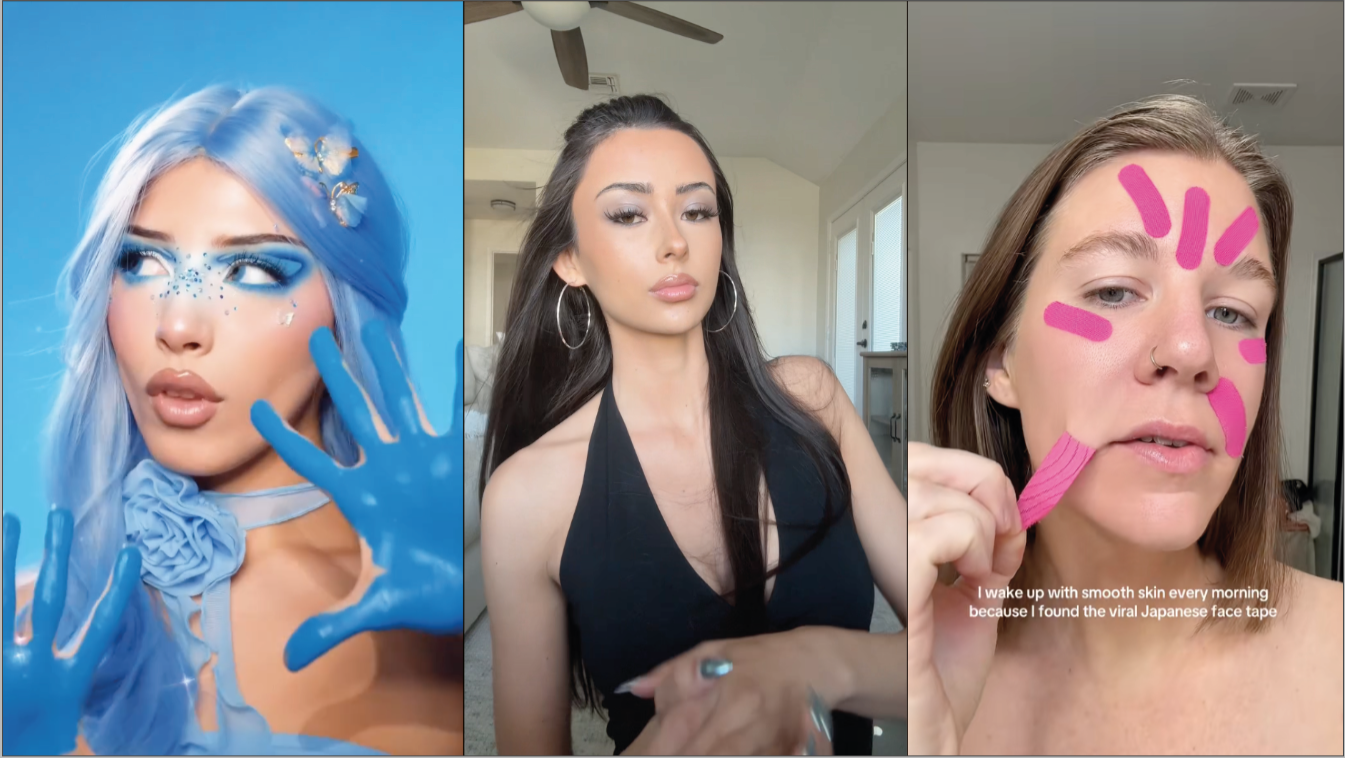
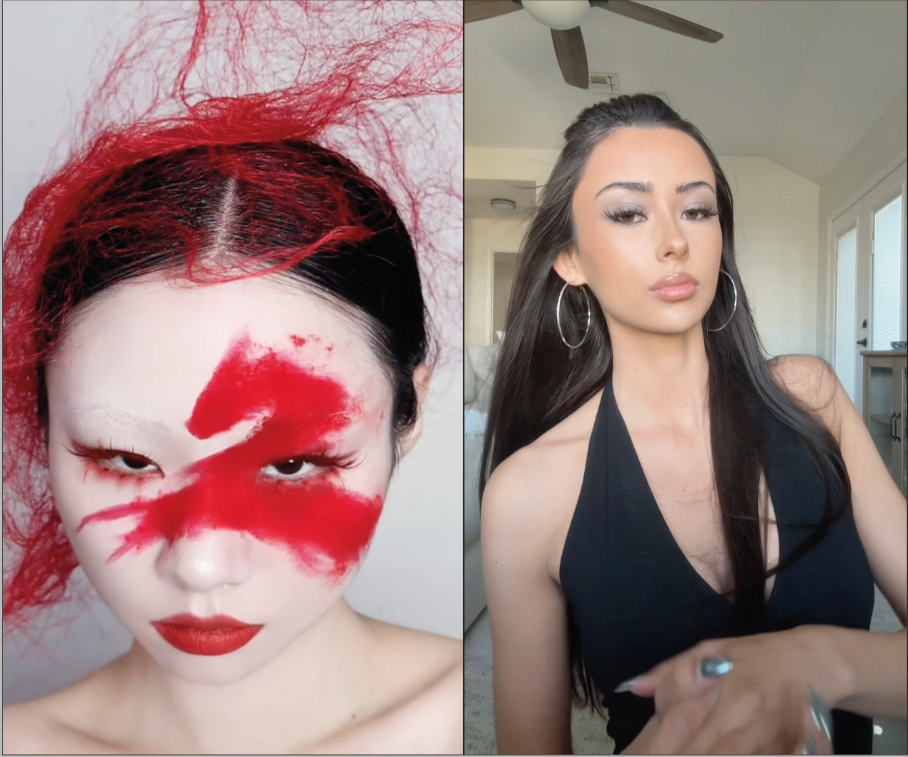
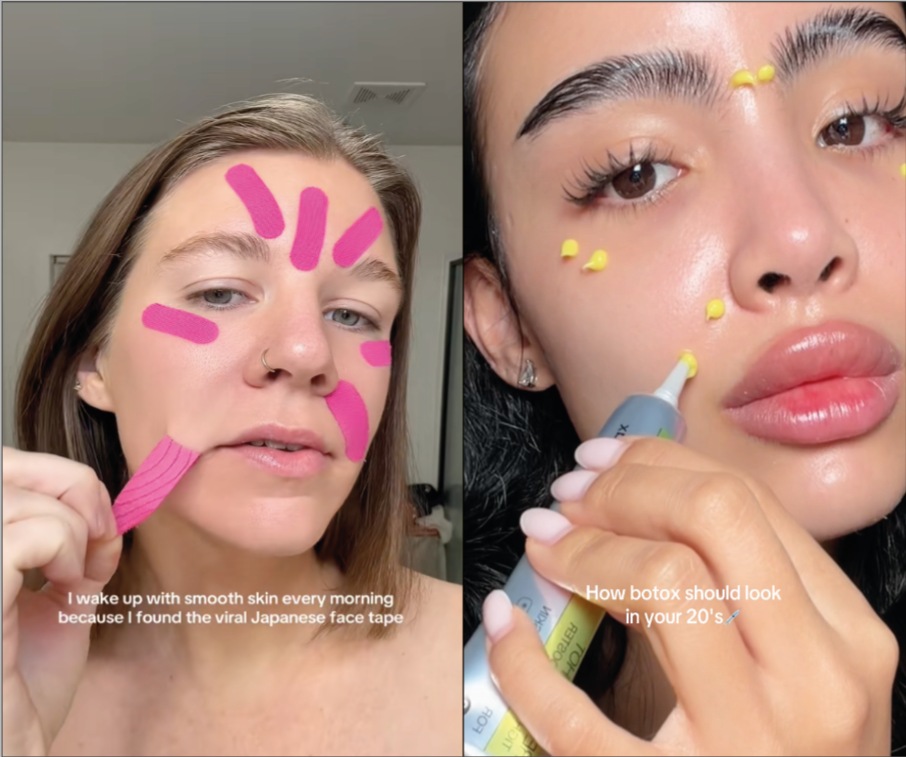
Sources: @nani_s_makeup /@kaylee.marina /@_toribaker

Every month, the Cosmetics IC social media team scours TikTok and Instagram to spotlight the latest beauty trends, viral techniques, and must-have products. So far this year, the beauty community has embraced renewed artistry, cultural references, and a growing demand for non-invasive lifting solutions. Here are the top three social media trends shaping the conversation at the start of the year.

1. MAXIMALISM REPLACES the Clean Girl Era

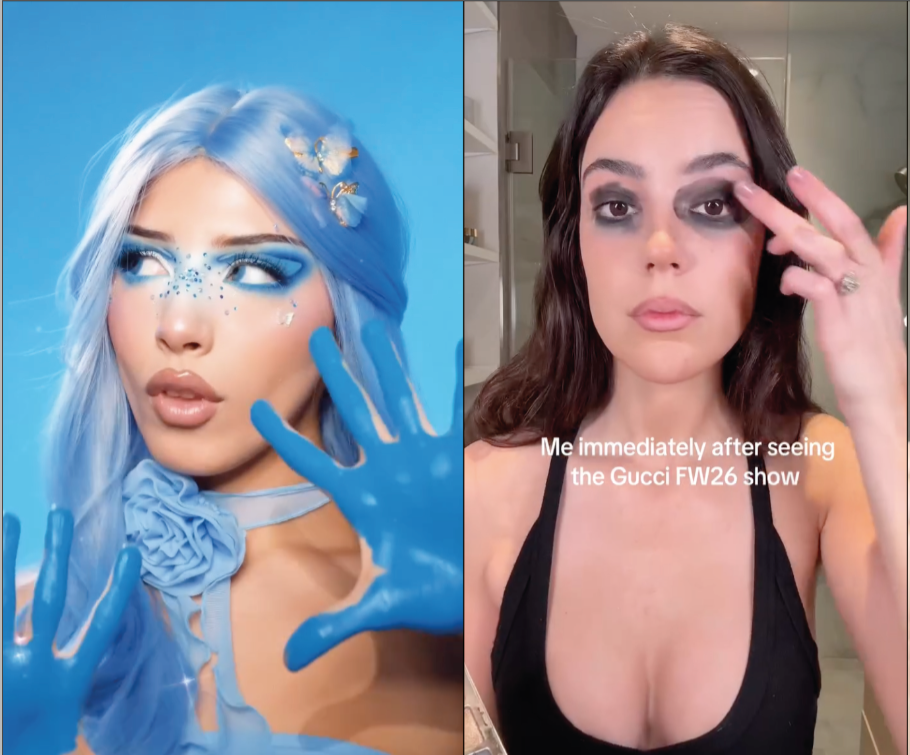
@nani_s_makeup / @ellamendelsohn

The first half of 2026 signaled a move away from clean girl-inspired makeup, which had dominated beauty through polished minimalism and the idea of using as few products as possible. In its place, color, maximalism and visible artistry gained traction, bringing makeup back closer to experimentation and self-expression with #maximalistmakeup up +184.1% YoY in TikTok US views.

This was notably seen through the Palm Color Mix trend on Instagram, where creators apply two contrasting shades onto their palm, blend them together, and use the resulting hue as the starting point for a bold eye look. By encouraging unexpected color associations, the trend turns makeup into a more creative and experiential process.

Gucci Milan Fashion Week 26 also unexpectedly echoed this anti-conformist appetite. The viral dark, smudged smokey eye, intentionally messy and intense, was quickly used on TikTok as a beauty statement associated with freedom, imperfection and a refusal of overly controlled aesthetics.

Beauty has always been tied to identity, but in a cultural context where appearance is increasingly scrutinized, makeup now carries a more political dimension. Against the controlled naturalness of the clean girl movement, these trends reflect a desire to reclaim beauty as a space for personality and visible self-expression, supported by the rise of Creative Makeup looks, up +61.3% YoY in TikTok US views, and Colorful Makeup, up +52.9% QoQ on Instagram US. Color, imperfection and intensity become more than aesthetic choices, they signal a broader resistance to uniformity.

2. From Global Glam to Cultural Specificity

@c.hwa_s___ / @kaylee.marina

This desire to express identity also took a more cultural form, as makeup trends increasingly drew from the beauty codes, symbols and aesthetics of specific communities and countries.

The first example emerged around Chinese New Year with the Red Horse Makeup trend. Inspired by the Year of the Fire Horse, the look blends symbolic references with bold red glam. Creators usually start with a white base before painting a red horse motif across the center of the face, turning makeup into a direct embodiment of the Fire Horse spirit.

This rise of culturally rooted aesthetics was also visible through Bebot Makeup, a trend celebrating Filipina Y2K glam. “Bebot,” a Filipino slang term often associated with a baddie attitude, became a beauty reference through glowing skin, charcoal smokey eyes, ultra-thin brows and overlined glossy lips. While many creators engaging with the trend were not Filipino, its popularity still helped bring a more specific cultural beauty language into mainstream visibility, with #filipinamakeup reaching 7M views on TikTok.

Together, these trends show that self-expression is no longer only about personal creativity, but also about making cultural identity more visible. By drawing from symbolic celebrations and community-rooted aesthetics, makeup becomes a way to affirm heritage, representation and belonging. This also reflects a broader demand for inclusion in a beauty industry still largely centered around American glam and Western standards.

3. Non-Invasive Lifting Solutions

@_toribaker / @melaniseiffert

In skincare, the first quarter of the year was marked by a growing interest in non-invasive lifting solutions, with consumers looking for visible firming effects without turning to clinical procedures.

This was first reflected in the rise of Japanese Face Tape, a technique inspired by Japanese kinesiology and integrated into overnight firming routines. The method consists of applying tape to targeted wrinkle-prone areas to create a subtle lifting effect by morning. Beyond the result itself, the trend reflects the growing appeal of at-home treatments that promise visible improvement without needles or downtime, with #facetapeforwrinkles reaching 1.8M views on TikTok.

From another angle, Retinal also gained traction as a stronger alternative to Retinol, often presented by creators as a way to achieve a smoother, almost botox-like skin appearance. Its momentum is reflected in #retinal, which rose +155.5% MoM in TikTok views, and was especially visible through targeted application methods, with creators recommending small dots of product on expression lines.

Together, these trends point to a more optimized approach to youthful skin. The goal is to achieve prevention, firmness, and facial structure. By combining overnight tools with more potent actives, skincare is increasingly positioned as an at-home alternative to aesthetic procedures, especially among younger consumers adopting anti-aging routines earlier.

THE CIC TAKE

Our social media team brings you an indispensable guide to all things viral, listening in to the trending beauty conversations on TikTok and Instagram. A monthly edit filled with data from our social media data partners, Spate and Tribe Dynamics.

To go further, join our team at Makeup In Paris for the Beauty Talk #1 – The Viral Beauty Economy, a conference dedicated to the viral dynamics shaping beauty in 2026.

For more information on our Social Books, Inspiration Reports, and consultancy services, contact us.

Source: Spate - YoY Tiktok US views from May 4, 2025 to May 3, 2026 vs. May 5, 2024 to May 4, 2025 - QoQ Instagram US views - from Feb 8, 2026 to May 3, 2026 vs. Nov 16, 2025 to Feb 8, 2026 - Tiktok US views - MoM Tiktok US views from Feb 1, 2026 to Mar 1, 2026 vs. Jan 4, 2026 to Feb 1, 2026

INGREDIENT INNOVATION - Trend Hunting at in-cosmetics Global 2026

Credits: Photo by Cosmetics IC

From exposome defense to neuro-aging: the new frontiers of skin longevity

At in-cosmetics Global 2026 (April 14–16), our team explored the innovations shaping the next era of beauty. Across the show floor, a clear shift emerged: skincare is moving from corrective approaches toward anticipatory, system-level strategies that optimize skin function over time.

The industry is now embracing a more systemic vision of skin health, integrating environmental exposure, cellular longevity, neurobiology, and advanced delivery systems.

Climate intelligence: tackling the exposome and inflammaging

As environmental instability accelerates, ingredient companies are evolving their approach to protection, developing solutions that respond to increasingly complex external stressors. Heat, UV radiation, pollution, and humidity fluctuations are no longer peripheral factors, they are now central to formulation strategies. New ingredients reflect this shift toward exposome-aware skincare, combining antioxidant protection with cellular resilience:

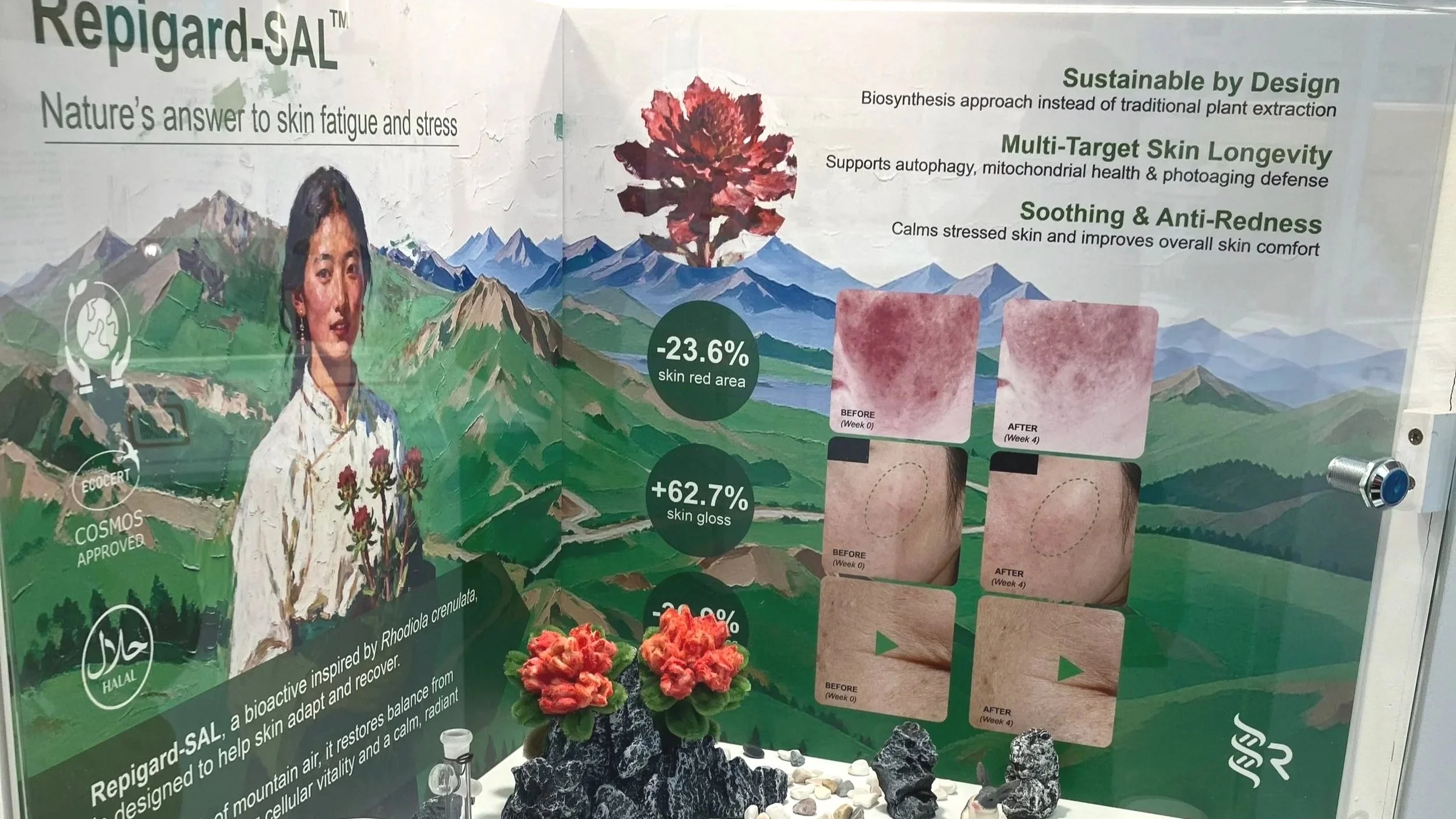
Readline Biotech - Photo by Cosmetics IC

  • Repigard-SAL™ (Readline Biotech) draws inspiration from Rhodiola crenulata, a resilient alpine plant traditionally used to combat fatigue and stress. It acts as a bioengineered adaptogen to improve cellular stress defense, supporting mitochondrial function and autophagy while oxidative damage and protein carbonylation caused by blue light exposure.


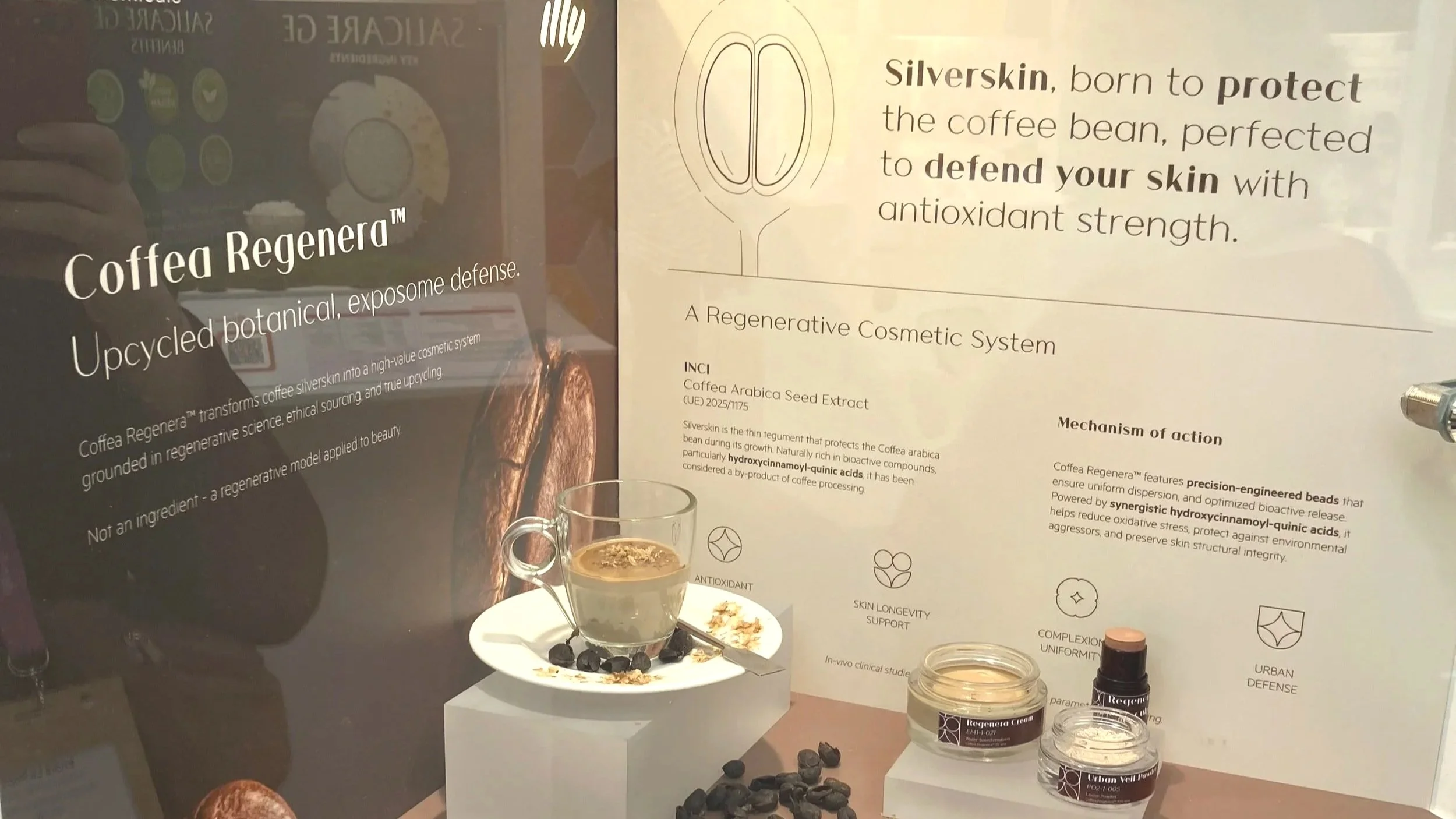
SAES Chemicals - Photo by Cosmetics

  • Coffea Regenera™ (SAES Chemicals) is an upcycled extract derived from Coffea arabica Silver Skin, a naturally bioactive fraction rich in hydroxycinnamoyl-quinic acids. Suitable for skincare and makeup formulation, it supports to skin longevity pathways and anti-hyaluronidase activity and provides anti-exposome shield, reinforcing urban defense against pollution and blue light.


A clear trajectory is emerging: cosmetics are evolving into daily environmental defense systems, designed to anticipate chronic stressors rather than repair damage.

Cellular health span: longevity moves to the core of skincare

One of the strongest signals at the show is the rise of cellular longevity science. The focus is shifting from visible signs of aging to the mechanisms that drive them: senescence, mitochondrial decline, and genomic instability. This new generation of actives targets the functional lifespan of skin:

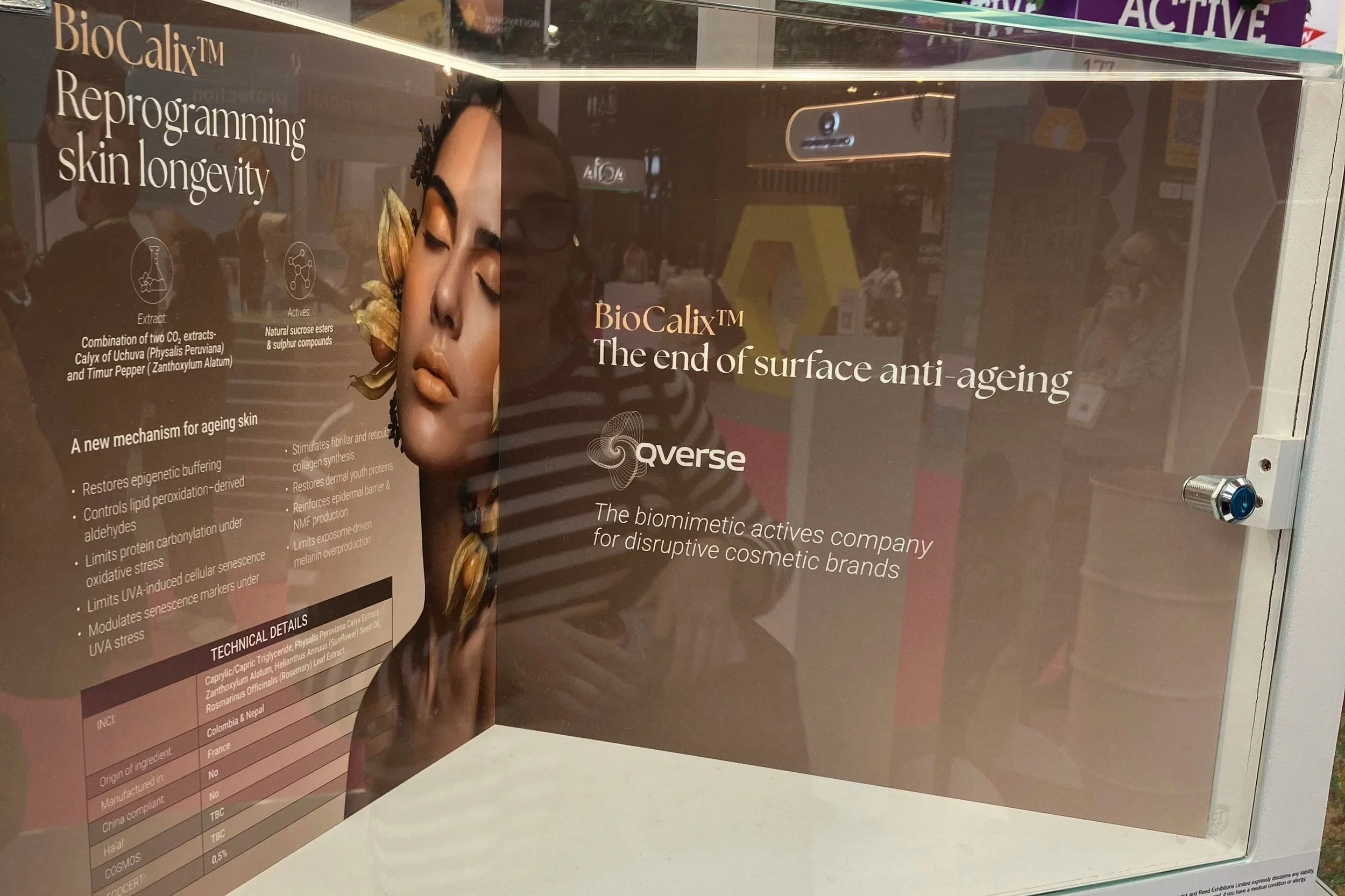
QVerse - Photo by Cosmetics IC

  • BioCalix™ (QVerse) supports long-term skin vitality by addressing pathways associated with senescence to support skin function, helping preserve vitality and comfort.


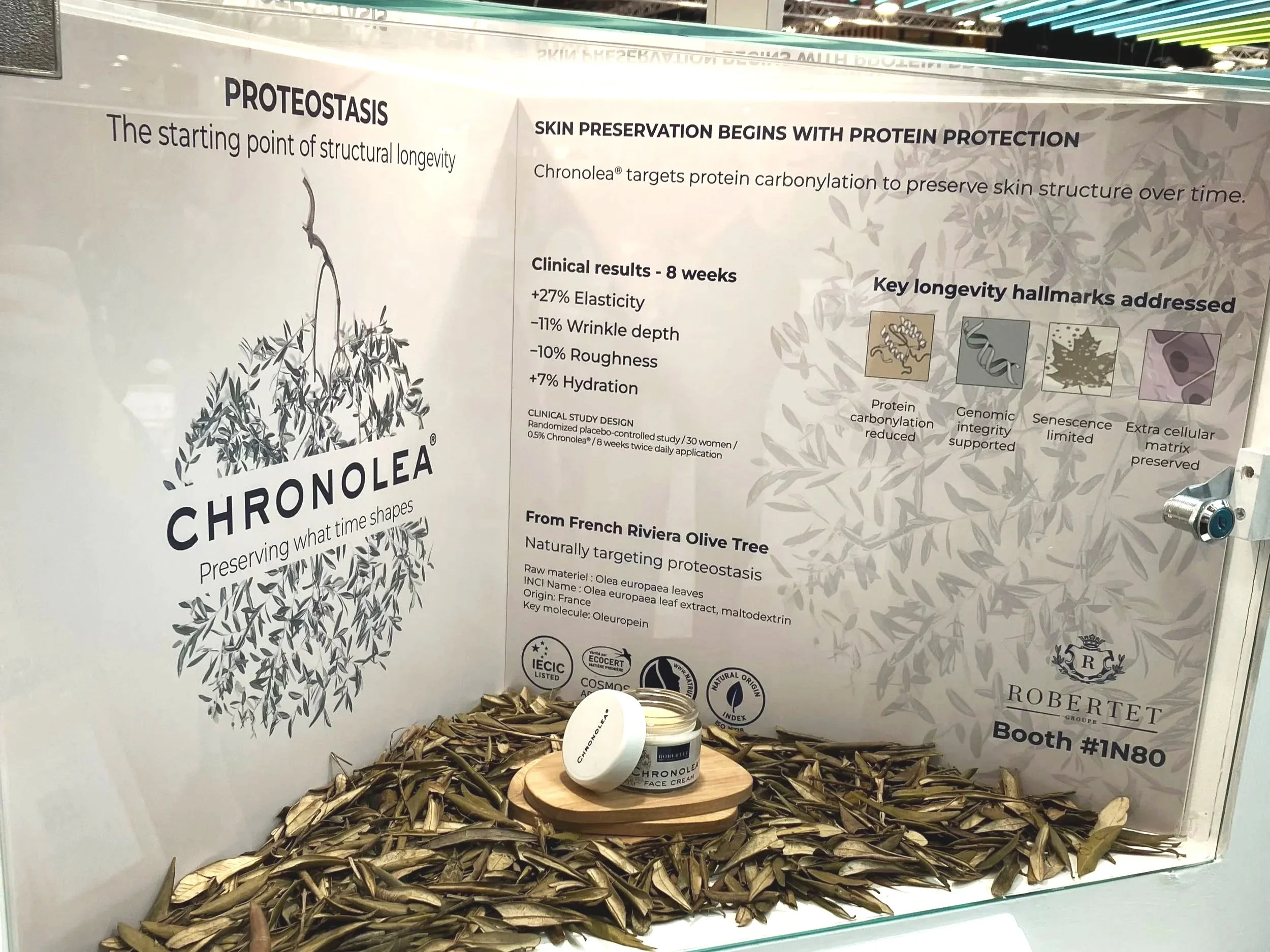
Robertet - Photo by Cosmetics IC

  • Designed with a longevity-driven approach, Chronolea (Robertet) acts on four key biological hallmarks of skin longevity: loss of proteostasis, cellular senescence, genomic instability, and extracellular matrix alteration. By protecting skin proteins from oxidative damage, Chronolea supports long-term skin resilience and preserves skin structure.

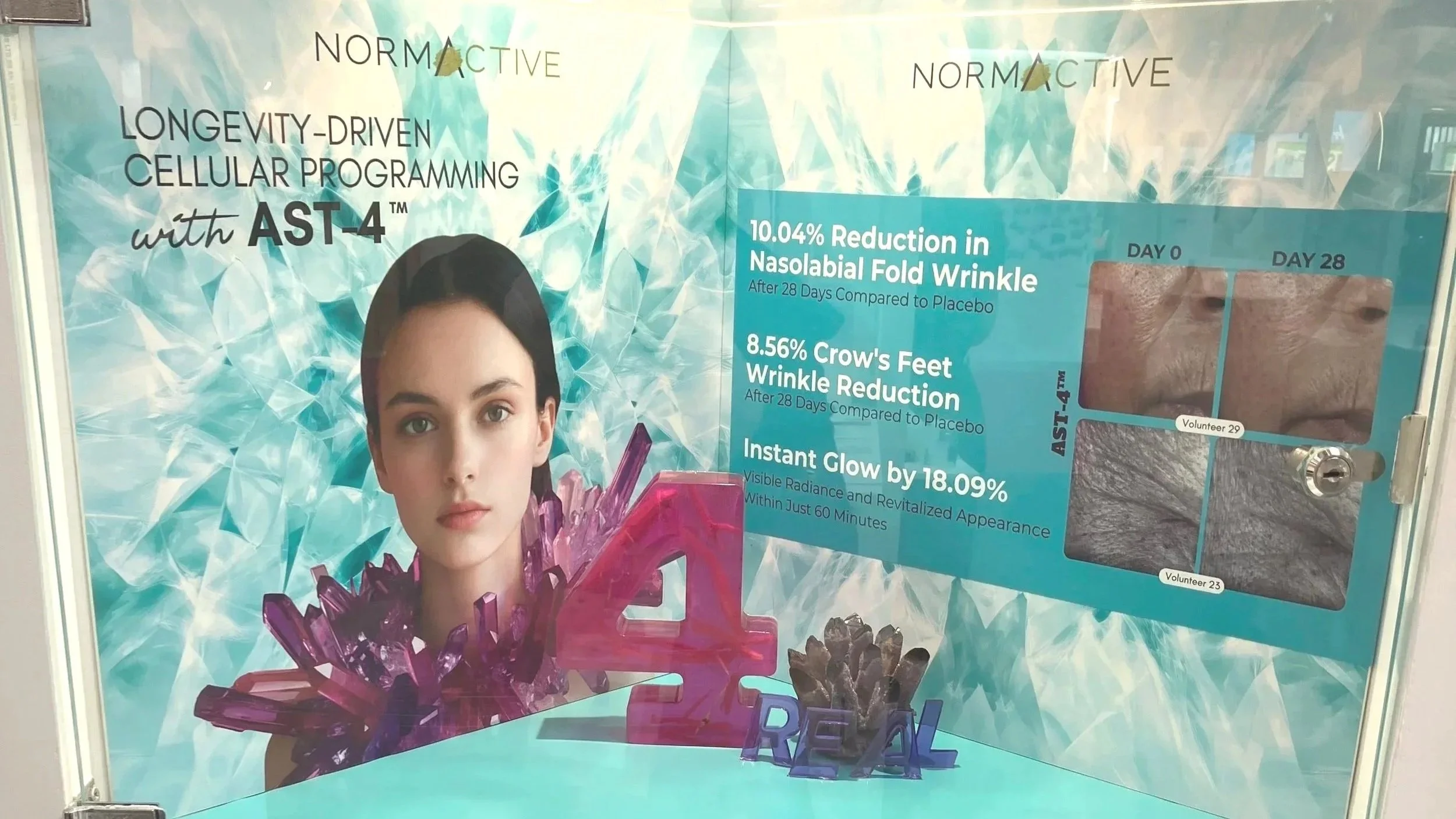
Normactive - Photo by Cosmetics IC

  • Developed under Normactive’s Longevity-Driven Cellular Programming™ framework, AST-4™ (Normactive) supports coordinated cellular resilience through the modulation of FOXO3-associated longevity signaling, autophagic flux, oxidative balance, ECM-related gene expression, and controlled senescence pathways.

This reflects a broader paradigm: aging is no longer treated as a symptom, but as a system to regulate.

Neuro-aging: the rise of the brain-skin axis

Beyond cellular biology, another frontier is emerging: neuro-aging. In a context of chronic stress, overstimulation, and cognitive fatigue, aging is increasingly understood as a neurobiological process that directly impacts the skin. Calm, balance, and sensory function become measurable dimensions of skin health. Innovations now target this brain-skin dialogue:

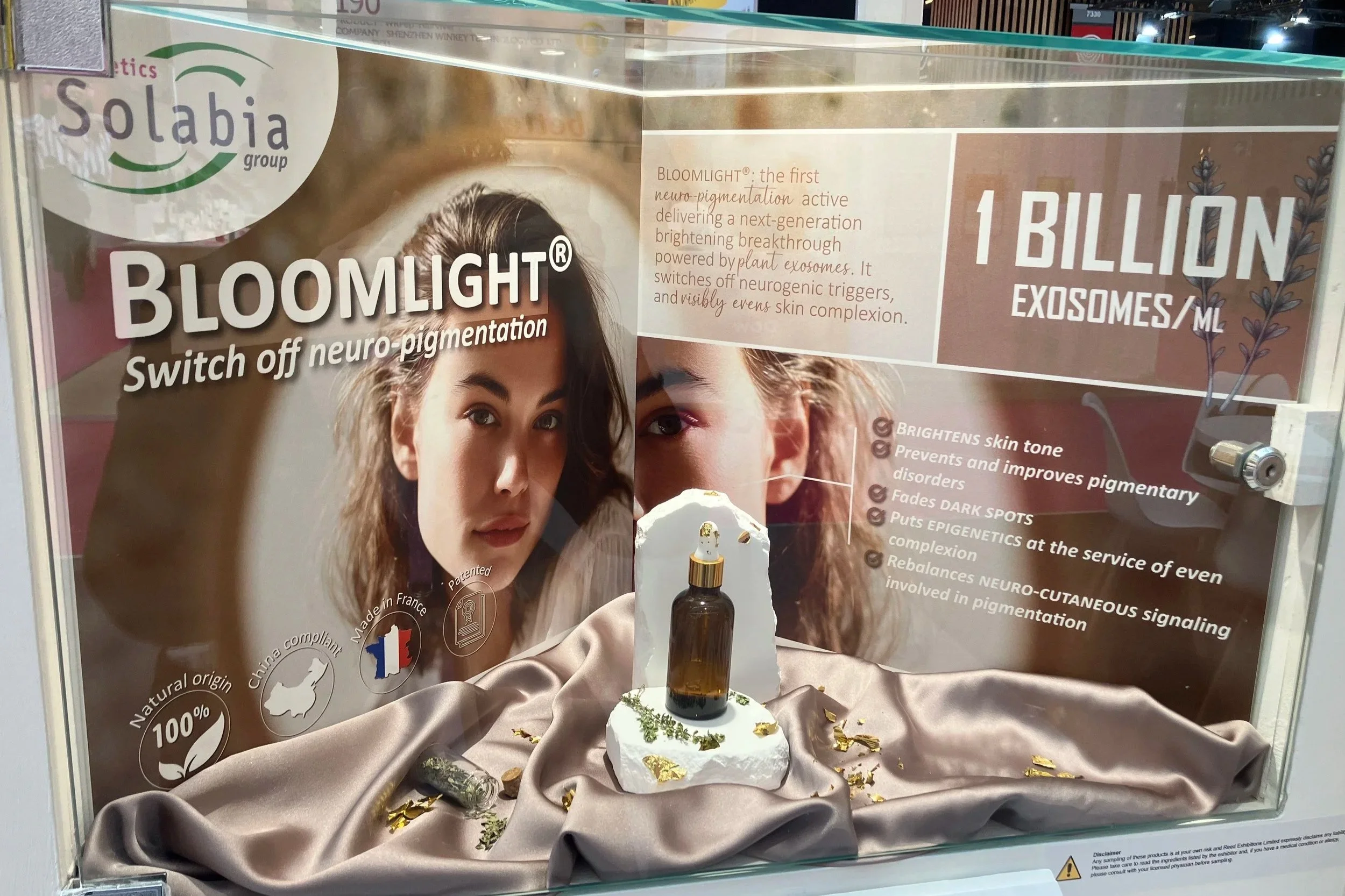
Solabia - Photo by Cosmetics IC

  • Bloomlight® (Solabia Group) is a brightening active inspired by plant exosomes communication, focusing on neuro-ppigmentation. Acting at the root cause of pigmentation, it targets stress-affected signaling within the neuro-cutaneous axis, demonstrating the link between stress, pigmentation, and skin longevity.


  • PrimalHyal™ NeuroYouth (Givaudan Active Beauty) pioneers the science of Neuro Skin Ageing, by restoring communication between neurons and skin cells for perfect balance and revived touch. It combines low molecular weight hyaluronic acid with selected amino acids to activate the skin’s neurorejuvenation.

The implication is significant: skincare is evolving into a neuro-cosmetic category, where emotional well-being and skin aging are deeply interconnected.

Advanced delivery systems: from ingredients to intelligent performance

Another major shift lies not in what is formulated, but in how it is delivered. The industry is moving toward precision delivery systems that enhance bioavailability while minimizing irritation, enabling more efficient and targeted action. Key innovations include:

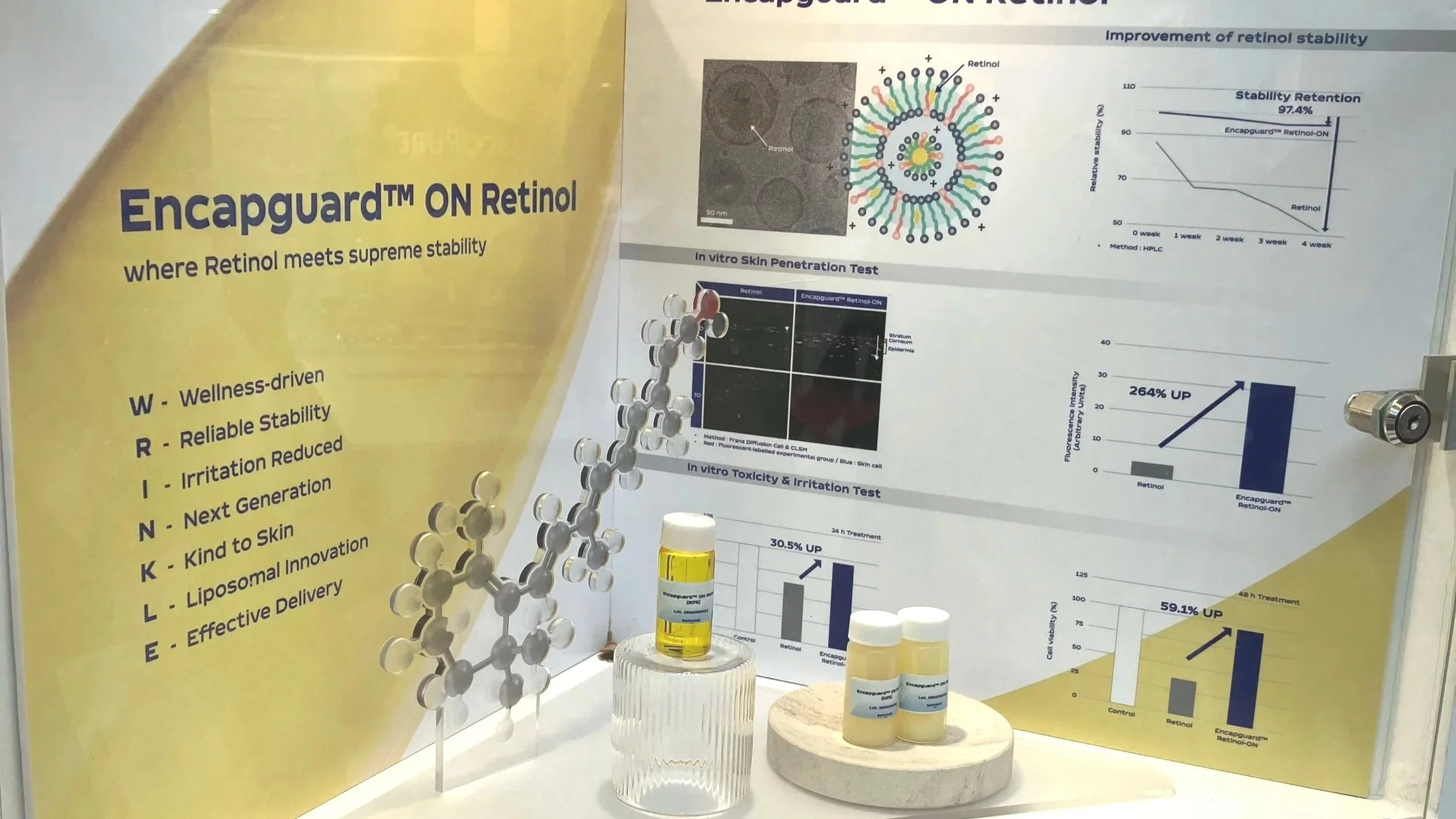
Samyang KCI - Photo by Cosmetics IC

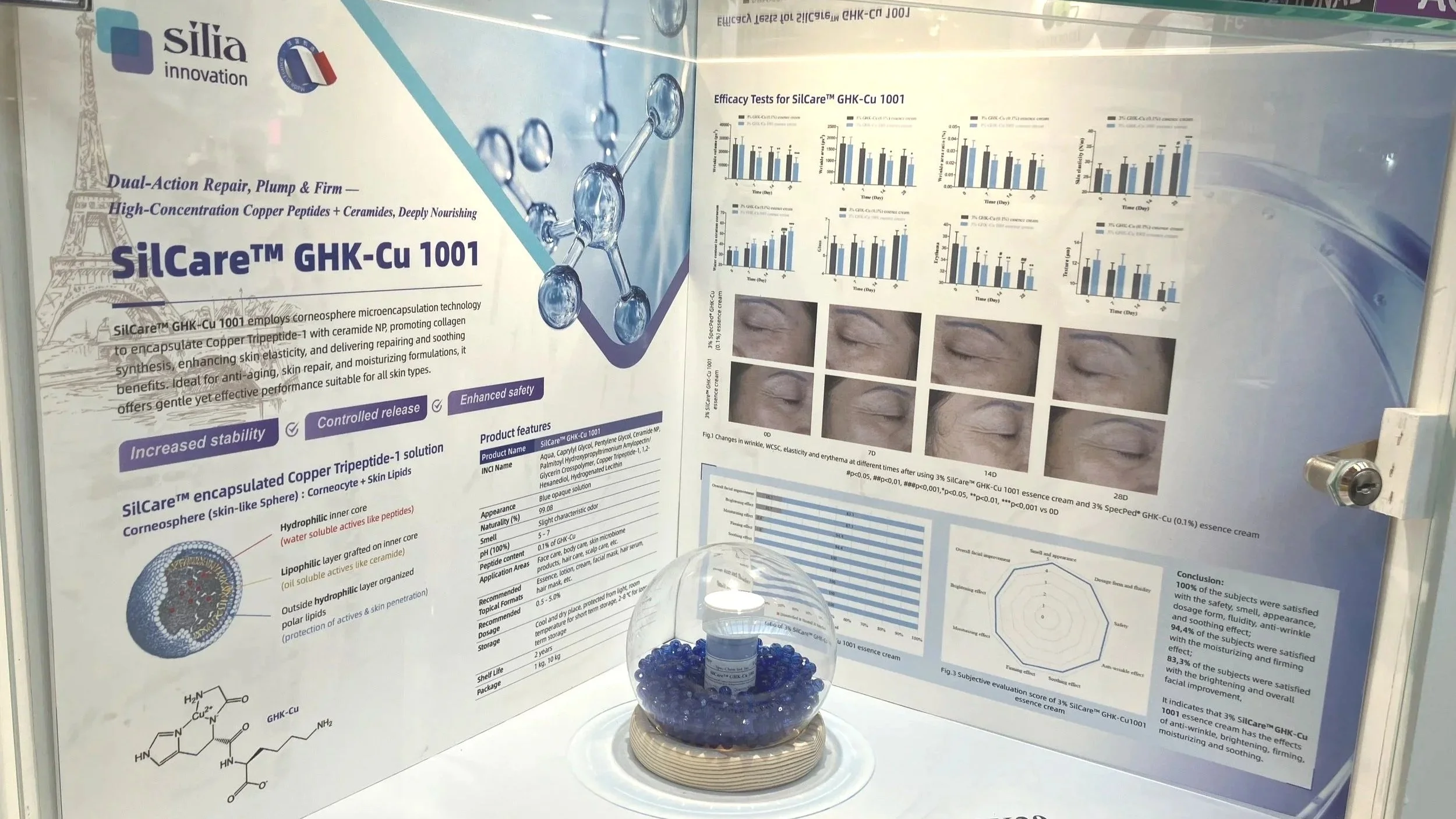
Spec-Chem - Photo by Cosmetics IC

  • Ionicsome™ Retinol (Samyang KCI) uses proprietary ionicsome delivery to stabilize retinol through ionic interactions, delivering resistance to light, heat, and oxidative degradation while maintaining active potency. The nanovesicle encapsulation improves water dispersibility and significantly enhances skin permeation, while minimizing irritation and maximizing anti-wrinkle efficacy.

  • SilCare™ GHK-Cu 1001 (Spec-Chem) uses corneosphere microencapsulation technology to encapsulate a high concentration of Copper Tripeptide-1 with ceramide NP, offering increased stability, controlled release, and enhanced safety.

  • VectorHyal™ (Givaudan Active Beauty) leverages a hyaluronic acid–based micro-encapsulation platform, designed for customization and to optimize penetration and controlled release of actives within the skin. Its structure, based on an HA structural backbone, enables deep & homogeneous penetration of actives, enhancing stability, solubility & performance of encapsulated actives.

This marks the transition toward formulation intelligence, where efficacy depends as much on delivery architecture as on active ingredients themselves.

THE CIC TAKE

Across all categories, a consistent vision emerges: from reactive care to preventive and adaptive systems, from surface correction to biological regulation, from isolated ingredients to integrated ecosystems. Cosmetics are no longer just about improving appearance; they are becoming tools to actively manage skin health across time, environment, and physiology.

in-cosmetics Global 2026 confirms a deeper transformation: longevity is redefining the role of beauty, shifting it from aesthetic enhancement to functional performance. In this new landscape, skincare is designed not only to preserve youth, but to sustain skin integrity in an increasingly unstable and demanding environment.

Beauty Brands Scaling Sport Partnerships as Strategy

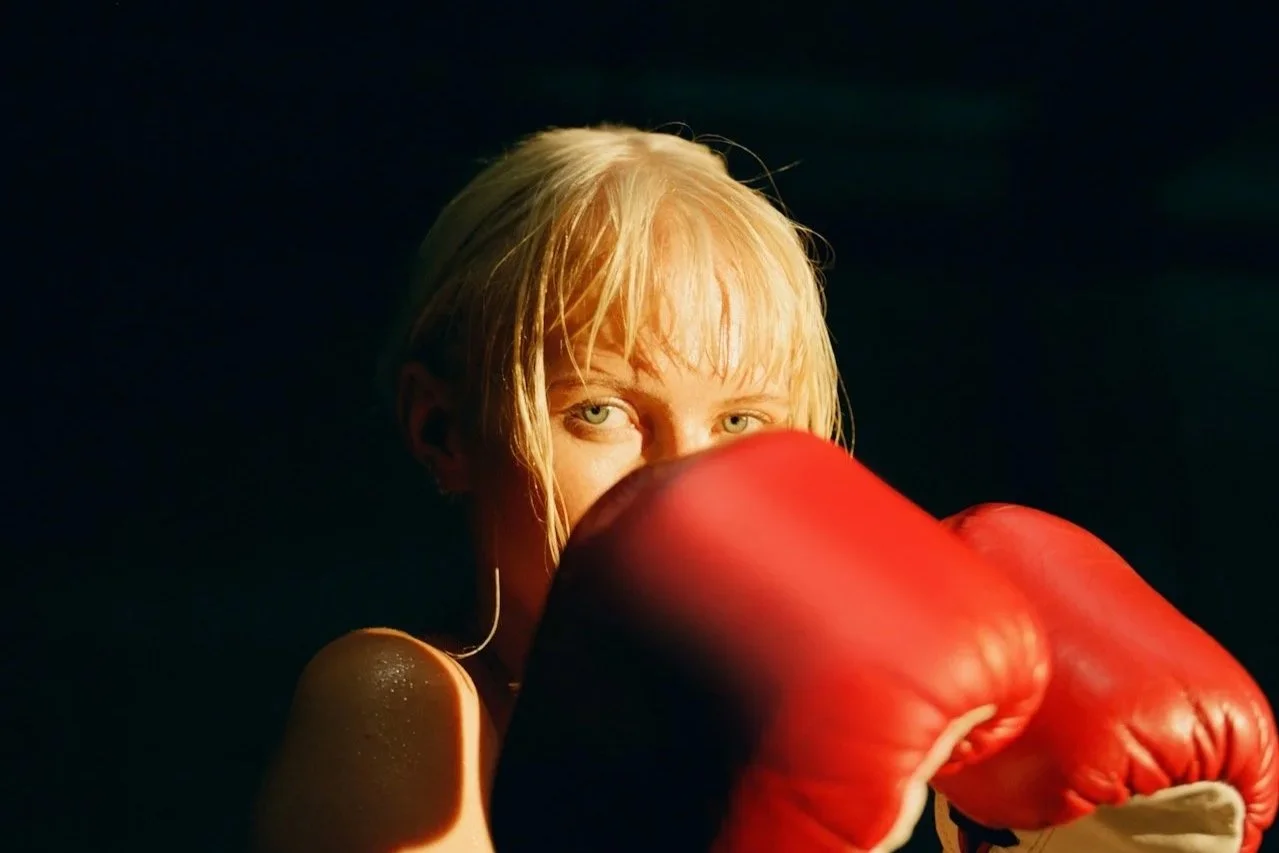
Credits: Mouthwash Studios via Deathtostock

Beauty and luxury brands are entering sport with a new level of intent. No longer limited to image-driven partnerships, these collaborations are becoming structural, rooted in long-term engagement, particularly around women’s sports.

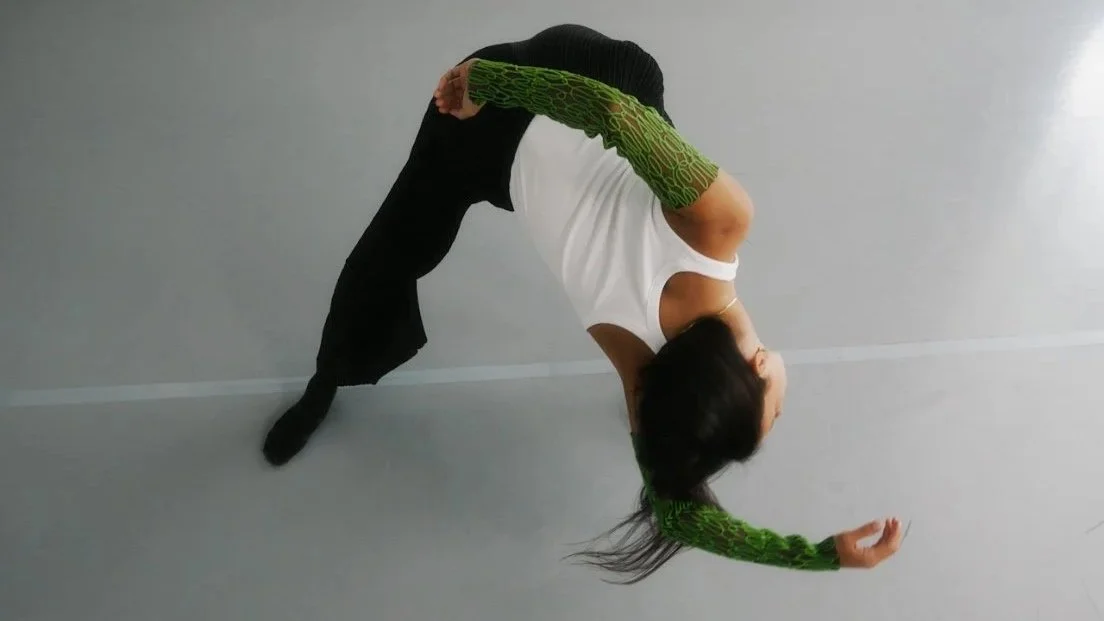
This acceleration echoes a shift we anticipated in our 2025 predictions with the “Life in Movement” trend - a celebration of bodies in action, where beauty moves beyond static ideals to embrace fluidity, strength, and grace in motion. This paradigm repositioned athletes and sports figures as new cultural icons of beauty, not for how they look, but for what their bodies can do.

Today, this vision is materializing at scale, as brands invest in sport not just as a platform for visibility, but as a space for legitimacy, performance, and transformation.

1. Chanel Beauté ans Performance-Led Femininity

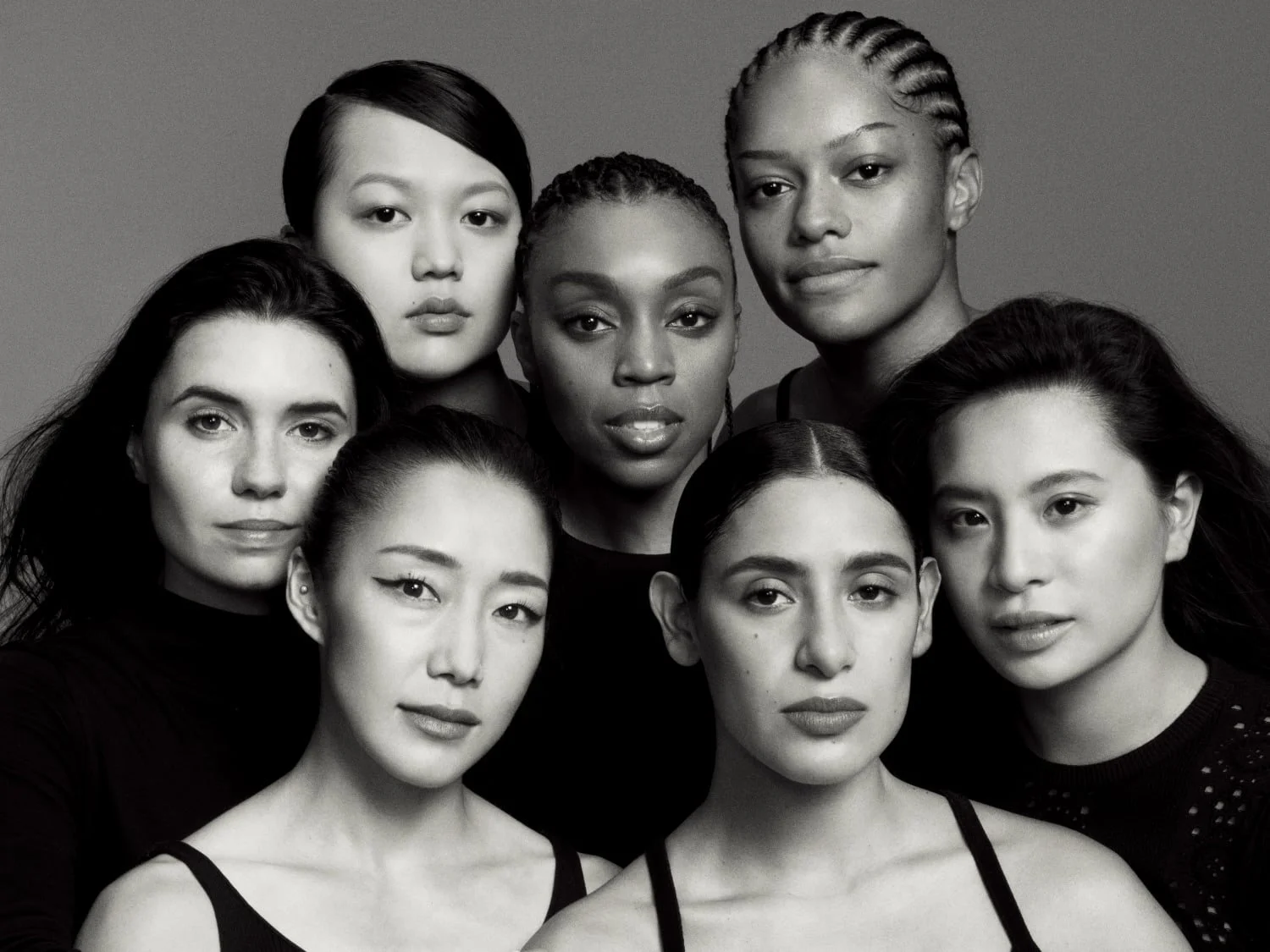
Chanel Beauté’s CC League reflects this shift. Built as a two-year mentorship program, it supports a collective of international athletes through coaching, workshops, and personal development. Beyond visibility, the initiative positions Chanel as a contributor to evolving representations of femininity in sport, where performance, resilience, and diversity are central. By engaging directly with high-level athletes, the program mirrors the brand’s own pursuit of excellence while fostering female empowerment in a tangible and sustained way.

2. Sephora’s Activation in Competitive Sport

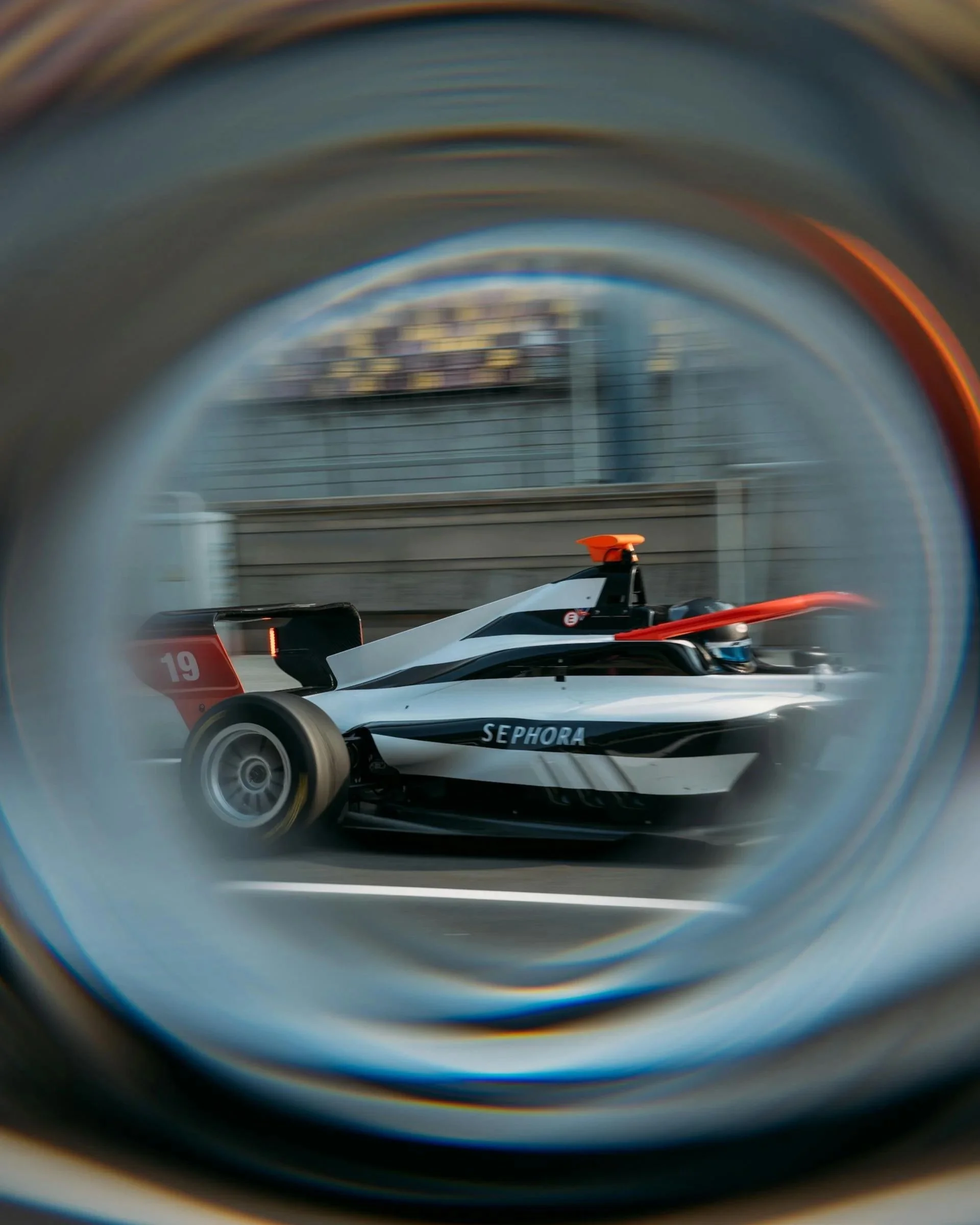
Sephora’s partnership with the F1 Academy continues this trajectory, albeit with a different activation approach. Through immersive experiences such as trackside “Glam Bars,” Sephora moves from observation to participation, engaging audiences directly in the live environment of the sport. This approach translates brand presence into experiential interaction, while reinforcing its alignment with the rising visibility and dynamism of women’s competitive platforms.


3. La Roche-Posay Under Extreme Conditions

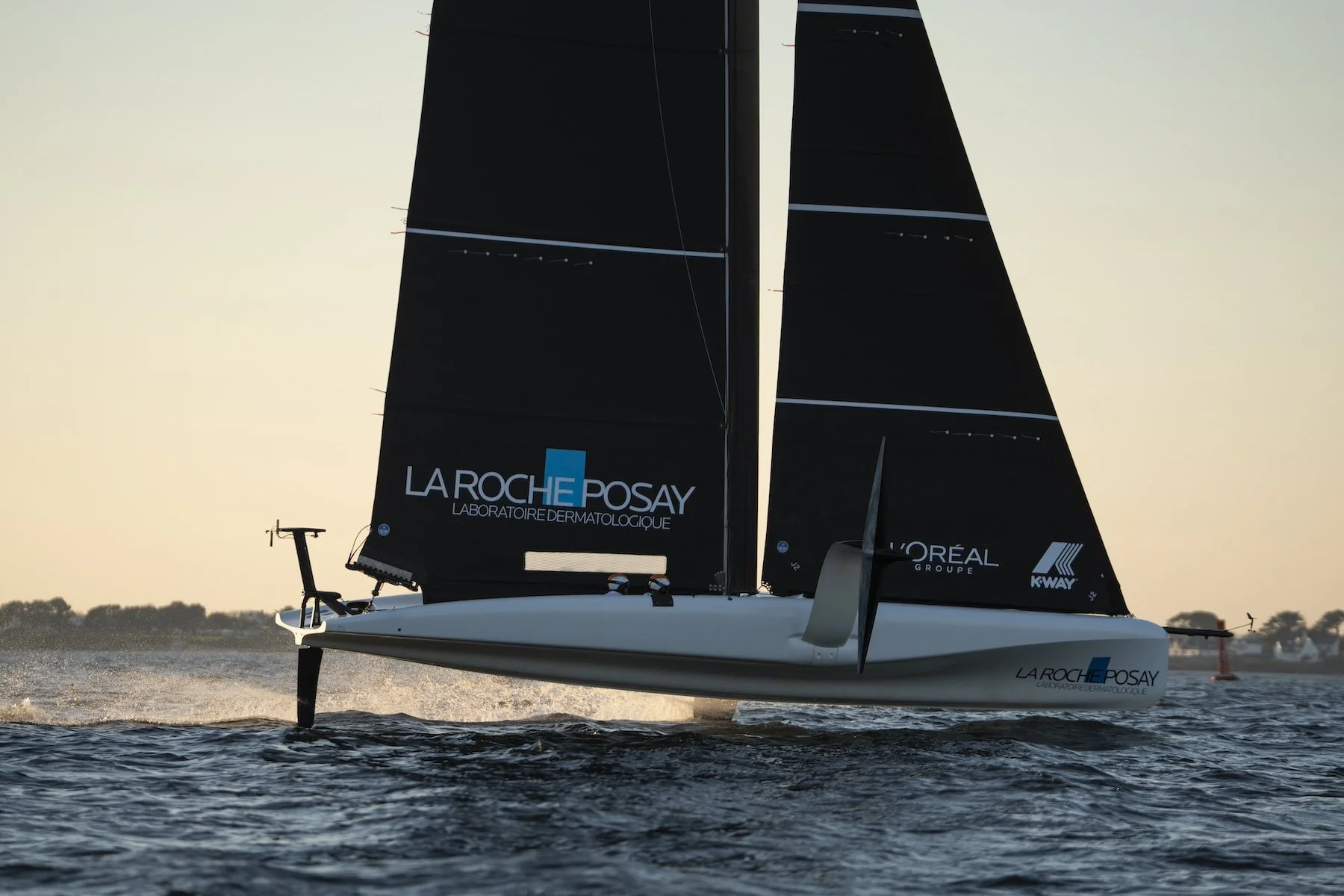
With La Roche-Posay’s role in the America’s Cup, the partnership model becomes even more functional. Here, sport serves as a testing ground, allowing the brand to co-develop products under extreme conditions alongside athletes. Performance is no longer metaphorical, it becomes measurable, tested, and proven, reinforcing scientific credibility and product efficacy.

THE CIC TAKE

Sport is emerging as a strategic territory where brands can assert purpose, credibility, and innovation. What began as a cultural shift toward “beauty in movement” is now evolving into a full-scale repositioning of the industry.

As consumers increasingly value experience, authenticity, and emotional engagement, sport offers a powerful convergence point - blending performance, storytelling, and community. For beauty and luxury brands, it is no longer just about entering the conversation, but about embedding themselves within it, shaping a new definition of beauty that is active, resilient, and in constant motion.

The Age of Flow: 5 Key Trends for 2026 and Beyond

Credits: Shauna Summers via Deathtostock

In our 2026 White Book, the Cosmetics IC team decodes the societal shifts and breakthrough beauty innovations that will transform the shape of the industry for the years ahead in 2026 and beyond.

The beauty industry is entering a new phase of transformation - one shaped by constant movement, uncertainty, and acceleration, but also by a growing desire for control, grounding, and intention. In a world marked by technological intensity, AI-driven systems, climate instability, and shifting social norms, consumers are recalibrating. Age, categories, and rigid frameworks are losing relevance, replaced by fluid identities, expert knowledge, and deeply personal choices. Beauty is no longer static or purely aesthetic: it has become adaptive, experiential, and emotionally strategic.

The Age of Flow reflects this moment. It describes a cultural shift where consumers learn to navigate extremes: between performance and care, indulgence and discipline, technology and humanity. Flow is about movement with purpose - choosing when to accelerate, when to protect, when to indulge, and when to return to what feels essential.

“Beauty now operates as a tool for alignment. From amplified physical performance and medi-wellness to protective rituals, sensorial pleasure, human expertise, and radical self-expression, brands are responding to a consumer who is more informed, more demanding, and more intentional than ever.” said Leïla Rochet, Chief Inspiration Officer of Cosmetics Inspiration & Creation.

Discover 5 inspiration territories to fuel your future innovation:

1. Superhuman Future: The optimization era

Across sport, wellness and beauty, performance is no longer instinctive or episodic. It is becoming structured, intentional and system-led. Consumers are replacing routines with protocols: calibrated sequences designed to regulate the body, improve efficiency and deliver measurable outcomes. Strength is no longer about appearance, but about functional capability, durability and long-term autonomy.

This philosophy is embodied by the rise of fitness-as-a-sport formats such as HYROX, which reward consistency, endurance and functional strength rather than elite specialization. Luxury fitness brands reinforce this mindset. Equinox’s It’s Not Fitness, It’s Life platform reframes physical mastery as a lifelong philosophy, positioning commitment and bodily ownership as expressions of identity.

Performance values increasingly extend into fashion and beauty: YSL Beauty’s Lash Latex Mascara borrows the language of training, framing lashes through repetition, endurance and lift rather than instant enhancement.

Recovery itself becomes a performance strategy. Nike x Hyperice’s Hyperboot integrates warm-up and recovery directly into footwear, while beauty adopts tech-enabled protocols such as Vagheggi x Nuon Medical’s 75.25 Longevity Day Cream, where professional treatment logic is translated into controlled at-home use.

In the future, beauty will operate as a system of optimization, balancing performance, recovery and longevity.

2. HUSH STATE: Protective harmony

In an age of intensity and extremes, calm is no longer passive. It becomes regulated, designed and strategic. As environmental stress, climate volatility and mental overload intensify, consumers are no longer seeking escape, but equilibrium, a way to protect internal balance while navigating external instability.

This shift is reflected in a new aesthetic language built on softness, restraint and visual breathing space. Pantone’s Cloud Dancer, described as “a discreet hue offering a promise of clarity,” embodies this desire for simplification and sensory relief. In culture, Rosalía’s latest album explores spirituality through vulnerability and contradiction, signalling quieter, more introspective forms of transcendence.

Protective harmony extends into physical environments. Hospitality increasingly prioritises silence, slowness and nervous-system regulation, positioning calm as a core luxury value. Aman pioneered this approach by redefining the hotel as a place of retreat rather than stimulation, where architecture and pacing support introspection and recovery.

In beauty, protection begins with real-time regulation. Cooling is reframed as active defence through products such as TIRTIR’s Ice-Cooling Cloud Cream. Skincare also addresses stress-induced responses directly, with Beekman 1802’s Magnesium Milk Barrier Reset Jelly Mist targeting cortisol-related irritation.

In the future, calm will function as a form of sustained flow, maintaining balance without stopping movement.

3. LIBERATING REWARDS: Pleasure by design

Under growing conditions of control and optimization, pleasure becomes purposeful. Sensation is no longer ornamental, but a driver of engagement, efficiency and momentum. As daily life becomes increasingly disciplined, consumers actively seek moments of release that fuel desire rather than disrupt performance.

Hyper-specific pleasure cues now trigger instant emotional response. The resurgence of banana as a sensory obsession illustrates this logic. Prada’s viral Banana Yellow Lip Balm transforms a familiar motif into a refined beauty object, while AMUSE’s Banana Lip Oil amplifies tactility through texture, scent and oversized applicators, extending pleasure into immersive retail experiences.

Beauty increasingly draws from collective food culture, turning everyday indulgence into emotional capital. Lidl’s Eau de Croissant elevates a mass-market icon into a sensorial object, while collaborations with pastry chefs such as Nina Métayer for Burberry Goddess translate taste into scent, texture and narrative.

Pleasure also becomes functional. Fel Beauty’s Kissylips Cushy Shine Lip and Cheek Balm positions emotional uplift as a measurable benefit, while brands such as Tree Hut place sensory excess at the core of their identity.

In the future, pleasure will be deliberately designed as a performance accelerator, sustaining engagement and motivation.

4. HANDS OF MASTERY: Human expertise, elevated authority

As automation, algorithms and AI accelerate production, human expertise becomes increasingly valuable. Speed and flawless outputs are no longer sufficient. What gains value instead is mastery: the visible mark of skill, intention and trained judgment.

Craft and process regain cultural significance. Erewhon’s expansion illustrates how artisanal food culture and curated craftsmanship function as luxury markers, while growing interest in cooking and grocery tourism reflects a broader desire for discernment and know-how.

In luxury, intellectual authority becomes aspirational. Miu Miu’s Making of Old campaign reframes aged leather as intentional, positioning time and process as authorship rather than flaw. Objects are increasingly evaluated through knowledge of materials, methods and expertise.

In beauty, trust is rebuilt through expert-led propositions. DUA by AB foregrounds Augustinus Bader’s TFC5™ technology, while The Ordinary’s Ingredients Book reinforces consumer literacy. At the same time, makeup artistry regains authority through artist-founded brands (m.ph, Hung Vanngo Beauty…) and figures such as Nina Park.


In the future, beauty will privilege human mastery over automation, positioning expertise as its ultimate form of authority.

5. REBEL IDENTITY: Rule-breaking reinvention

As social norms fracture and traditional authority erodes, identity becomes an act of disobedience. Age, gender, aesthetics and usage conventions are increasingly rejected in favor of self-authored expression. Neutrality is refused, and polish gives way to provocation.

Fashion reclaims its role as cultural resistance. Rick Owens’ Tower collection at Paris Men’s FW26 exaggerates symbols of authority to strip them of power, while Dilara Findikoglu’s Cage of Innocence dismantles ideas of virtue and restraint through deconstruction and symbolism.

This rejection of refinement extends to beauty. The rise of the “messy girl” mindset embraces imperfection as authenticity, echoed in Dior Men FW26’s punk-inflected hair and exaggerated textures. Beauty becomes a language of tension, excess and visibility.

Brands increasingly encourage amplified self-expression. MAC’s collaboration with Chappell Roan sharpens makeup as spectacle, while experimental formats like Zara Hair’s Chromatic Gel or About Face’s Shimmerstick invite users to embrace the unconventional.

In the future, beauty will operate as a tool for rule-breaking self-invention: fluid, expressive and unapologetic.

The CIC Take

For an up-close look at our 5 Key Trends for 2026 and Beyond visit our booth (K48) at the upcoming MakeUp in Los Angeles (March 4 & 5) where our CIO Leila Rochet will personally talk you through a selection of international products at our Inspiration Bar, curated to illustrate many of the themes above. More information here.

The full version of our 2026 White Book: The Age of Flow is available now, contact us for more information.

How Gen Z & Gen Alpha Are Rewriting the Rules of Fragrance

Credits : Noyz

At this year’s Fragrance Innovation Summit in Paris, Cosmetics Inspiration & Creation explored a crucial question: why is fragrance undergoing such a profound transformation, and what does this shift reveal about the future of beauty?

Our talk, How Gen Z & Alpha Redefine Perfume and Its Use unpacked the cultural, emotional, and behavioral shifts that are pushing fragrance far beyond its traditional codes.
Today, only 6% of 18-34 y.o. consumers do not wear perfume, compared to 26% of 55+ y.o. consumers (Circana - Fragrance Innovation Summit 2025). What emerges today is clear: younger generations are not just buying perfume, they are reinventing its meaning, its use, and its value.

Below are the three major transformation engines shaping the next era of fragrance.

1. Personal Layers - Fragrance as a Language of Identity

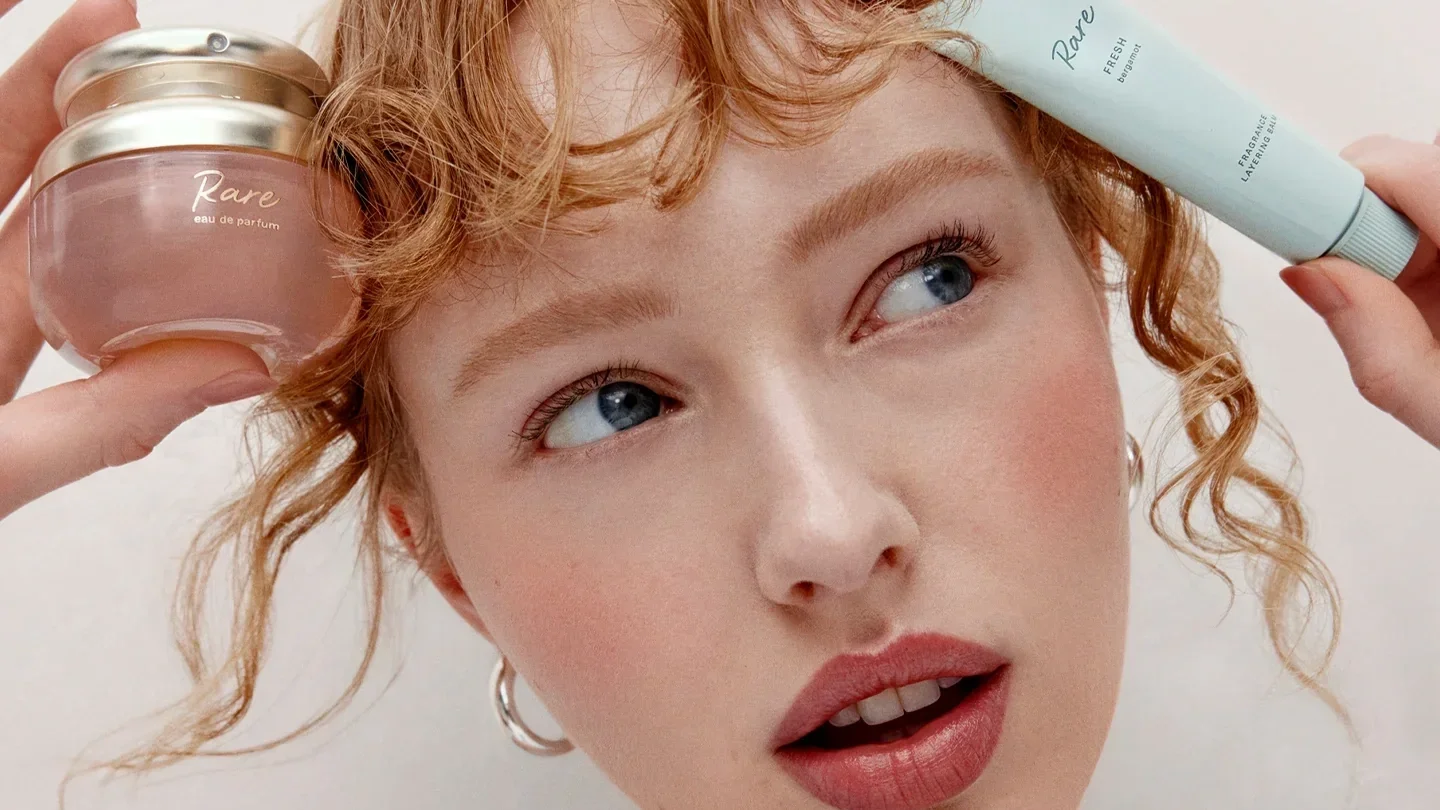
Rare Beauty - Fragrance Layering Balm

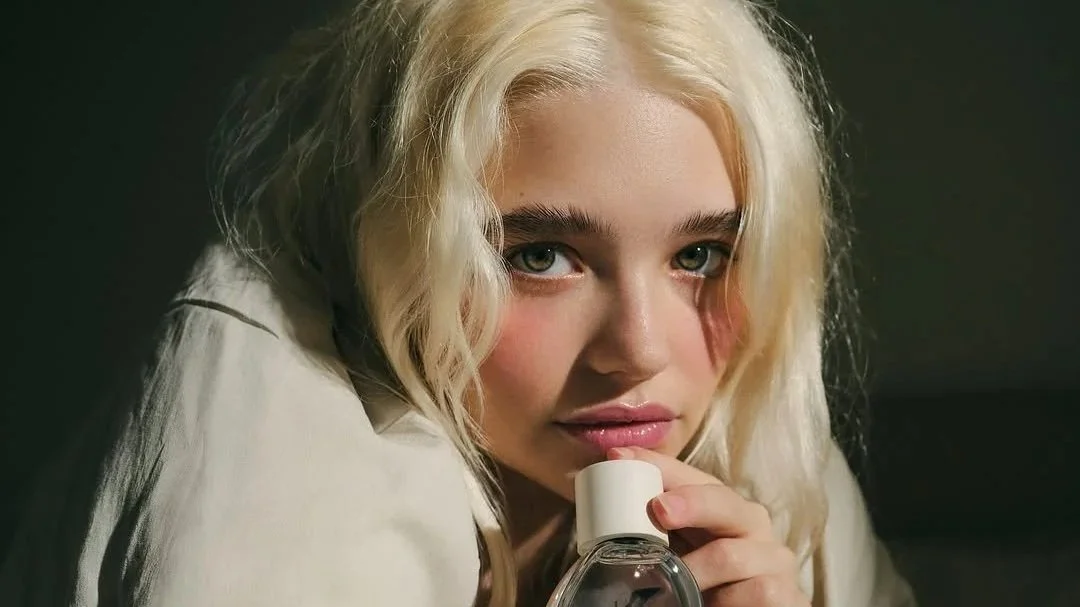
For Gen Z and Gen Alpha, fragrance is no longer a finishing touch. It has become a core tool of self-expression, a modular language through which they articulate their moods, aesthetics, and evolving identities.

This generation has abandoned the traditional “signature scent” in favor of fragrance wardrobes: flexible scent portfolios designed to shift with context, emotion, and persona. On TikTok communities like PerfumeTok or Smellmaxxing, perfume is framed as a daily emotional code: “What scent matches my mood today?”

This drive for personal authorship fuels a new wave of innovation focused on augmentation, modulation, and co-creation:

  • Rare Beauty introduced Fragrance Layering Balms, allowing users to build their own olfactive “score” by adding amber, floral, woody, or fresh layers. As Selena Gomez puts it, “I wanted a perfume that evolves with me.”

  • Glossier continues to push its “skin-scent” ethos with You Fleur, a fragrance designed to adapt differently to every wearer, encouraging layering as a personal signature.

  • New gestural formats are multiplying: gels, body & hair mists, mood mists, enabling users to adjust texture and intensity.

  • In Japan, IPSA’s Skin Fragrance Gels blur the line between scent and skincare for a more intimate, subtle expression.

Across markets, one shift stands out:
Fragrance is becoming a writable space, a canvas for identity, emotion, and self-narration.


2. Wellness Scents - The Rise of Emotional Fragrance

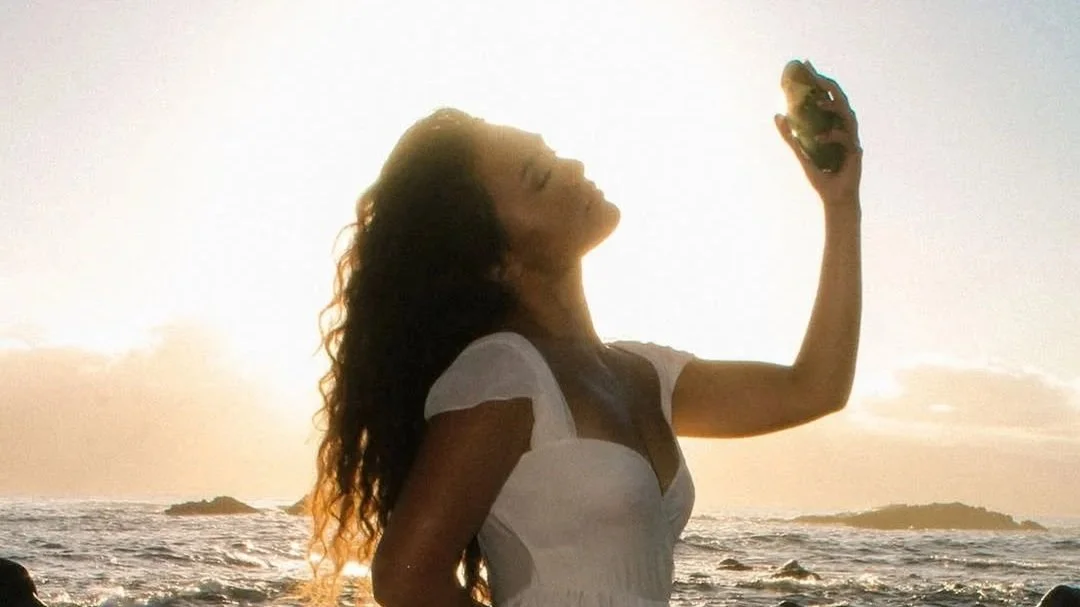
Orebella

As stress and emotional volatility rise, especially among younger consumers, fragrance is increasingly perceived as a tool for emotional regulation, clarity, and reconnection.

What was once a beauty gesture is transforming into a micro-ritual of psychological support. Nearly 80% of UK consumers now believe fragrance can improve mental well-being (Mintel - Make Sense of Scents - July 2025).

This shift fuels an emerging hybrid territory between perfumery, neuroscience, and self-care, illustrated by a new generation of functional, mood-responsive scents:

  • Moods, launched this year, reimagines aromatherapy through clinically validated blends. Its “MoodSwings” duo, a double roller designed for on-the-go regulation, delivers measurable emotional impact, with 76% of users reporting improved mood and harmony.

  • Orebella (by Bella Hadid) brings bi-phased scent rituals combining skincare actives, mushrooms, and aromatherapeutic components, turning fragrance into a meditative, sensorial practice.

  • The Nue Co uses neuroscience and nostalgia with First Milk, formulated to trigger the brain’s comfort response.

  • The multisensory trend expands through edible fragrances such as Amorecco, merging taste, touch, and scent.

  • Everyday beauty also shifts: Being Frenshe transforms lip wellness into a mood-boosting centering ritual through scent science.

What we witness here is a status shift:
Fragrance is evolving from aesthetic pleasure to emotional utility, a new form of self-soothing and regenerative care.

3. Cultural Anchors - Fragrance as a Cultural Dialogue

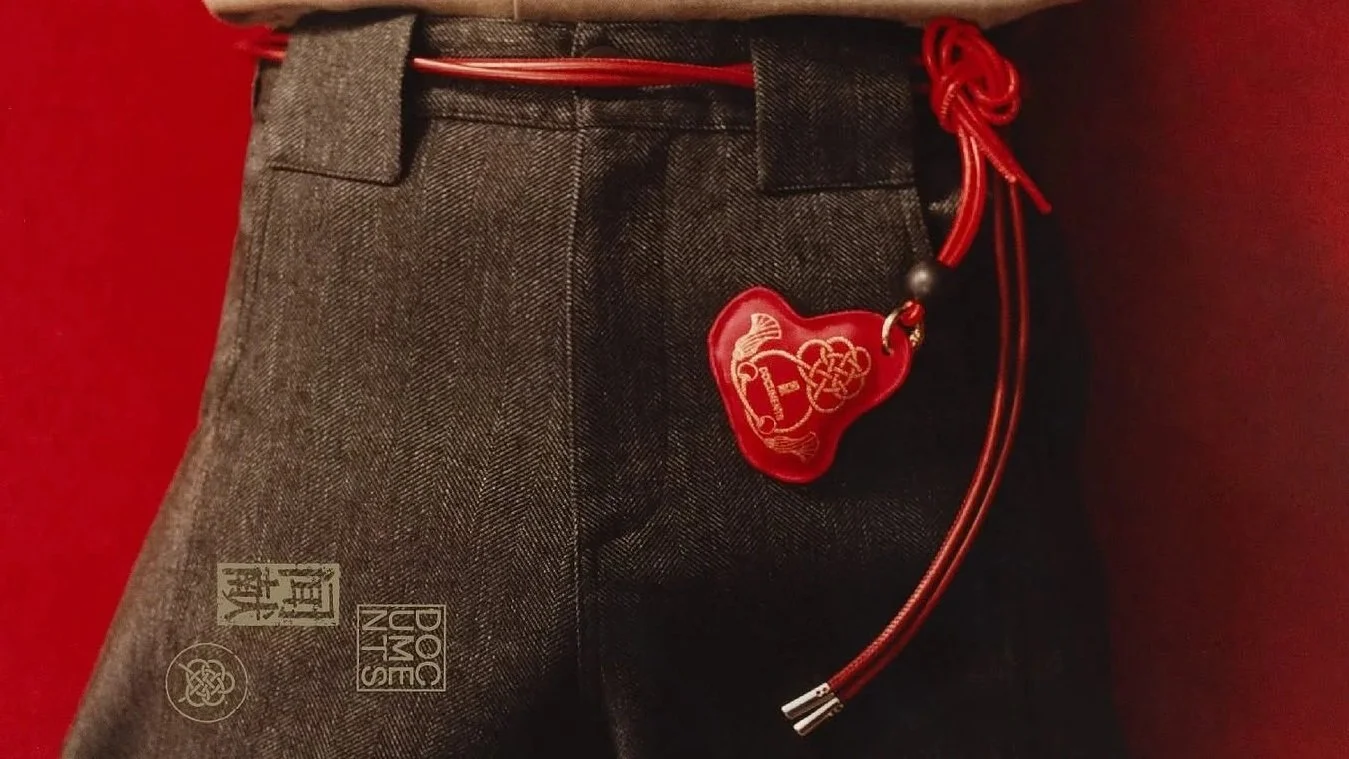
Documents

For Gen Z, identity is cultural as much as personal. Fragrance, therefore, becomes a medium of heritage, storytelling, and collective meaning.

Brands increasingly lean into culture, art, craft, history, symbolism, to create fragrances that resonate emotionally and intellectually:

  • In China, Documents blends Guochao cultural revival with modern perfumery. Products reinterpret traditional lucky charms, rituals, and olfactive philosophies, turning perfume into a living cultural artefact.

  • Miu Miu Miutine becomes a manifesto of “soft rebellion,” merging literature, youth culture, and feminine narratives into an olfactive attitude.

  • Diptyque curates its experiences like exhibitions, as seen in its Shanghai installation Un Air de Paris in October, an educational and immersive scent journey designed for younger audiences.

  • In Korea, Borntostandout pushes cultural hybridization to the extreme: Onggi clay pot maceration, gallery-like boutiques, and ultra-concentrated juices redefine fragrance as contemporary art.

  • Balenciaga’s revival of Le Dix shows how heritage can be reimagined for a new generation seeking roots, authenticity, and symbolism.

Across these initiatives lies a powerful insight:
Fragrance is becoming a cultural language, a place where identity, memory, aesthetics, and heritage meet.


The CIC Take - What This Transformation Means for the Future of Fragrance

Younger generations are rewriting the expectations of fragrance at every level.
They fluidly navigate between self-expression, emotional functionality, cultural meaning, and expect scent to evolve with them.

We are entering a new paradigm where fragrance becomes care and culture, performance and identity, a sensorial ecosystem rather than a single product.

For brands, the opportunity is bold and clear: Don’t just create new scents. Create new meanings, new rituals, and new ways for consumers to connect to themselves, to others, and to the world.

Check our website for our latest Trend Books, Inspiration Tours or Retail Forecasting Books. Don’t hesitate to contact us for a tailored Fragrance Report.