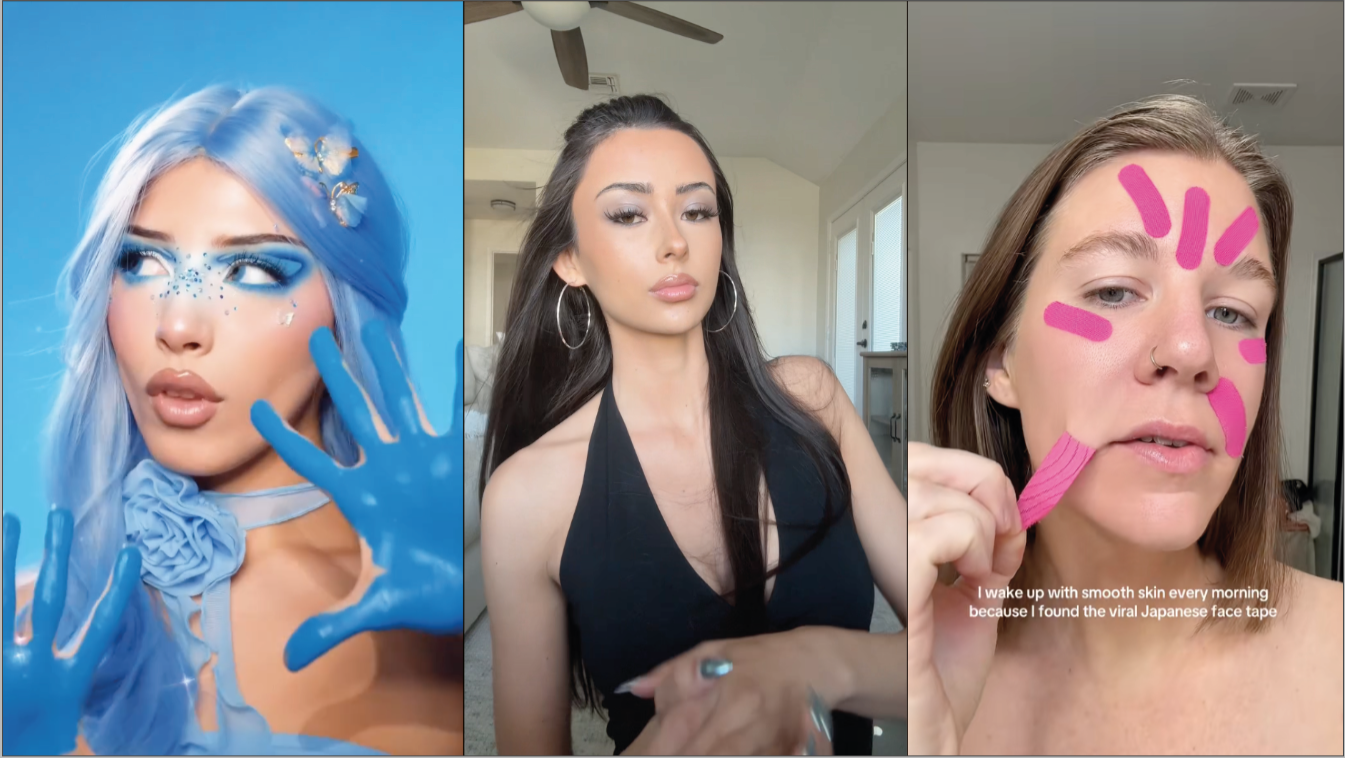
Sources: @nani_s_makeup /@kaylee.marina /@_toribaker
Every month, the Cosmetics IC social media team scours TikTok and Instagram to spotlight the latest beauty trends, viral techniques, and must-have products. So far this year, the beauty community has embraced renewed artistry, cultural references, and a growing demand for non-invasive lifting solutions. Here are the top three social media trends shaping the conversation at the start of the year.
1. MAXIMALISM REPLACES the Clean Girl Era
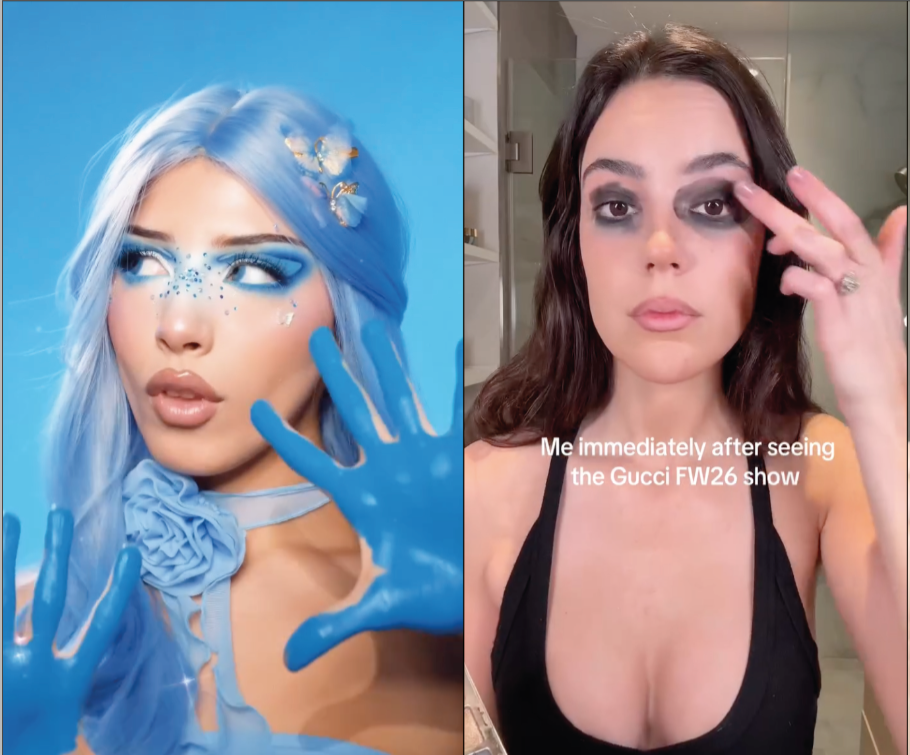
@nani_s_makeup / @ellamendelsohn
The first half of 2026 signaled a move away from clean girl-inspired makeup, which had dominated beauty through polished minimalism and the idea of using as few products as possible. In its place, color, maximalism and visible artistry gained traction, bringing makeup back closer to experimentation and self-expression with #maximalistmakeup up +184.1% YoY in TikTok US views.
This was notably seen through the Palm Color Mix trend on Instagram, where creators apply two contrasting shades onto their palm, blend them together, and use the resulting hue as the starting point for a bold eye look. By encouraging unexpected color associations, the trend turns makeup into a more creative and experiential process.
Gucci Milan Fashion Week 26 also unexpectedly echoed this anti-conformist appetite. The viral dark, smudged smokey eye, intentionally messy and intense, was quickly used on TikTok as a beauty statement associated with freedom, imperfection and a refusal of overly controlled aesthetics.
Beauty has always been tied to identity, but in a cultural context where appearance is increasingly scrutinized, makeup now carries a more political dimension. Against the controlled naturalness of the clean girl movement, these trends reflect a desire to reclaim beauty as a space for personality and visible self-expression, supported by the rise of Creative Makeup looks, up +61.3% YoY in TikTok US views, and Colorful Makeup, up +52.9% QoQ on Instagram US. Color, imperfection and intensity become more than aesthetic choices, they signal a broader resistance to uniformity.
2. From Global Glam to Cultural Specificity
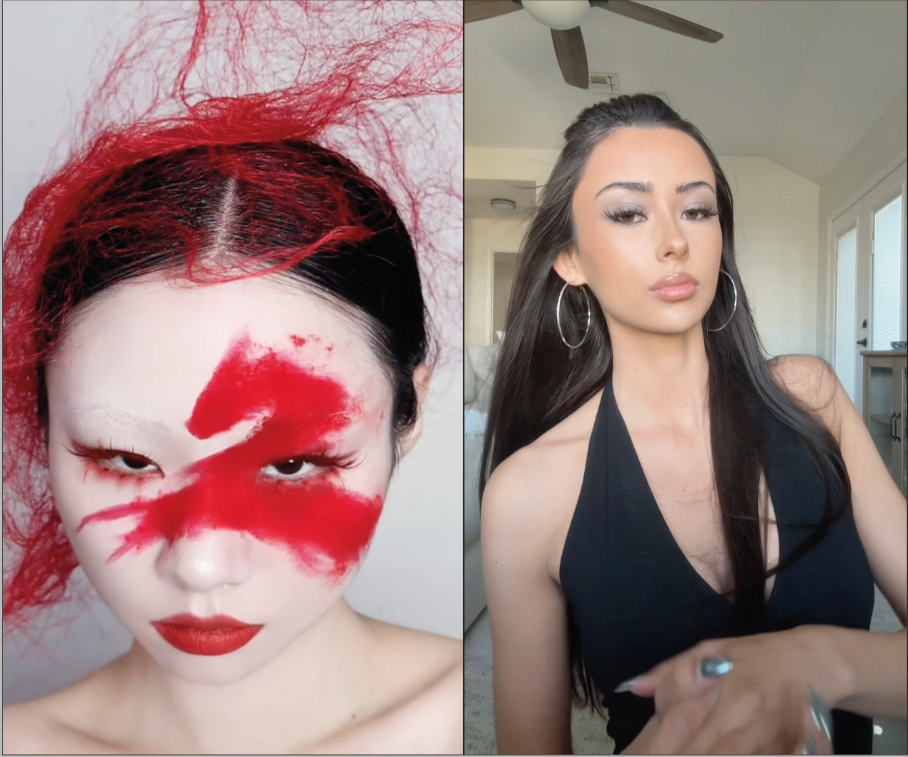
@c.hwa_s___ / @kaylee.marina
This desire to express identity also took a more cultural form, as makeup trends increasingly drew from the beauty codes, symbols and aesthetics of specific communities and countries.
The first example emerged around Chinese New Year with the Red Horse Makeup trend. Inspired by the Year of the Fire Horse, the look blends symbolic references with bold red glam. Creators usually start with a white base before painting a red horse motif across the center of the face, turning makeup into a direct embodiment of the Fire Horse spirit.
This rise of culturally rooted aesthetics was also visible through Bebot Makeup, a trend celebrating Filipina Y2K glam. “Bebot,” a Filipino slang term often associated with a baddie attitude, became a beauty reference through glowing skin, charcoal smokey eyes, ultra-thin brows and overlined glossy lips. While many creators engaging with the trend were not Filipino, its popularity still helped bring a more specific cultural beauty language into mainstream visibility, with #filipinamakeup reaching 7M views on TikTok.
Together, these trends show that self-expression is no longer only about personal creativity, but also about making cultural identity more visible. By drawing from symbolic celebrations and community-rooted aesthetics, makeup becomes a way to affirm heritage, representation and belonging. This also reflects a broader demand for inclusion in a beauty industry still largely centered around American glam and Western standards.
3. Non-Invasive Lifting Solutions
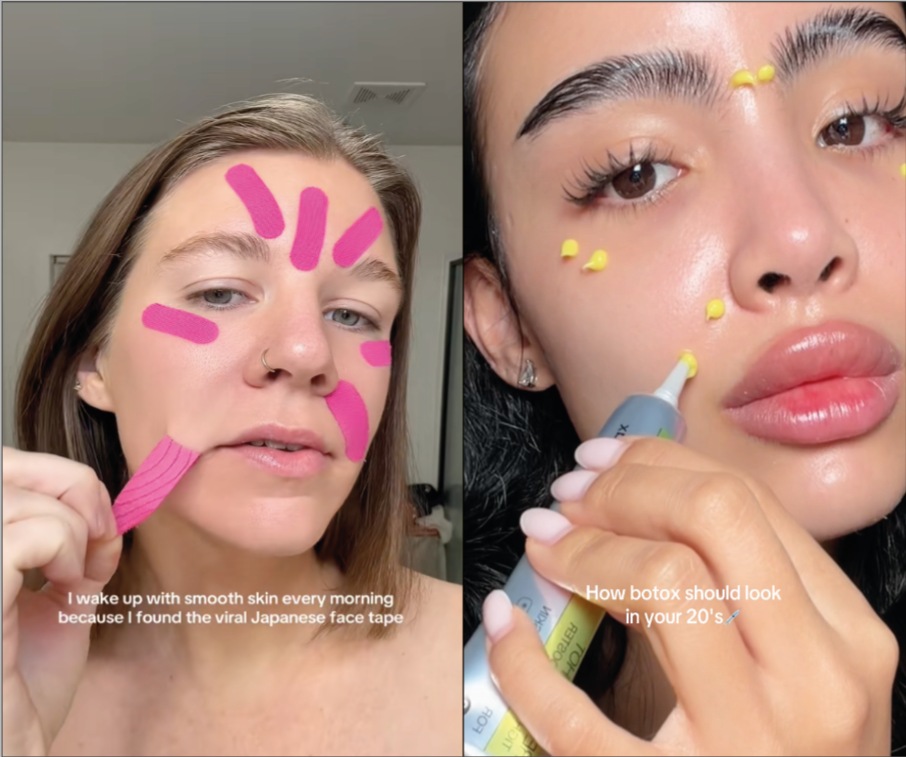
@_toribaker / @melaniseiffert
In skincare, the first quarter of the year was marked by a growing interest in non-invasive lifting solutions, with consumers looking for visible firming effects without turning to clinical procedures.
This was first reflected in the rise of Japanese Face Tape, a technique inspired by Japanese kinesiology and integrated into overnight firming routines. The method consists of applying tape to targeted wrinkle-prone areas to create a subtle lifting effect by morning. Beyond the result itself, the trend reflects the growing appeal of at-home treatments that promise visible improvement without needles or downtime, with #facetapeforwrinkles reaching 1.8M views on TikTok.
From another angle, Retinal also gained traction as a stronger alternative to Retinol, often presented by creators as a way to achieve a smoother, almost botox-like skin appearance. Its momentum is reflected in #retinal, which rose +155.5% MoM in TikTok views, and was especially visible through targeted application methods, with creators recommending small dots of product on expression lines.
Together, these trends point to a more optimized approach to youthful skin. The goal is to achieve prevention, firmness, and facial structure. By combining overnight tools with more potent actives, skincare is increasingly positioned as an at-home alternative to aesthetic procedures, especially among younger consumers adopting anti-aging routines earlier.
THE CIC TAKE
Our social media team brings you an indispensable guide to all things viral, listening in to the trending beauty conversations on TikTok and Instagram. A monthly edit filled with data from our social media data partners, Spate and Tribe Dynamics.
To go further, join our team at Makeup In Paris for the Beauty Talk #1 – The Viral Beauty Economy, a conference dedicated to the viral dynamics shaping beauty in 2026.
For more information on our Social Books, Inspiration Reports, and consultancy services, contact us.
Source: Spate - YoY Tiktok US views from May 4, 2025 to May 3, 2026 vs. May 5, 2024 to May 4, 2025 - QoQ Instagram US views - from Feb 8, 2026 to May 3, 2026 vs. Nov 16, 2025 to Feb 8, 2026 - Tiktok US views - MoM Tiktok US views from Feb 1, 2026 to Mar 1, 2026 vs. Jan 4, 2026 to Feb 1, 2026