
Chanel Couture Fall 2026 - The Impression
Haute Couture Fall/Winter 2026-2027 unfolded at a moment of profound creative transition. With new creative directors now established at several of fashion's most influential houses, the season became less about spectacle for its own sake and more about redefining what couture can represent today.
Across Paris, designers moved away from overt demonstrations of excess to explore couture as a language of ideas. Architecture, fairy tales, contemporary sculpture, cosmic science and ancient civilizations emerged as cultural frameworks through which craftsmanship could be reinterpreted. Instead of relying on historical nostalgia, many collections questioned how heritage can evolve through new materials, new narratives and new emotional territories.
The result was a season where couture became a laboratory for imagination. Fantasy remained central, but it was grounded in technical innovation, intellectual references and renewed attention to the object itself. From silicone replacing silk to dresses activated by particle accelerators, couture increasingly positioned itself as a space where fashion intersects with science, design, art and material research.
Crafting New Narratives for Heritage Houses
Balenciaga - Chanel - Dior Couture Fall 2026
Several of the season's most anticipated collections came from designers continuing to redefine iconic maisons without erasing their identities. Their challenge was not to reinvent house codes entirely, but to establish new narratives capable of extending them.
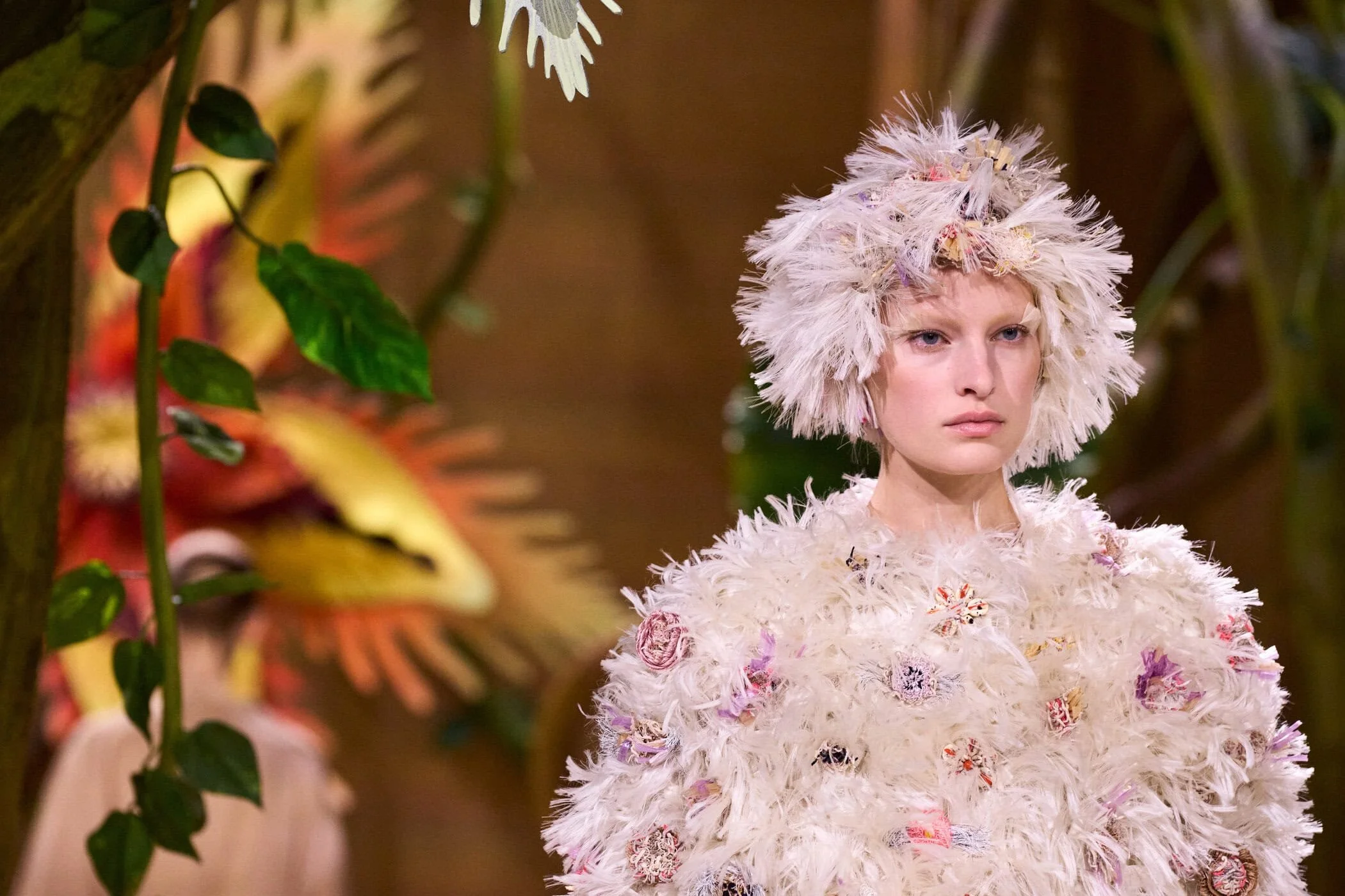
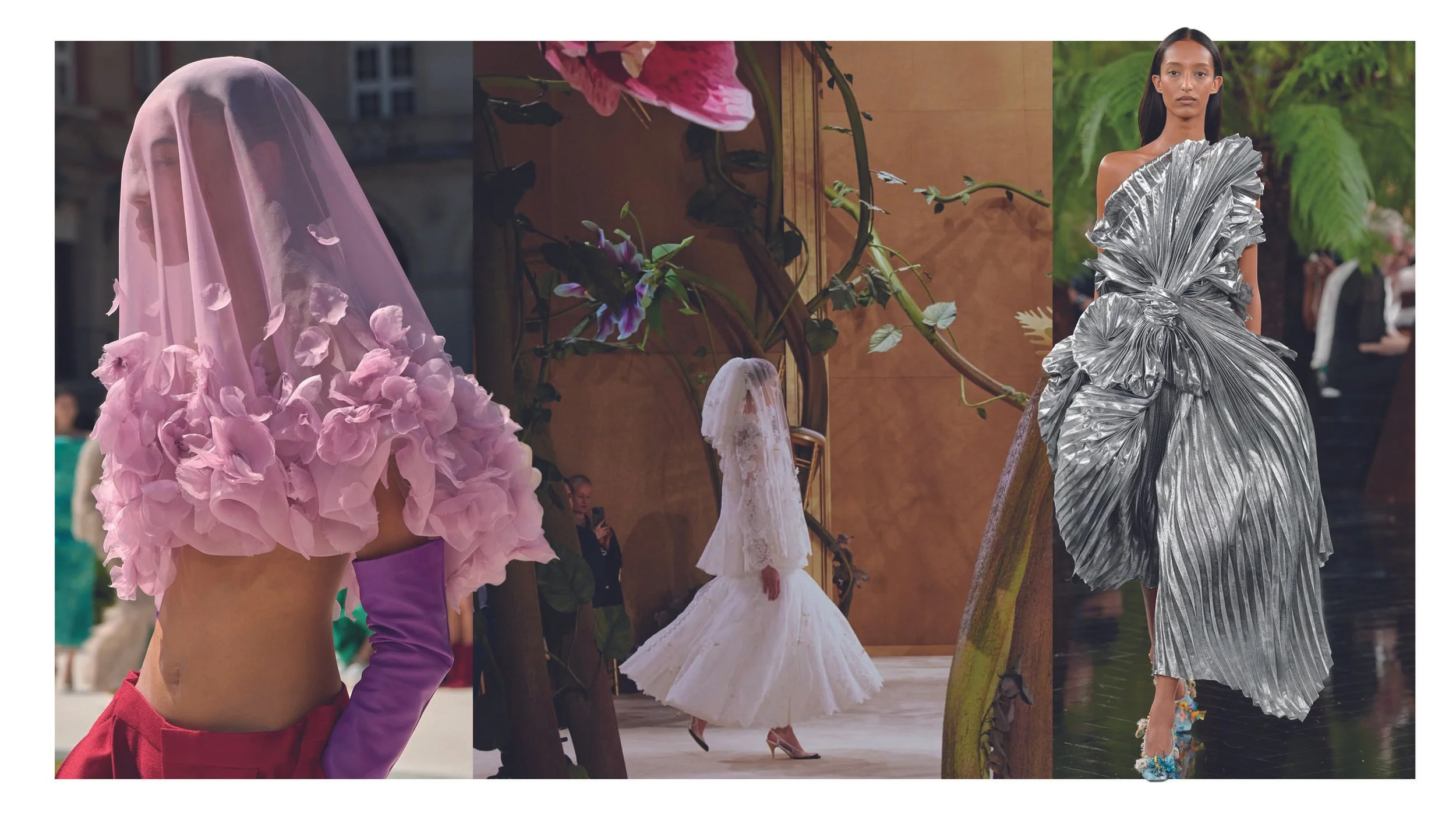
At Balenciaga, Pierpaolo Piccioli approached his couture debut with remarkable restraint. Entering a house built upon Cristóbal Balenciaga's architectural rigor required a careful recalibration of his own visual language. His characteristic emotional use of colour remained present through flashes of saturated pink, while signature feather work evolved into structural elements integrated within sculptural silhouettes. Feathers became both decoration and construction, questioning the boundary between garment and object through collaborations with milliner Philip Treacy. Rather than reproducing his Valentino vocabulary, Piccioli translated softness into Balenciaga's discipline, opening a new dialogue between emotion and architecture.
Dior Couture Fall 2026 - The Impression
At Chanel, Matthieu Blazy continued the narrative initiated with his ready-to-wear debut by transforming the house into a contemporary fairy tale. Inspired by Jack and the Beanstalk, symbols including beans, golden eggs and lucky charms appeared throughout the collection as subtle talismans embedded within couture craftsmanship. Instead of monumental silhouettes, Blazy focused attention on extraordinary embroidery, transparent layers and meticulous textile construction developed by Chanel's Métiers d'Art. Couture was imagined as something capable of accompanying everyday life while preserving its aura of magic. Even beauty echoed this dreamlike atmosphere through feather eyelashes, glittering eyelids and softly coloured hair, extending the collection's story beyond clothing.
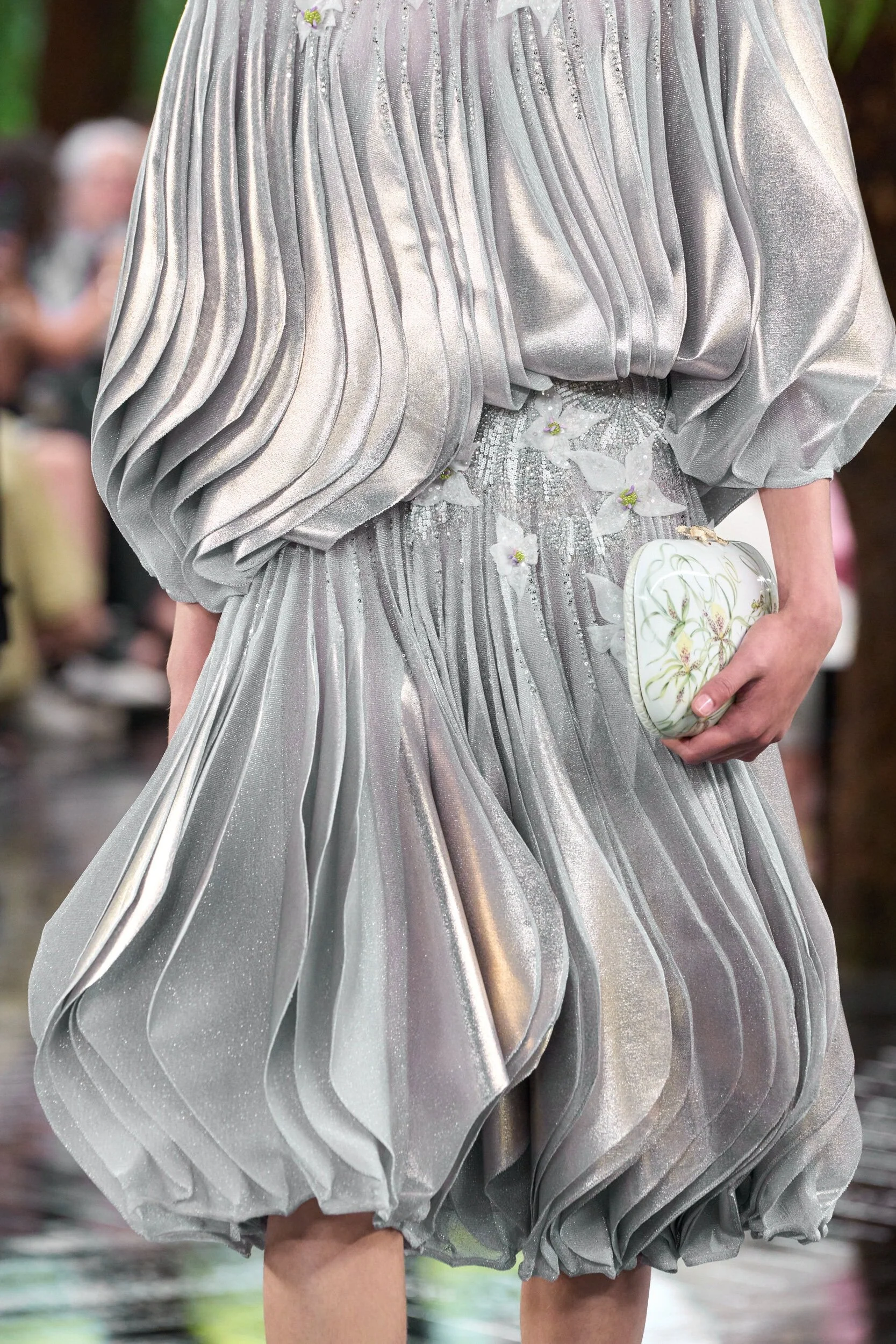
Jonathan Anderson pursued a similarly intellectual approach at Dior, where sculpture became the collection's central language. Inspired by the work of American artist Lynda Benglis, Anderson explored pleating as a living structure that continuously reshaped garments through movement and light. Dresses appeared almost carved from fabric, while monumental fan constructions referenced Benglis' Peacock series, introducing theatrical gestures without overwhelming the silhouette. Floral references inherited from Dior's archives remained present, yet they were filtered through Anderson's fascination with material experimentation and artistic process. The accompanying beauty direction reinforced this sculptural sensibility with shimmering green eye makeup that echoed the collection's iridescent colour palette.
These collections suggest that couture's future lies less in preserving heritage unchanged than in continuously rewriting its mythology through contemporary cultural references.
Material Intelligence is Couture's New Frontier
Schiaparelli - Iris Van Herpen Couture Fall 2026 - The Impression
Beyond storytelling, Fall/Winter 2026-2027 demonstrated a growing fascination with material innovation as a creative discipline in itself.
Schiaparelli Couture Fall 2026 - The Impression
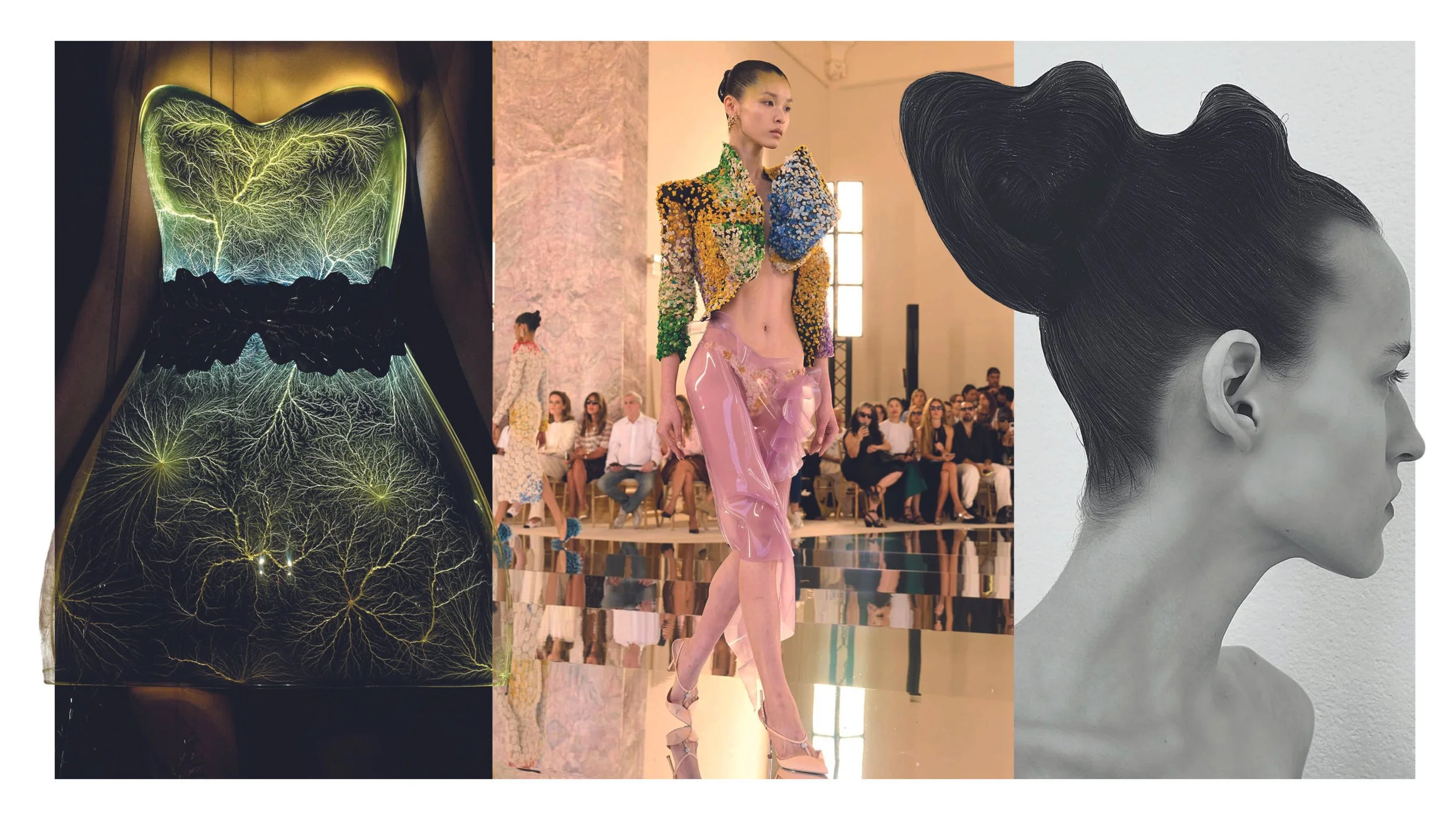
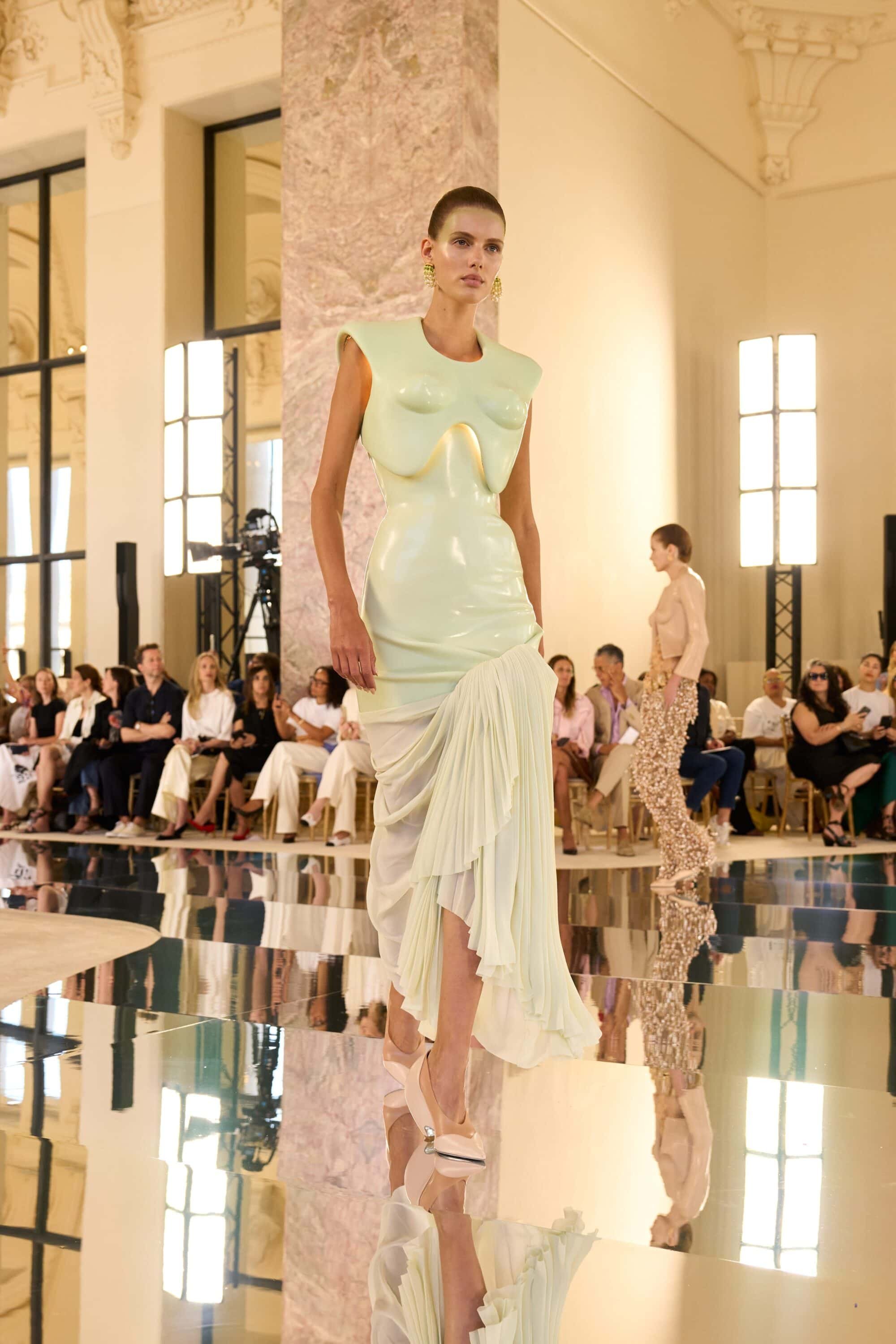
Daniel Roseberry's latest collection for Schiaparelli emerged from his encounter with Antoni Gaudí's architecture in Barcelona. Organic structures replaced conventional couture construction as silicone, latex and hand-crafted surfaces challenged expectations surrounding luxury materials. Marine ecosystems provided a recurring vocabulary through shell jewellery, octopus-inspired accessories, fish-scale textures and botanical embroidery. The garments felt simultaneously architectural and biological, suggesting that couture can evolve by observing the structural intelligence already present in nature. Guido Palau's sculptural wet-look hairstyles extended this marine landscape across the body.
Iris van Herpen, pushed material experimentation further, with the collection Sonic Starquakes, expanding couture into the realm of astrophysics and quantum imagination. Inspired by stellar vibrations, plasma dynamics and branching cosmic structures, the collection explored the invisible forces connecting the human body to the universe. One dress was electrically charged inside a particle accelerator before being cryogenically preserved, allowing lightning to autonomously carve microscopic pathways across its surface.
Here, craftsmanship became a collaboration between designer and natural phenomenon, positioning couture as an interface between scientific research, material behaviour and artistic creation. The garments proposed a vision of fashion where matter itself becomes an active creative partner.
Couture increasingly serves as a testing ground for emerging technologies and unconventional materials. Innovation is no longer limited to fabrication techniques; it extends into scientific collaboration and entirely new conceptions of what a garment can become.
Ancient Futures
While some designers looked towards advanced technologies, others found inspiration in humanity's oldest visual languages.
Standing Ground Couture Fall 2026 - The Impression
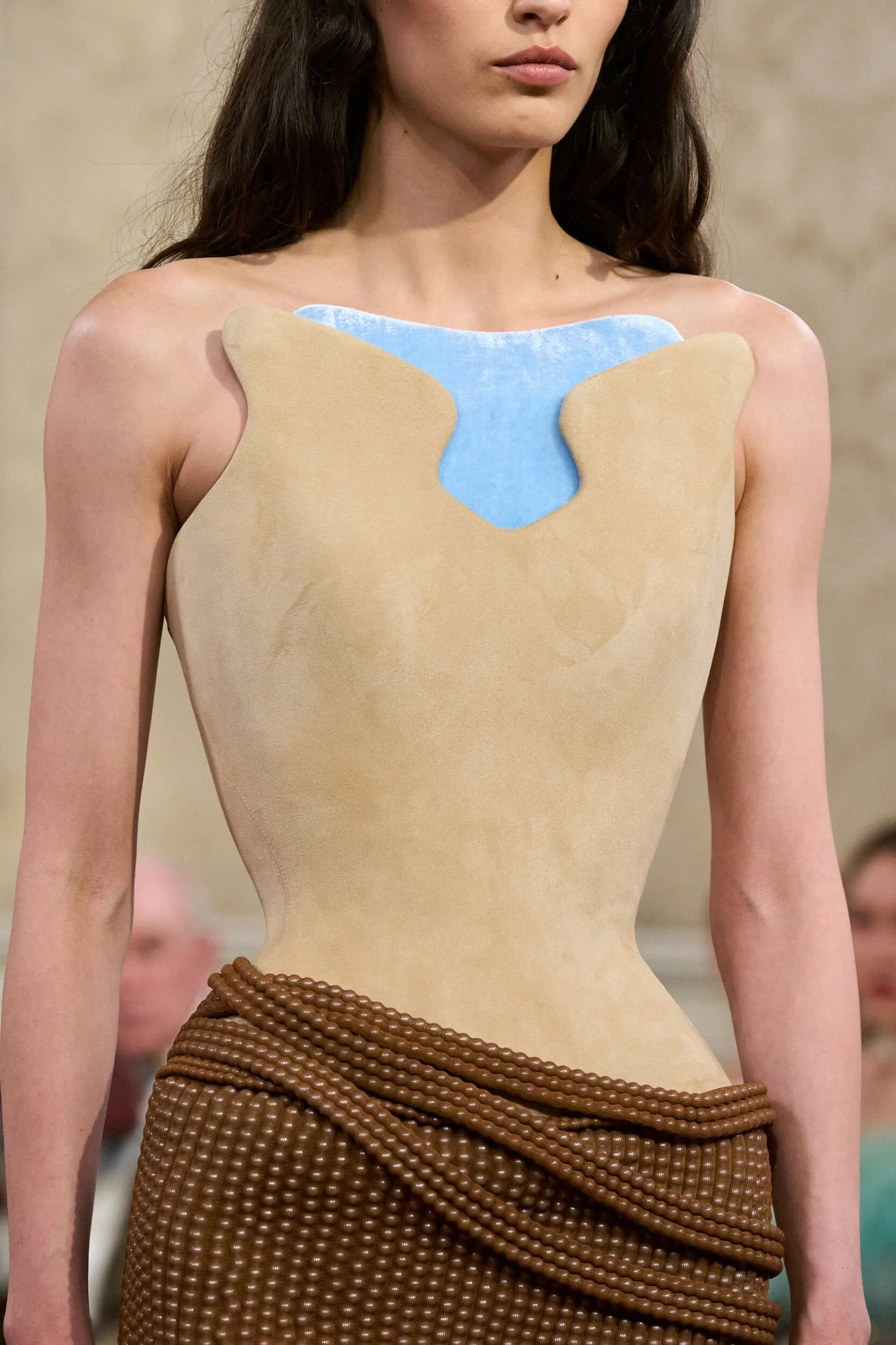
Irish designer Michael Stewart made his Haute Couture debut with Standing Ground, presenting a collection built upon purity of line and exceptional construction. Ancient drapery, archaeological references and naturally occurring forms informed silhouettes that felt both prehistoric and futuristic. Stewart deliberately avoided explicit storytelling, allowing ambiguity to remain central to the collection's appeal. His restrained aesthetic recalls the architectural precision of Azzedine Alaïa while establishing its own quiet identity through sculptural tailoring and custom-order craftsmanship. In an industry increasingly driven by visibility and digital acceleration, Standing Ground proposes an alternative model where exclusivity grows through intimacy, patience and enduring design.
This dialogue between ancient civilizations and speculative futures appeared across the season, suggesting a broader cultural desire to reconnect with timeless archetypes while imagining new worlds. Designers no longer position the past and the future as opposites, instead, they reveal how both can coexist within the same silhouette.
The Cosmetics IC Take
Haute Couture Fall/Winter 2026-2027 signals a meaningful evolution in the role of couture itself. Beyond showcasing exceptional savoir-faire, collections increasingly function as cultural research platforms where heritage, material innovation, scientific exploration and artistic disciplines intersect.
Three movements stand out. First, heritage houses are rewriting their identities through fresh narrative systems instead of relying solely on historical codes. Second, material experimentation has become a primary creative territory, with couture embracing architecture, biology, physics and advanced fabrication. Finally, mythology is returning through contemporary lenses, whether rooted in fairy tales, ancient civilizations or cosmic phenomena.
Together, these shifts point towards a couture landscape where imagination gains credibility through knowledge, craftsmanship expands through interdisciplinary collaboration, and luxury finds new relevance by transforming cultural ideas into extraordinary objects.