
Credits: Chris Abatzis via Deathtostock
Redefining Growth, Purpose, and Performance
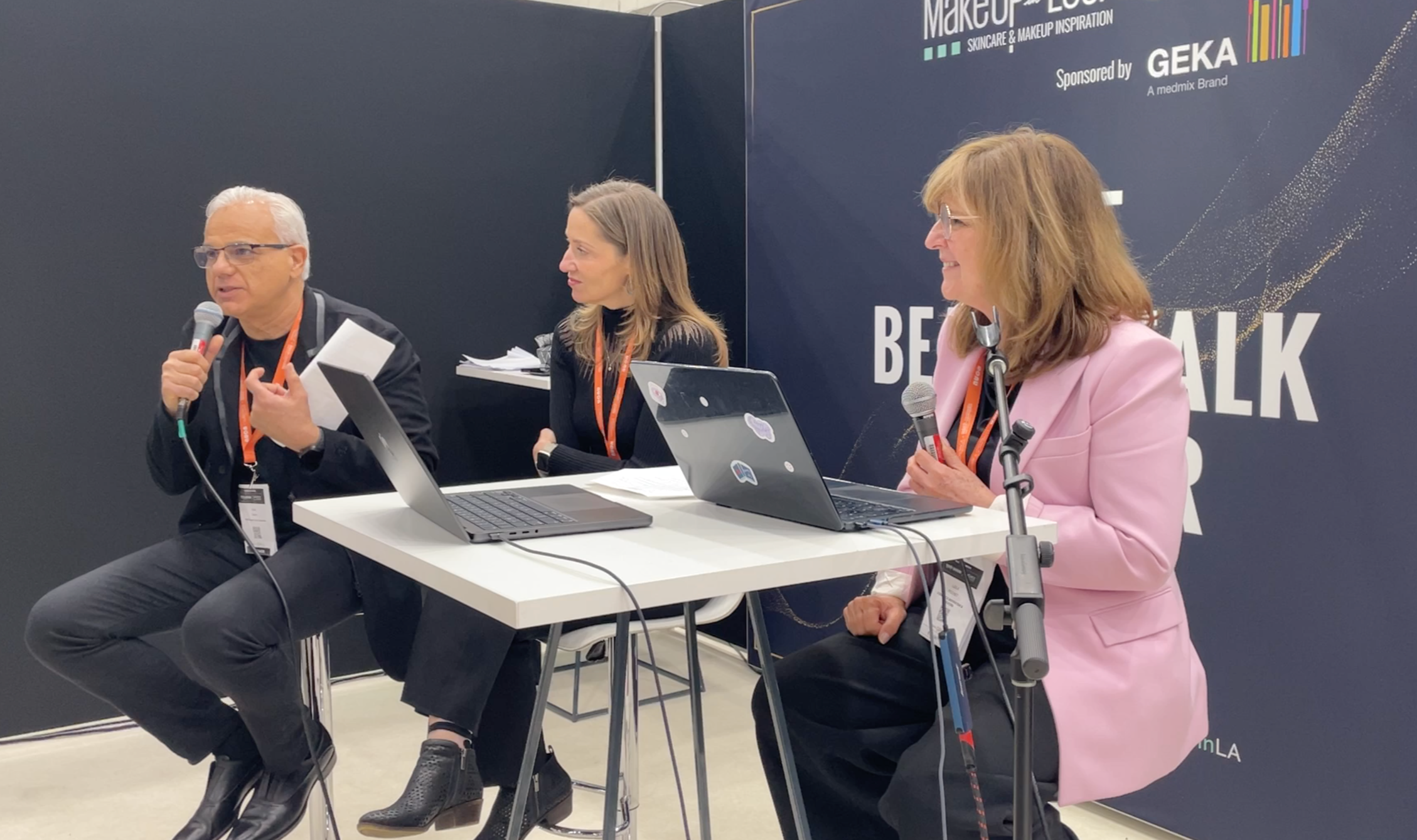
At MakeUp in Los Angeles, Cosmetics Inspiration & Creation hosted a new edition of its Beauty Talk series, bringing together industry leaders to explore the next phase of responsible beauty.
Moderated by Leila Rochet, founder of Cosmetics Inspiration & Creation, the session “Clean Beauty 2030: Redefining Growth and Performance” featured Victor Casale, co-founder of MOB Beauty and chairman of Pact Collective, and Iva Teixeira, founder of The Good Face Project.
The conversation revealed a decisive shift: clean beauty is no longer the destination, it is the starting point. As the industry moves toward 2030, brands must move beyond ingredient exclusion to embrace a broader framework combining science, transparency, sustainability and performance.
From Clean Claims to System Thinking
To frame the discussion, Leila Rochet highlighted how the clean beauty movement has matured dramatically over the past decade. What once functioned as a niche positioning has now become a mainstream expectation.
“Clean beauty is maturing beyond niche to become a mainstream category.” - Leila Rochet
But the future of responsible beauty requires a more holistic perspective. Rochet outlined four interconnected territoriesshaping the evolution of the category:
Supreme Health - safe, science-driven formulations supporting long-term wellbeing
Planet Revival - climate-aware ingredients and sustainable product design
Ethical Ecosystems - fair sourcing and biodiversity protection
Hedonistic Nature - reconnecting beauty with nature, rituals and emotional wellbeing
Together, these dimensions signal a shift from clean formulations to systemic responsibility.
Clean Is the Baseline
According to Iva Teixeira, the clean beauty movement has reached a stage of structural standardization. Retailer “no lists” and ingredient restrictions have largely stabilized, meaning the concept of clean is no longer a differentiator.
“Clean beauty has basically reached a framework of understanding… it has become the platform on top of which new dimensions will emerge.” - Iva Teixeira
The next competitive frontier will therefore revolve around performance, advanced science, and new ingredient ecosystems, including biotechnology and AI-supported formulation.
Technology is already transforming product development by allowing chemists to evaluate regulatory compliance during the formulation stage, dramatically accelerating innovation.
Regulation Is Accelerating Change
Regulatory evolution is another major force shaping the future of clean beauty. Victor Casale pointed out that global cosmetic innovation is increasingly guided by European regulatory standards, which often set the pace for ingredient reformulation and environmental progress.
“Clean used to be about a ‘no list’. Today it includes packaging, sustainability and ethics, and regulation is forcing that evolution.” - Victor Casale
At the same time, regulatory frameworks are becoming more fragmented. In the United States alone, multiple states are developing their own cosmetic laws, creating new complexity for brands operating globally.
Packaging: Beauty’s Next Transformation
Beyond ingredients, packaging emerged as one of the most urgent challenges for the industry. Casale shared how MOB Beauty was designed around refillable and compostable packaging systems, aiming to rethink the lifecycle of beauty products.
“We’ve spent 50 years teaching consumers that heavier, shinier packaging means luxury. But the package lasts hundreds of years while the product lasts three months.” - Victor Casale
Scaling these solutions, however, requires systemic change across the entire supply chain, from packaging manufacturers to brand design strategies.
Commitment as the New Competitive Advantage
While technologies and regulations are accelerating change, Casale emphasized that transformation ultimately depends on industry commitment.
“My formula for success is commitment. If you commit to doing the right thing, you will overcome many of these obstacles.” - Victor Casale
Brands that embed sustainability and transparency into their culture - not just their claims - will be best positioned for the next decade.
The Strategic Outlook for 2030
Looking ahead, three strategic priorities are emerging for beauty innovators.
Ingredient Reinvention
Replacing petroleum-derived molecules is becoming a central priority for the industry. Biotechnology and fermentation technologies are enabling a new generation of ingredients that combine improved sustainability with high performance.
As Iva Teixeira emphasized, this transition is already underway across the industry:
“Number one is replacing petroleum-derived molecules in their formulas.” - Iva Teixeira
Major beauty companies are already investing in biotech platforms capable of producing next-generation actives designed to reduce reliance on petrochemical inputs.
Packaging Transformation
Packaging is the next major frontier. Developing refillable, compostable and circular systems will be critical as brands rethink the lifecycle of beauty products and reduce long-term environmental impact.
Radical Transparency
Transparency is evolving beyond ingredient disclosure. Brands must communicate not only what is inside their products, but also how those products are formulated, manufactured, and sourced.
As Rochet concluded, the future of beauty will be defined by brands capable of moving beyond clean toward measurable impact and credibility.
“Transparency must become your superpower. It’s not about saying things anymore, it’s about proving them.” - Leila Rochet