
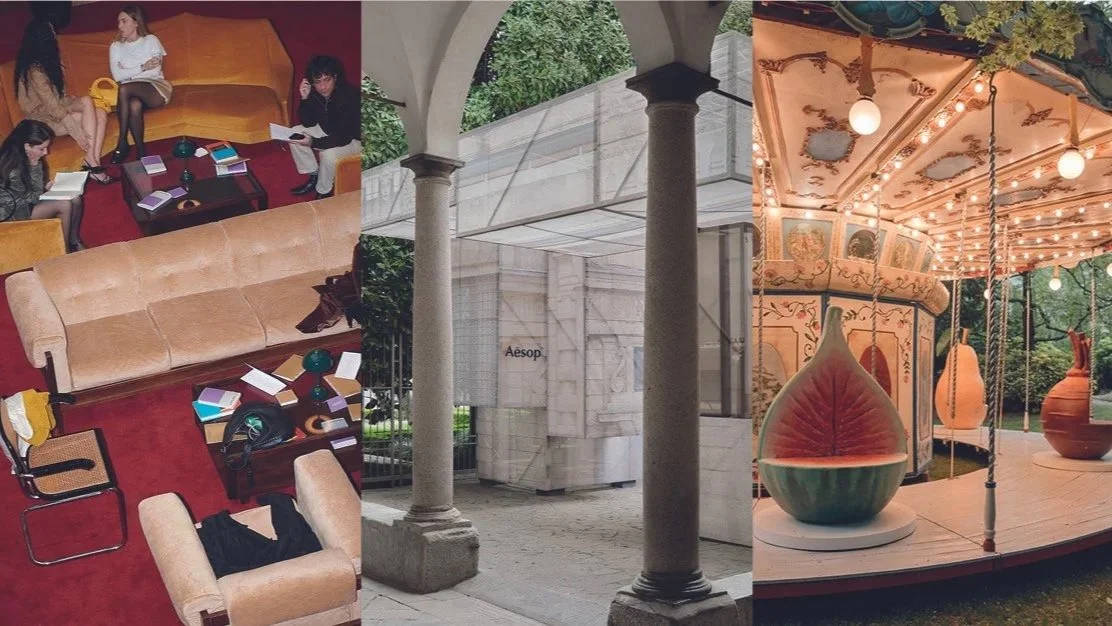
Credits: Miu Miu / Aesop / Arket
Milan, April 20-26, 2026 - As Milan Design Week unfolds alongside Salone del Mobile, a quieter but more deliberate shift takes shape across the city. Beyond spectacle, a growing sense of intentionality and slowness emerges, challenging the fast-paced, image-driven nature of contemporary design. What becomes evident is not that brands are newly building worlds, they always have, but that these worlds are now expressed with greater clarity, coherence, and depth.
From fashion houses to cultural institutions, the focus moves away from isolated objects toward immersive systems of meaning, designed to be experienced over time rather than instantly consumed. This year, Salone del Mobile reinforces this evolution with initiatives such as Salone Raritas, opening the fair to collectible, limited-edition design, alongside a renewed contract focus led by OMA. Together, these signals point toward a design landscape where rarity, narrative, and intentional experience take precedence over pure visibility.
Here are our 6 key initiatives of this design week :
AESOP - ARCHITECTURES OF LIGHT
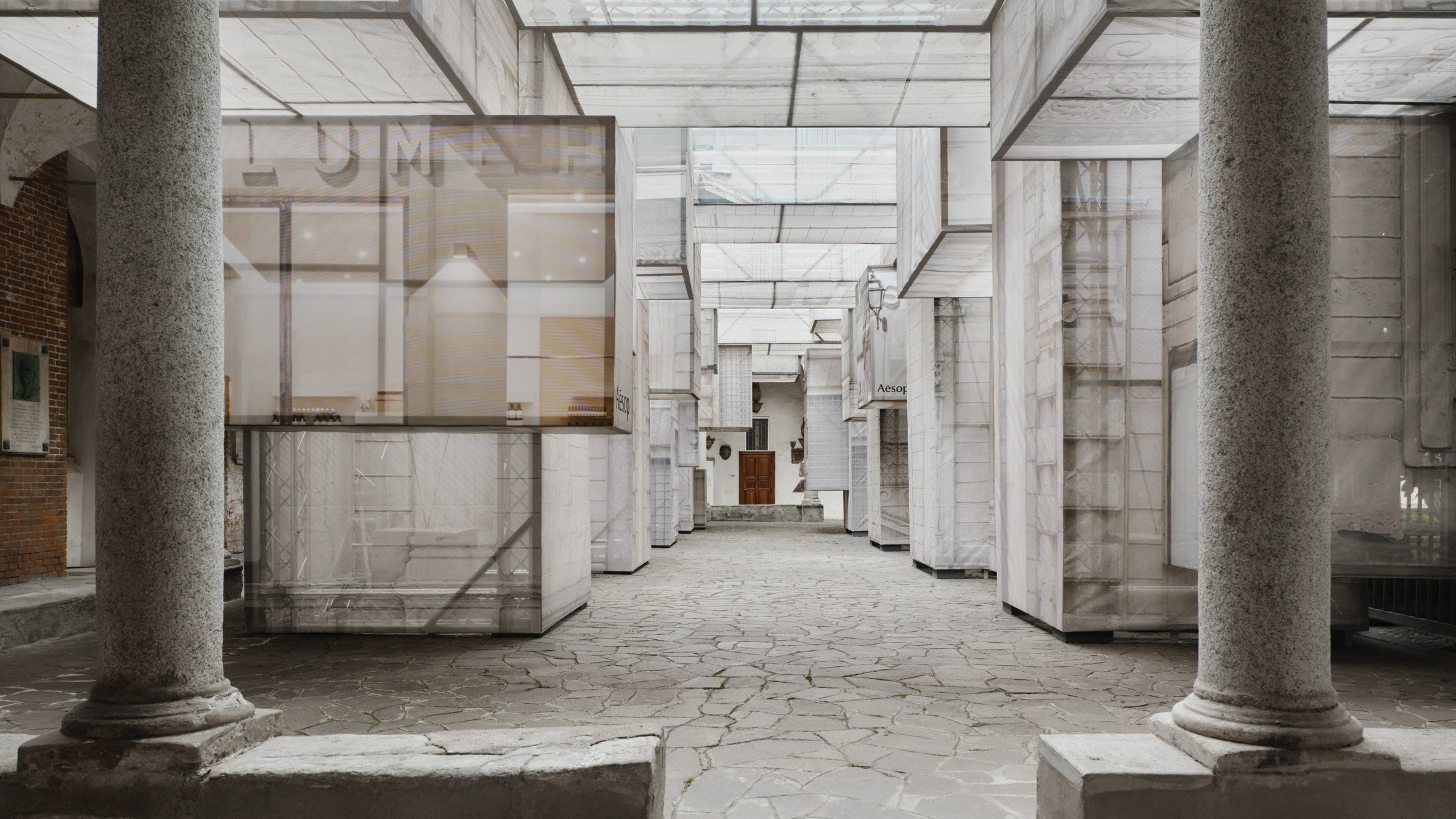
Credits: Aesop
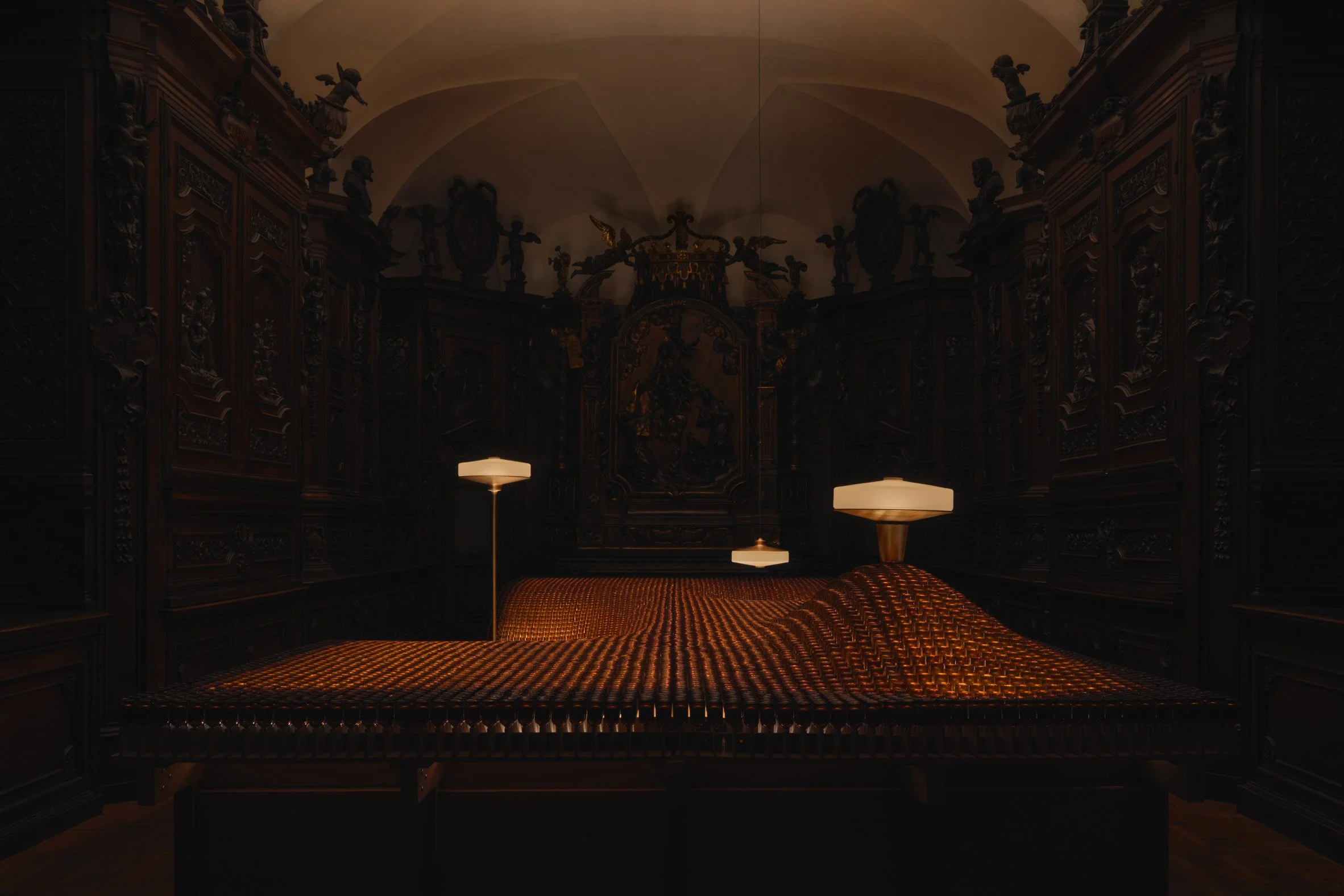
At the Chiesa del Carmine in Brera, Aesop presents The Factory of Light, a scenographic installation marking the launch of its first lighting collection, Aposē. Set against scaffolding printed with Milanese architectural façades, the space unfolds as an imagined city, structured around four immersive rooms dedicated to light.
For Aesop, light is not a metaphor but a core philosophy: “we illuminate every skin.” This conceptual grounding translates into three sculptural lamps (table, pendant, floor), all derived from the distorted geometry of the brand’s iconic hand balm tube. The project extends Aesop’s design language beyond skincare into the domestic sphere, transforming a functional object into a carrier of brand ethos. Here, product becomes environment, and environment becomes narrative.
JIL SANDER - THE VALUE OF STILLNESS
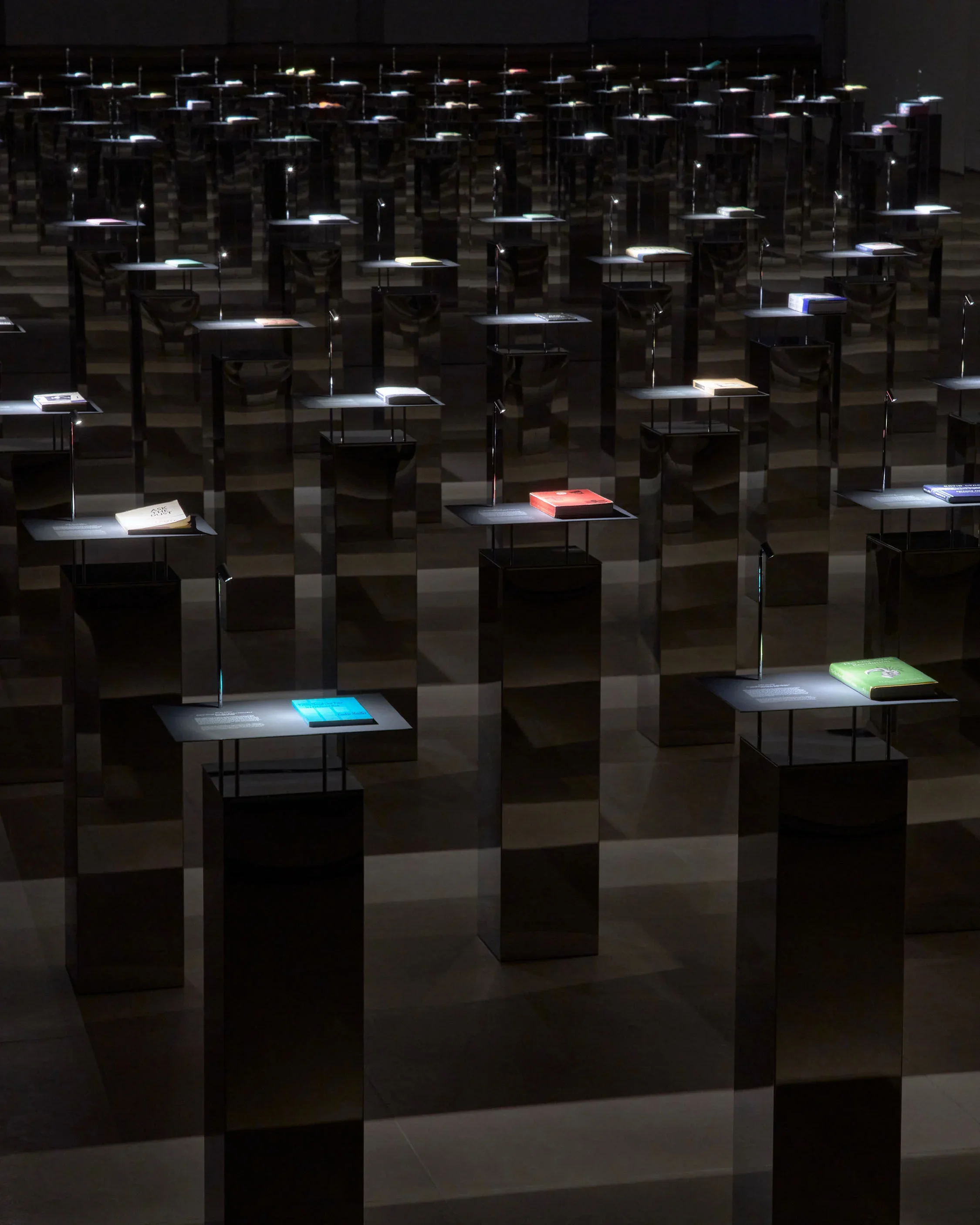
Credits: Jil Sander
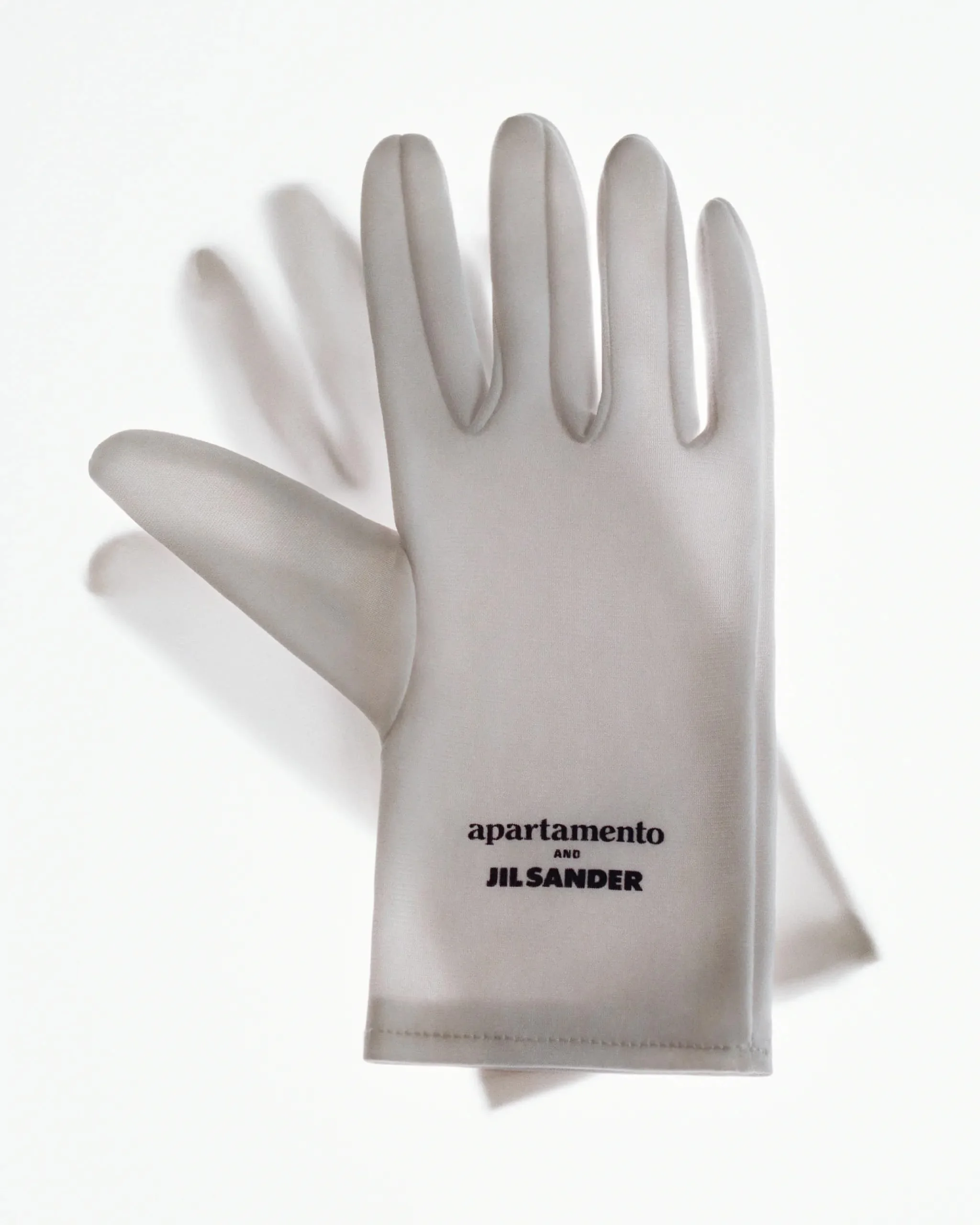
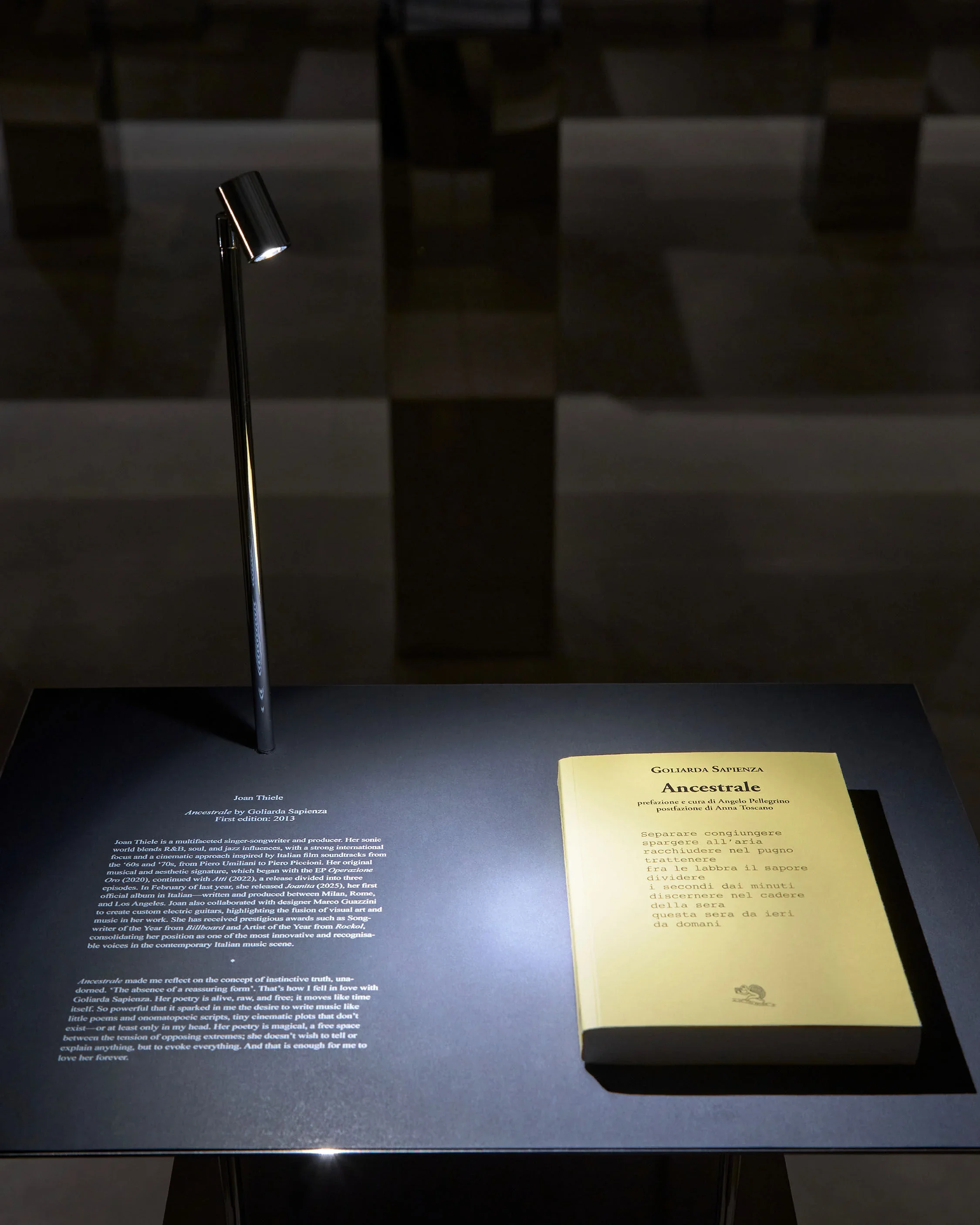
In contrast to the hyperactivity of design week, Jil Sander proposes a radical slowdown. Reference Library, developed with Apartamento, transforms the brand’s Milan headquarters into a contemplative space where sixty books, each selected by creatives across disciplines, are displayed individually on chrome plinths under isolated light.
There are no products, no launches, no immediate outcomes, only sources. The installation reframes attention as a scarce resource, inviting visitors to engage in a slower, more deliberate form of discovery. Positioned as a human alternative to algorithmic consumption, the library becomes both archive and statement: a defense of depth, memory, and intellectual intimacy in an era of fragmentation.
EAMES - REFRAMING THE HOUSE
Credits: Triennale di Milano
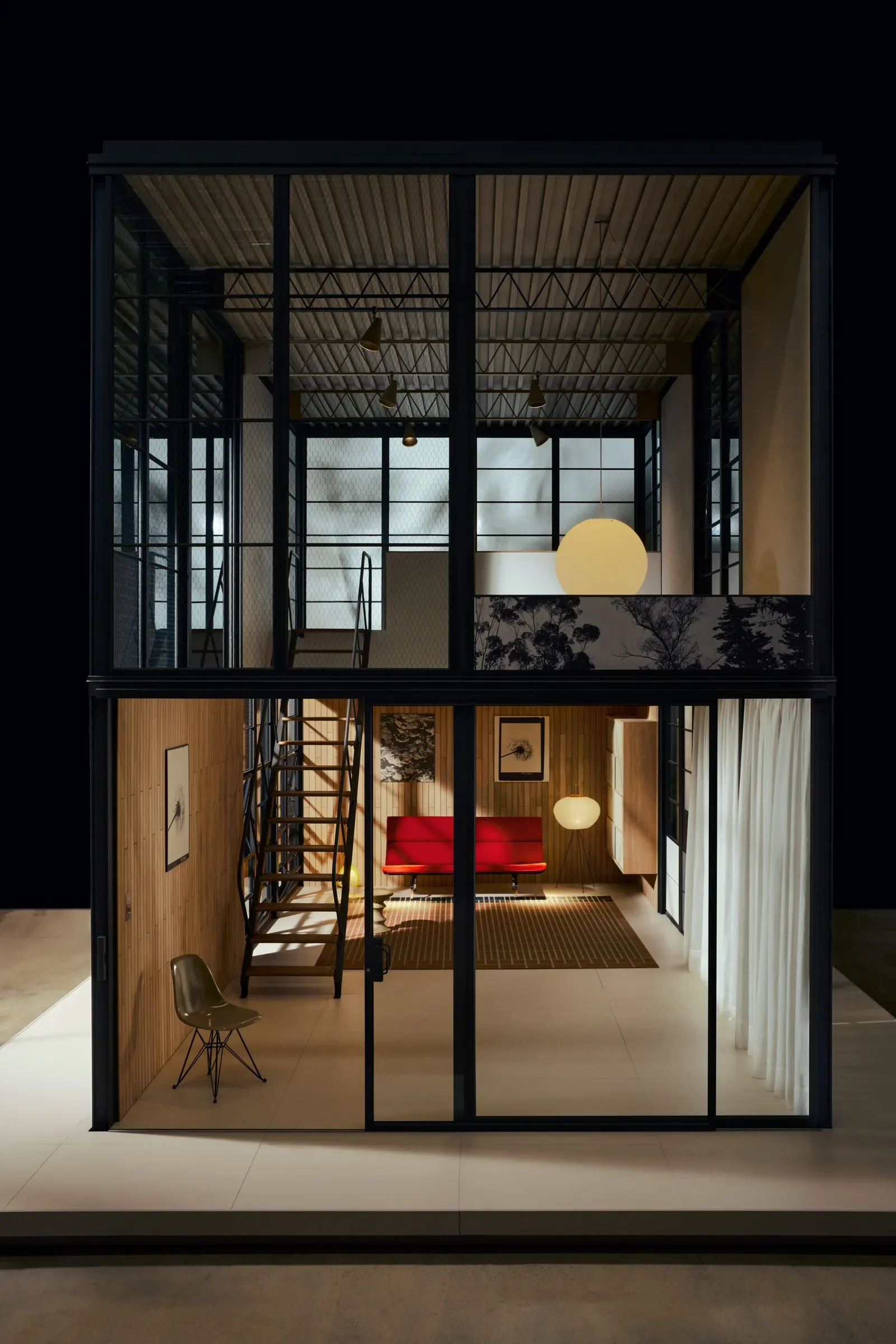
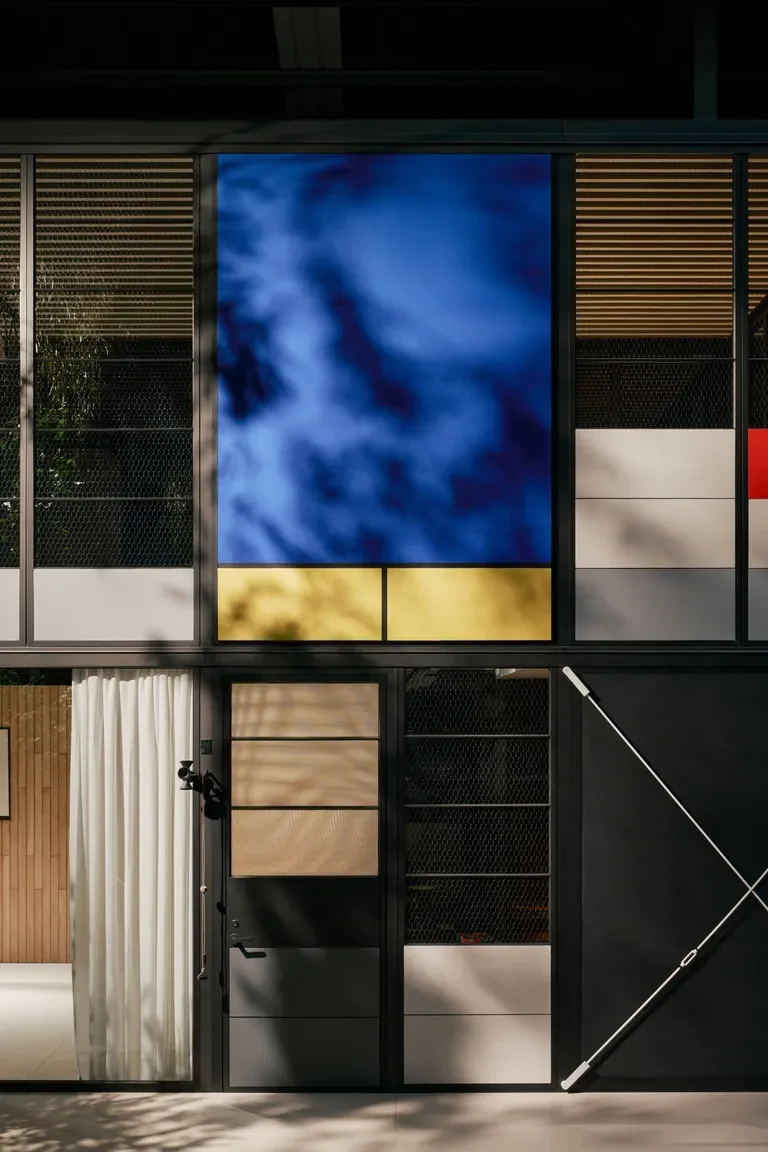
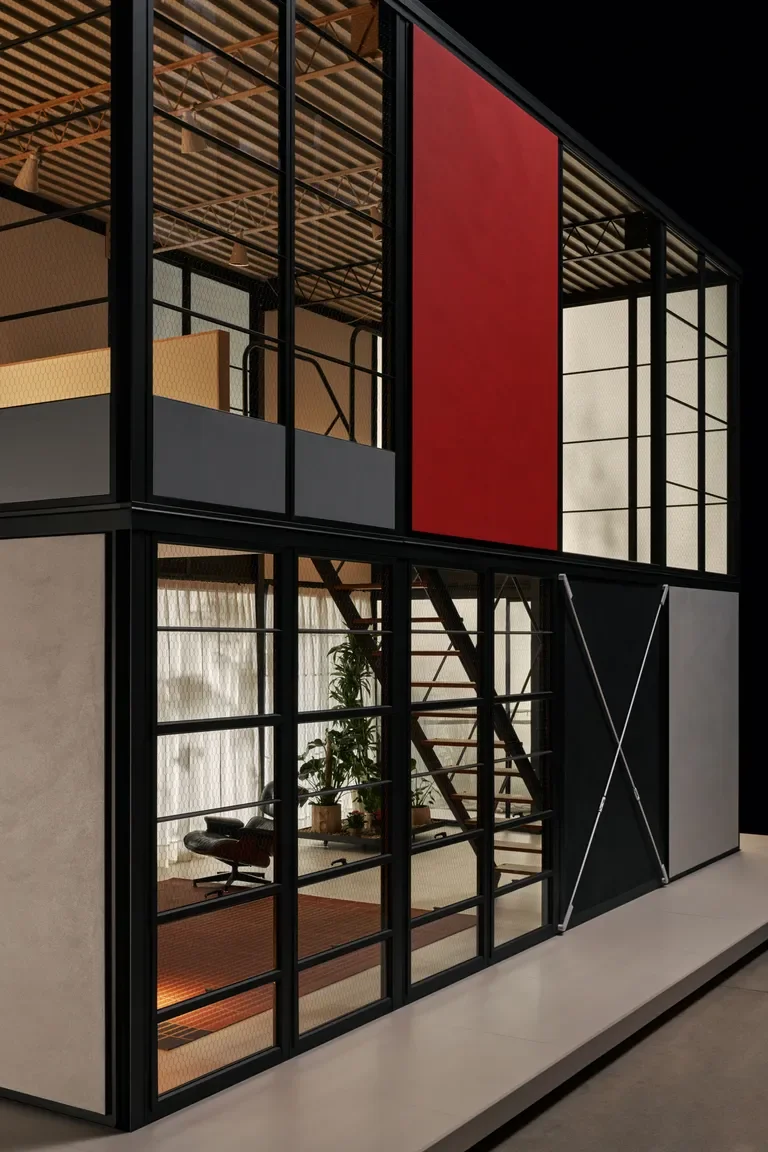
At the Triennale di Milano, The Eames Houses exhibition introduces the Eames Pavilion System, a modular, prefab reinterpretation of the iconic Eames House. Developed with Kettal, the project translates the original vision into a flexible kit-of-parts architecture, adaptable to contemporary constraints.
Composed of aluminium frames and interchangeable panels, the system responds to today’s realities: mobility, climate variation, regulatory complexity, while preserving the conceptual integrity of the Eames legacy. Rather than replicating a singular object, it extends a way of thinking: one rooted in adaptability, clarity, and quiet innovation.
BOTTEGA VENETA - MATERIAL AS LIGHT
Credits: Bottega Veneta
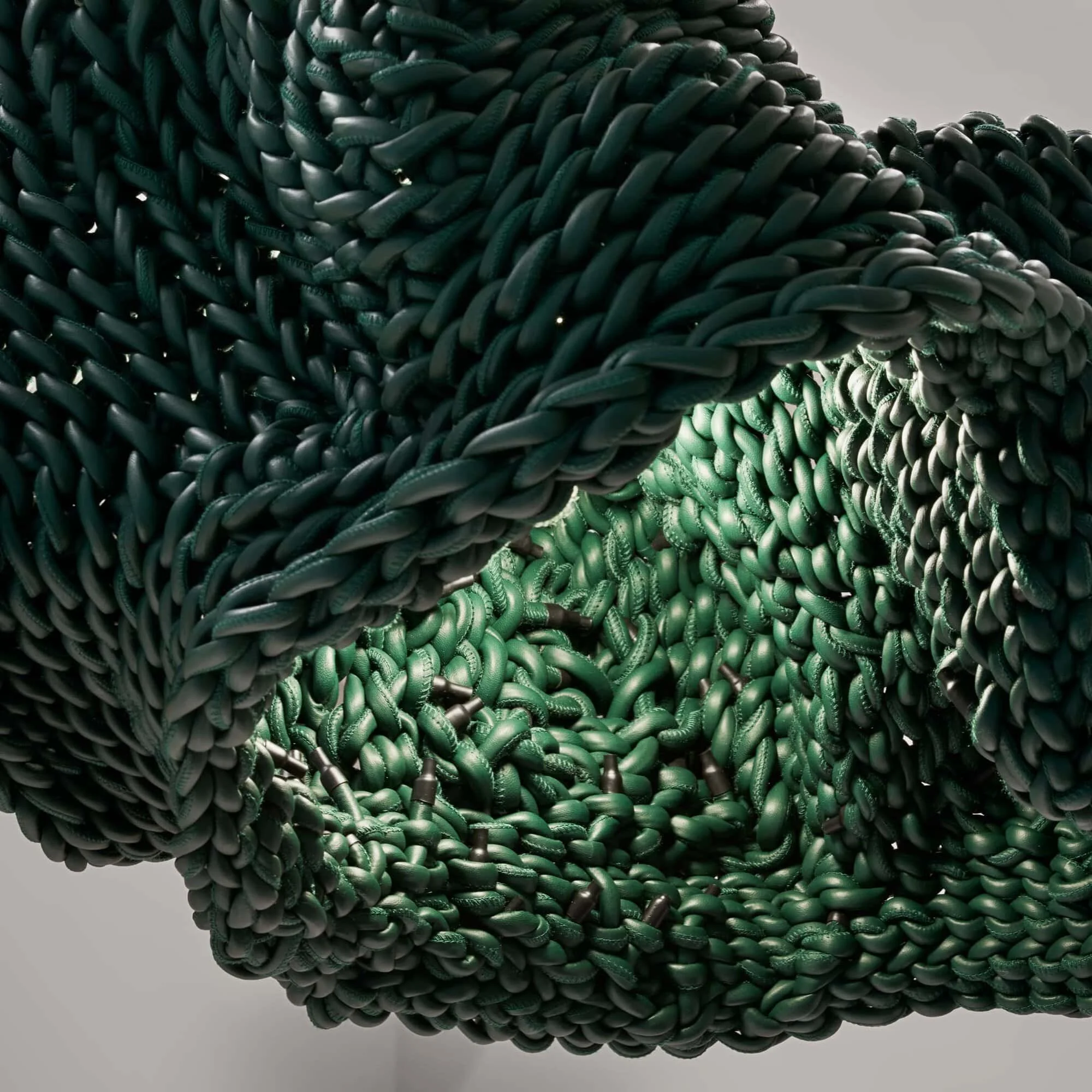
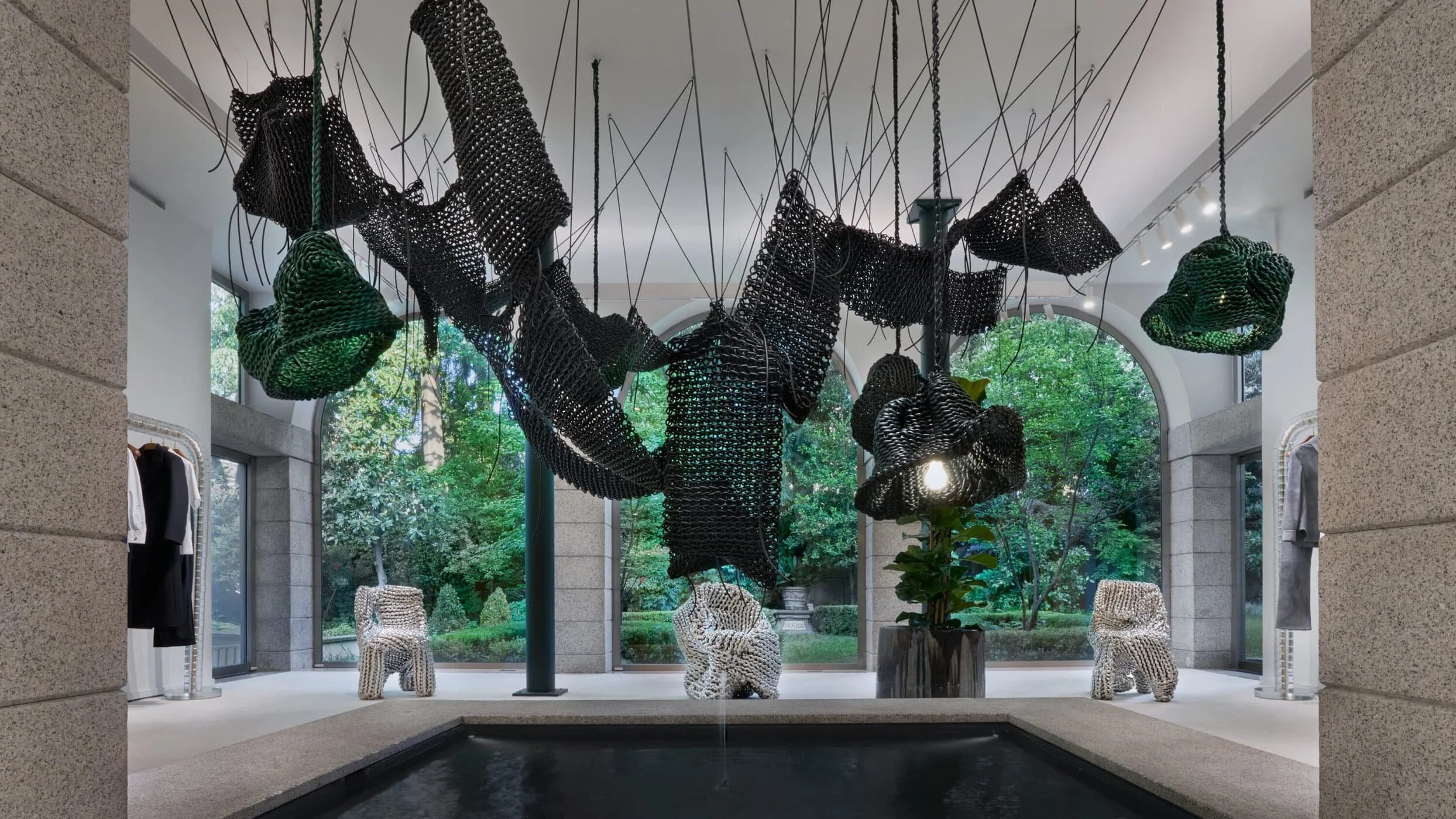
With Lightful, Bottega Veneta continues its exploration of craft as a contemporary language. In collaboration with artist Kwangho Lee, the Via Sant’Andrea store becomes a study in material transformation, where woven leather structures interact with light to create shifting, atmospheric compositions.
Rendered in deep blacks and greens selected by Louise Trotter, the pieces oscillate between structure and softness, utility and abstraction. Light is not applied but embedded, revealing texture through shadow and movement. Beyond the installation itself, the project reflects a longer-term dialogue between brand and artist, an increasingly rare continuity that privileges depth over visibility.
ARKET x LAILA GOHAR - STAGING PLAY
Credits: Arket
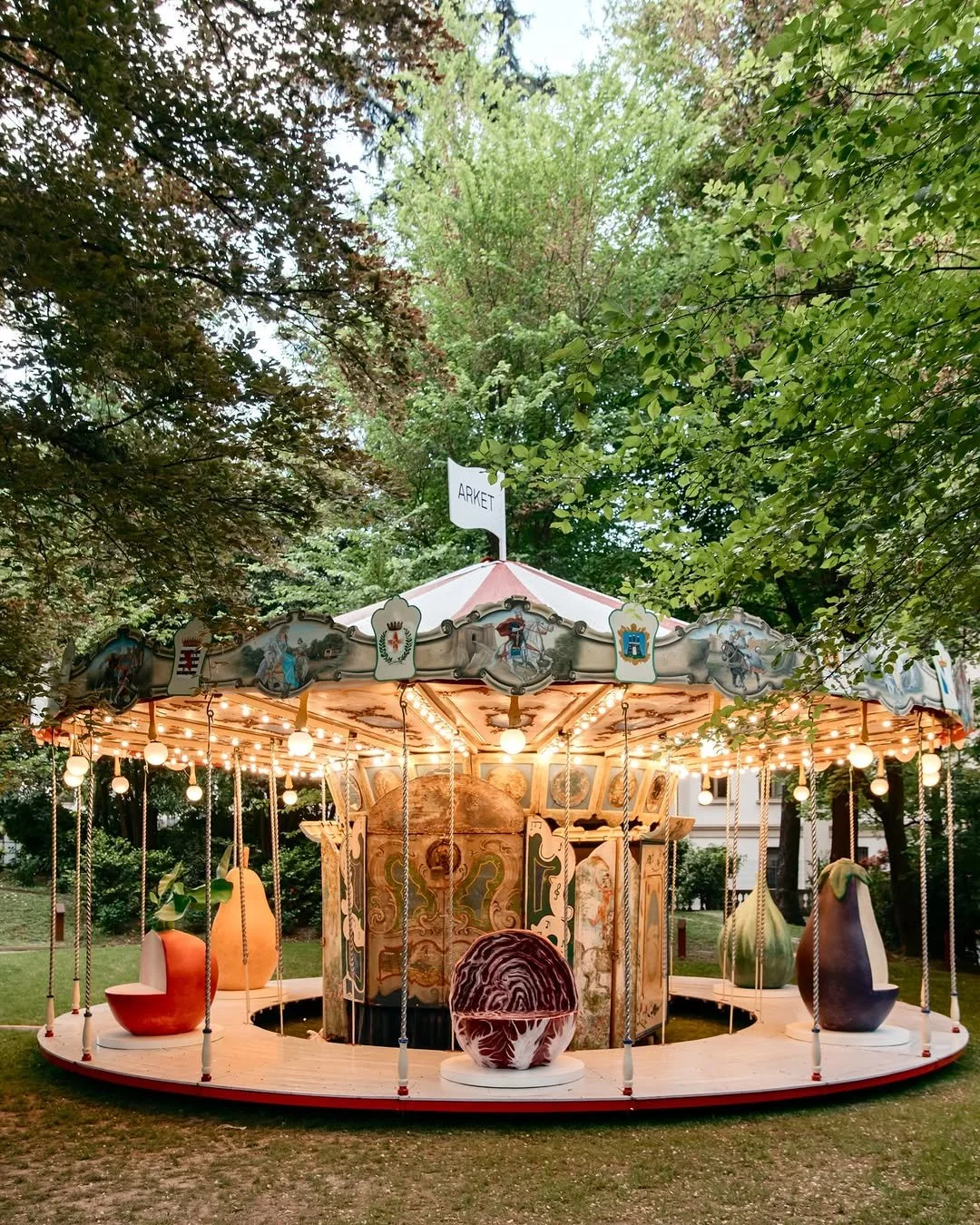
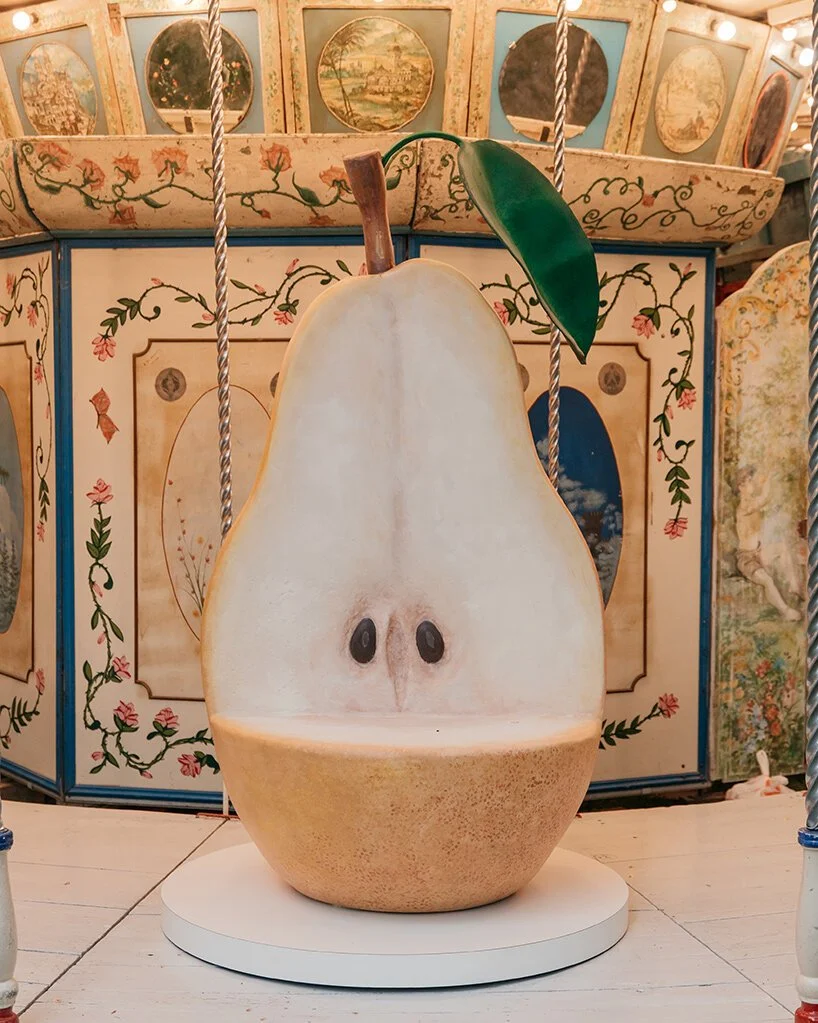
At Giardino delle Arti, Laila Gohar’s collaboration with ARKET takes the form of an immersive, public installation centered around a reimagined carousel. Replacing traditional horses with oversized fruits and vegetables, the structure shifts from nostalgic object to spatial device.
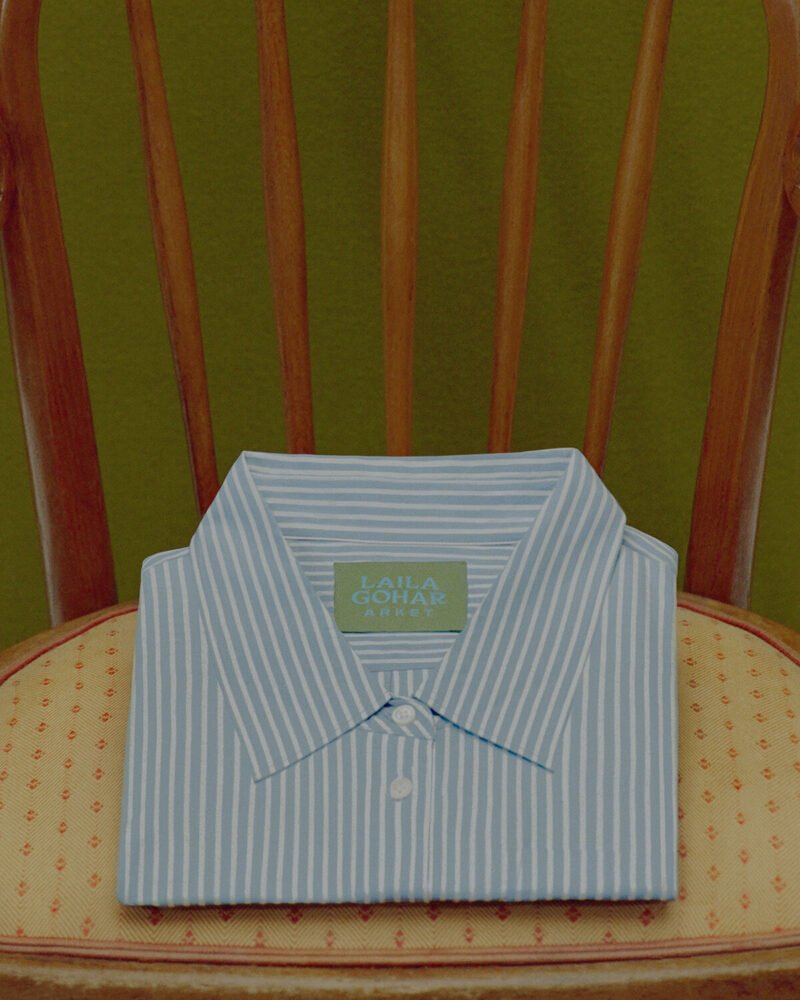
The installation introduces Gohar’s first ready-to-wear collection, where utilitarian silhouettes meet unexpected detailing. Around it, a temporary café and interactive elements extend the experience beyond display into participation. Play becomes a framework: slowing movement, capturing attention, and reframing the everyday through scale and repetition. Clothing, object, and environment merge into a single experiential system.
MIU MIU - CULTURE AS PLATFORM
Credits: Miu Miu
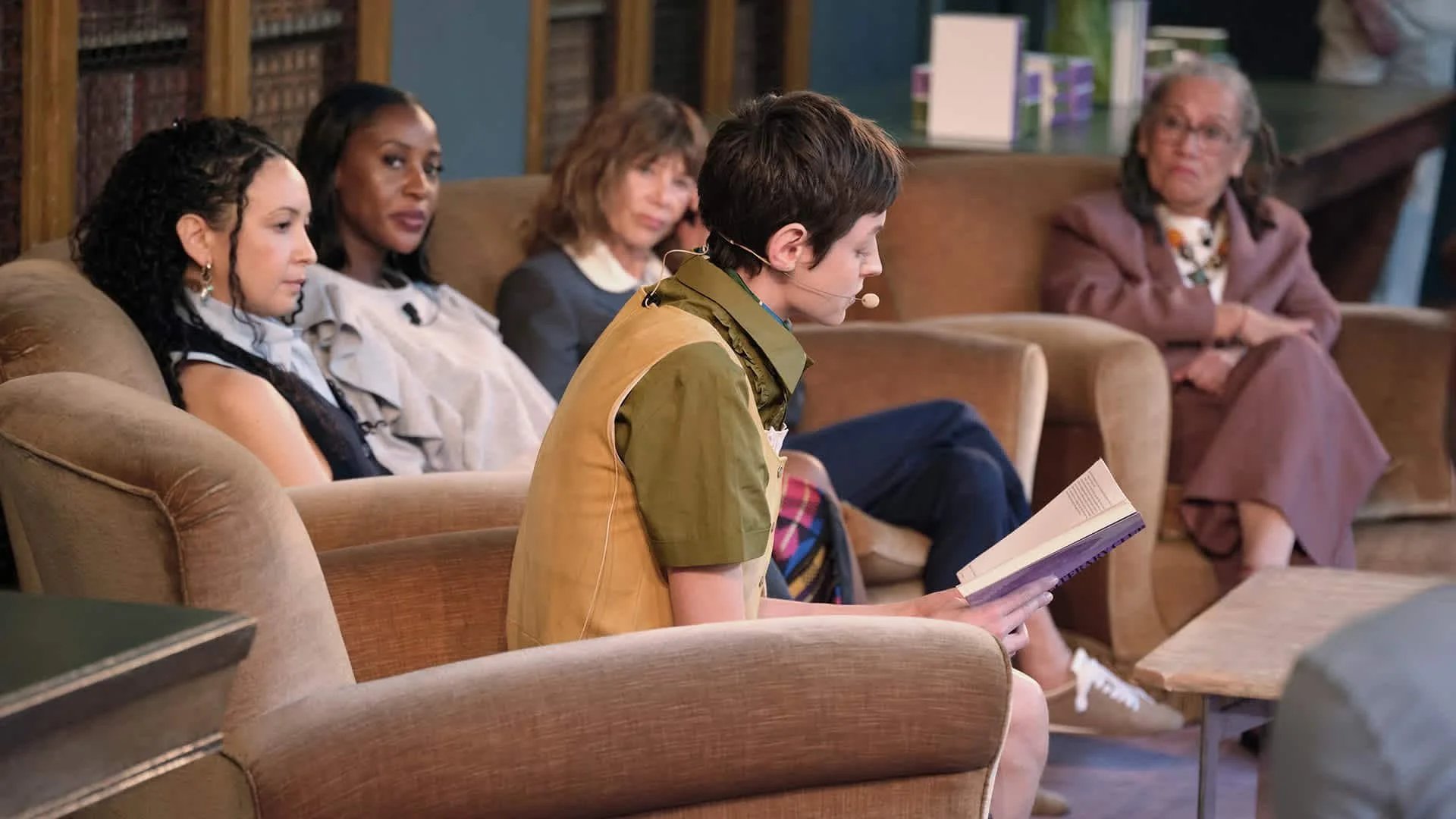
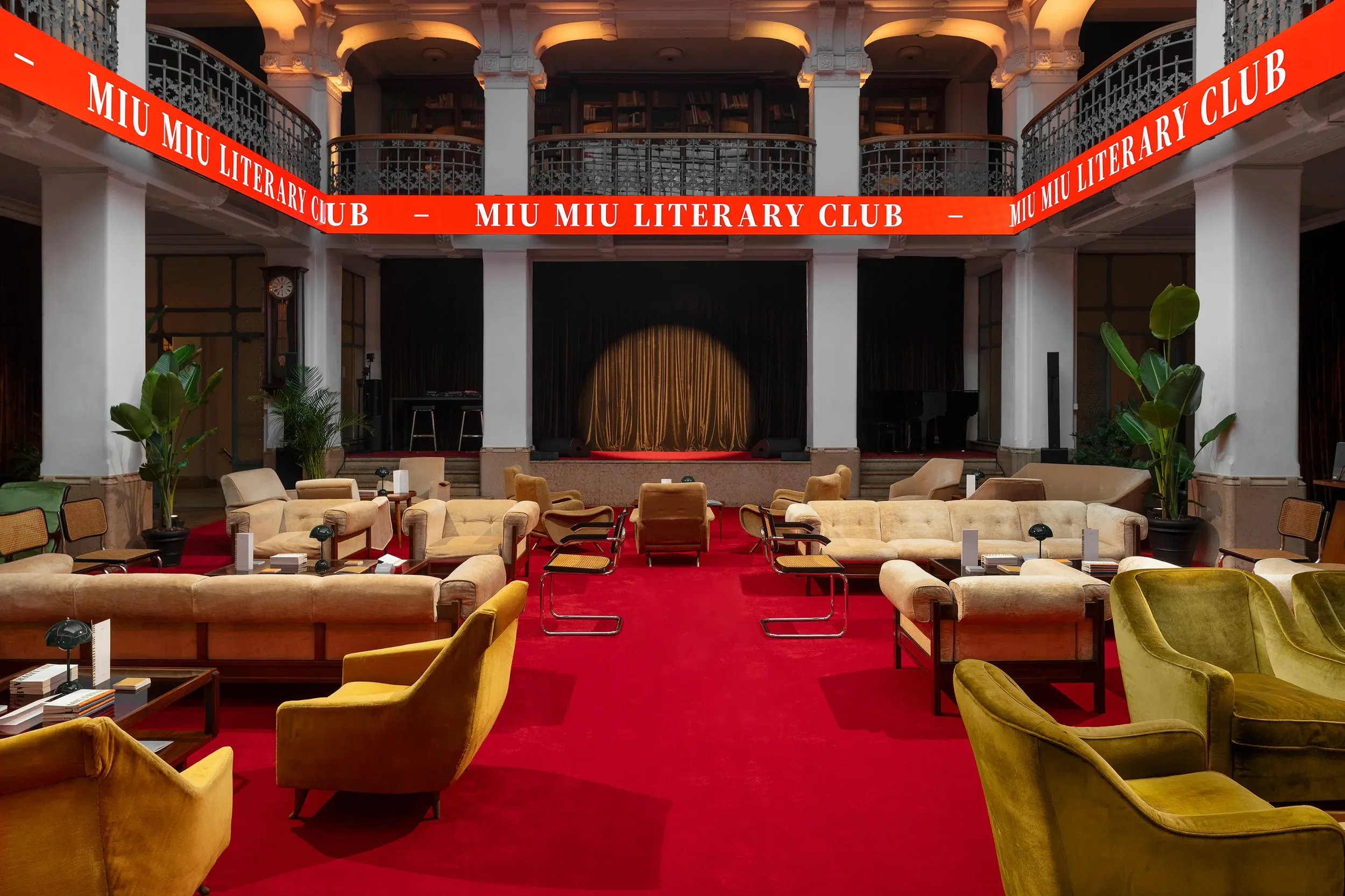
With its Literary Club: Politics of Desire, Miu Miu continues to position itself at the intersection of fashion and intellectual discourse. Hosted during the week, the program brings together writers, thinkers, and audiences to explore themes of desire, consent, and self-determination through talks, readings, and curated texts.
Anchored in the works of Annie Ernaux and Ama Ata Aidoo, the initiative extends beyond event into platform, one that reinforces Miu Miu’s role as a cultural actor. Here, design is not material but conceptual, shaping conversations rather than objects.
THE COSMETICS IC TAKE
This Milan Design Week 2026 signals an evolution from brands designing isolated objects to cohesive worlds where product, space, and narrative increasingly converge.
Across Aesop, ARKET, and Bottega Veneta, value lies in the ability to create immersive systems, where a product becomes an entry point into a broader, unified experience.
At the same time, a counter-movement emerges around slowness and intentionality. Jil Sander and Miu Miu highlight the growing importance of attention, depth, and cultural engagement, suggesting that in a saturated landscape, creating space for pause and reflection is becoming a powerful luxury lever.
Materiality and adaptability also still stand out as key drivers. From tactile, expressive materials to flexible design systems, brands are responding to a need for both emotional resonance and evolving usage.