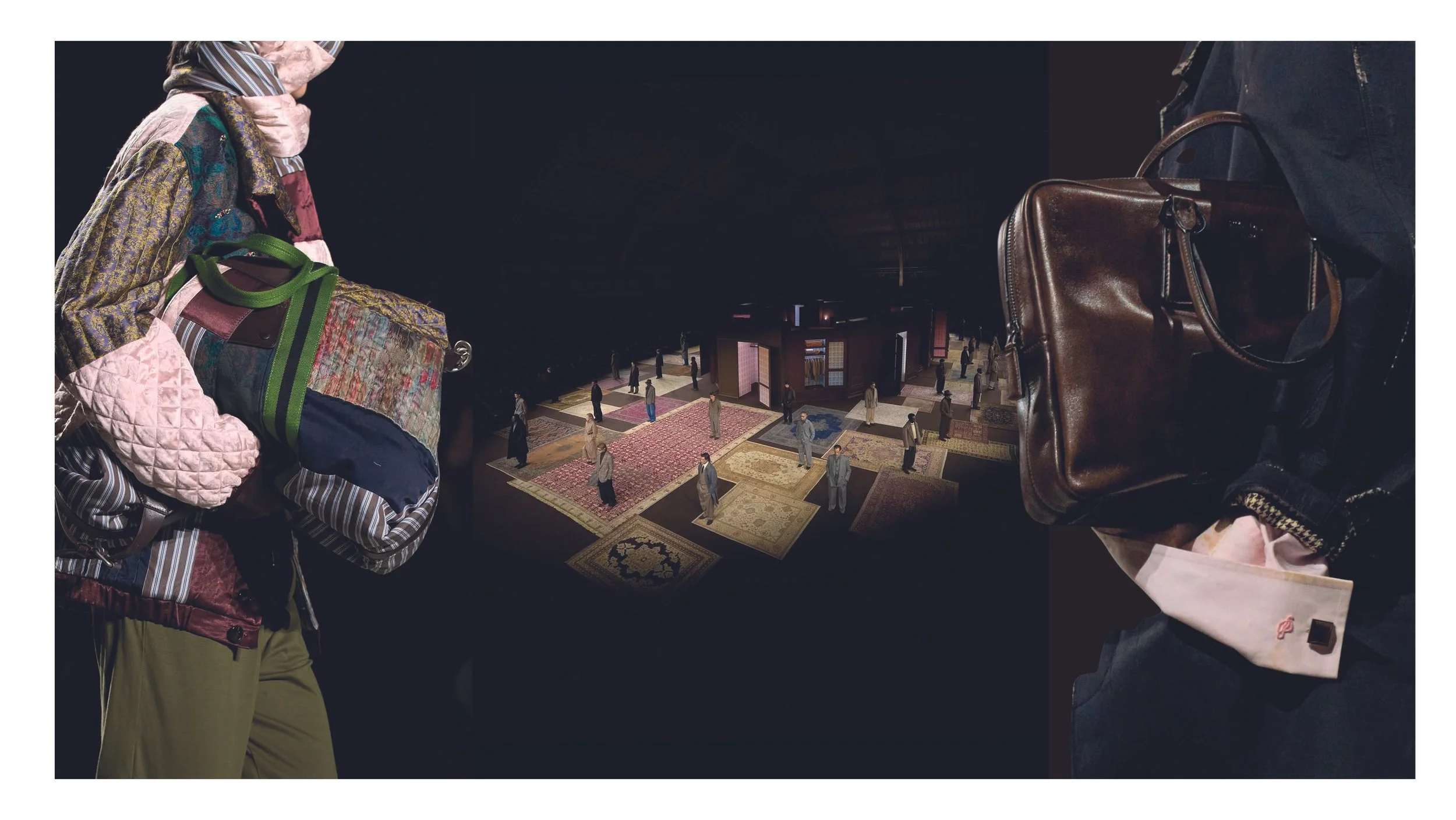
Dries Van Noten / Zegna / Prada - Men Fall/Winter 2026
At Men’s Fall/Winter 2026, a number of designers leaned back into conservative dress codes (and casting), traditional silhouettes, and established masculine markers. Yet within this context, others carved out a necessary rupture, reminding us that masculinity can still be theatrical, fluid and defiantly expressive.
Rather than chasing novelty, the season focused on reworking the familiar: questioning class structures, destabilising good taste, and navigating the tension between comfort and discomfort. Clothes became tools for reflection on identity, power, preservation and the very real emotional and physical needs of an uncertain future.
Here are five defining themes that shaped Men’s FW26.
1. MAKING NEW FROM THE FAMILIAR - Beauty, ugliness and the search for new beginnings
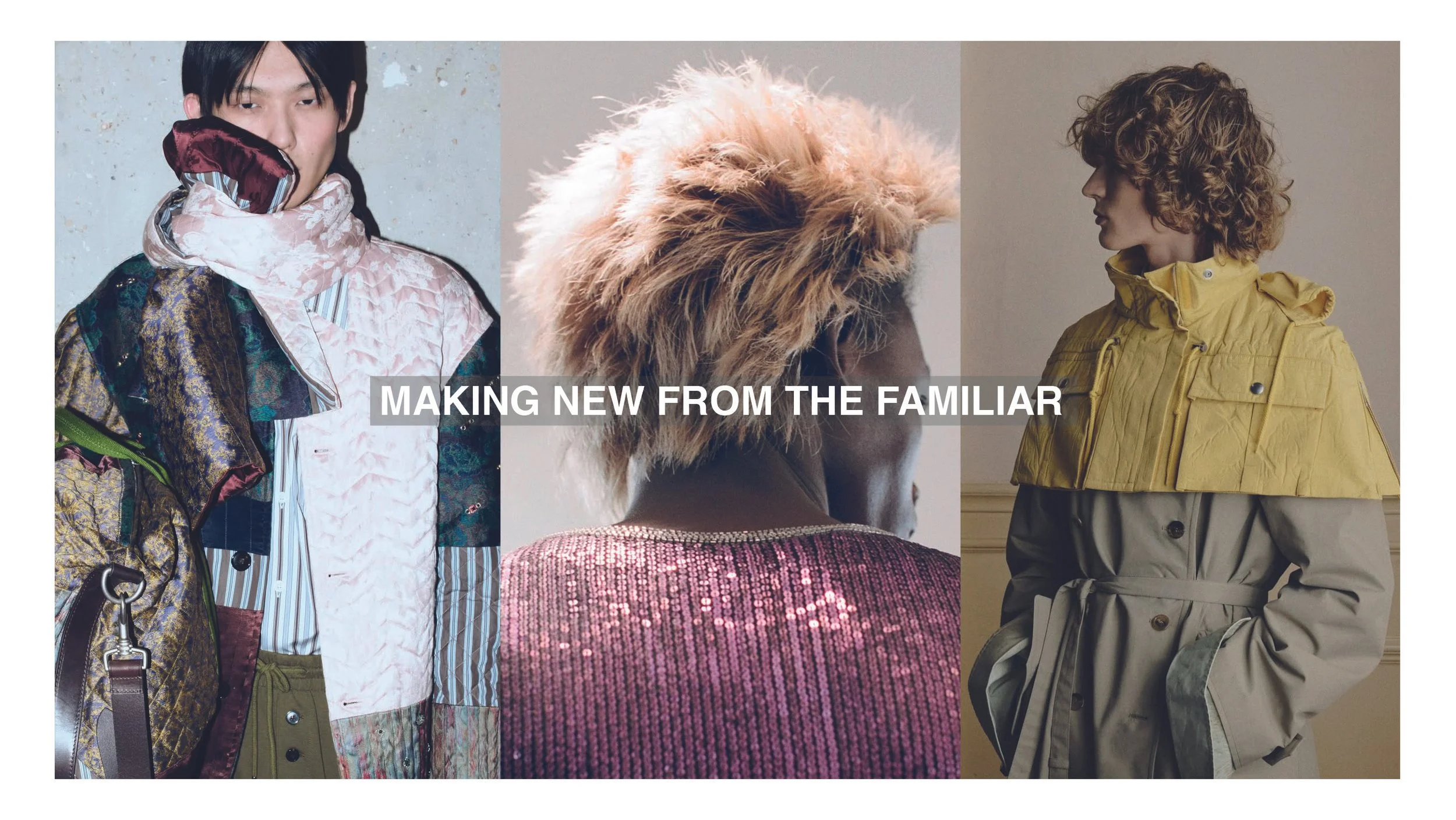
Dries Van Noten / Dior / Prada - Men Fall/Winter 2026
At the core of FW26 was a desire to rework the known: silhouettes, archetypes, textures… into something emotionally and culturally relevant. Designers leaned into contrast: comfort versus discomfort, refinement versus decay, beauty versus awkwardness.
At Dries Van Noten, this took the form of a coming-of-age narrative. Knitwear became the emotional anchor of the collection: sweaters as memory-holders, offering warmth, safety and nostalgia at a time when the world itself feels unstable. Patterned, striped, patchworked and colour-blocked knits layered familiarity with experimentation. Archetypal silhouettes were loosened from their boundaries, suggesting growth, self-expression and the uncertainty of adolescence.
At Dior, Jonathan Anderson pushed familiarity into eccentricity. Aristocracy was reimagined, not as polished privilege, but as something fractured, theatrical and deliberately uncomfortable. Punk-inflected references to Paul Poiret, exaggerated silhouettes, degraded textures and rejected polish created character-driven looks that thrived in unease. This was escapism through excess: a refusal of what modern “refinement” should look like.
Prada approached the familiar through tension and contradiction. Broken boundaries, working-class decadence and a deliberate questioning of good taste defined the collection. The mismatched marble fireplaces and fractured interiors of the set felt like metaphors for a destabilised world. Across the looks, signs of wear and distress appeared repeatedly: peeling fabrics, frayed edges left raw, creased leathers, materials seemingly in states of fatigue. Yet these elements were always held within Prada’s clarity and refinement.
Across these collections, a fundamental question was asked: what happens when we stop idealising the familiar and start degrading it instead?
2. DECONSTRUCTION AS SOFT POWER - Acts of disobedience and the mocking of authority
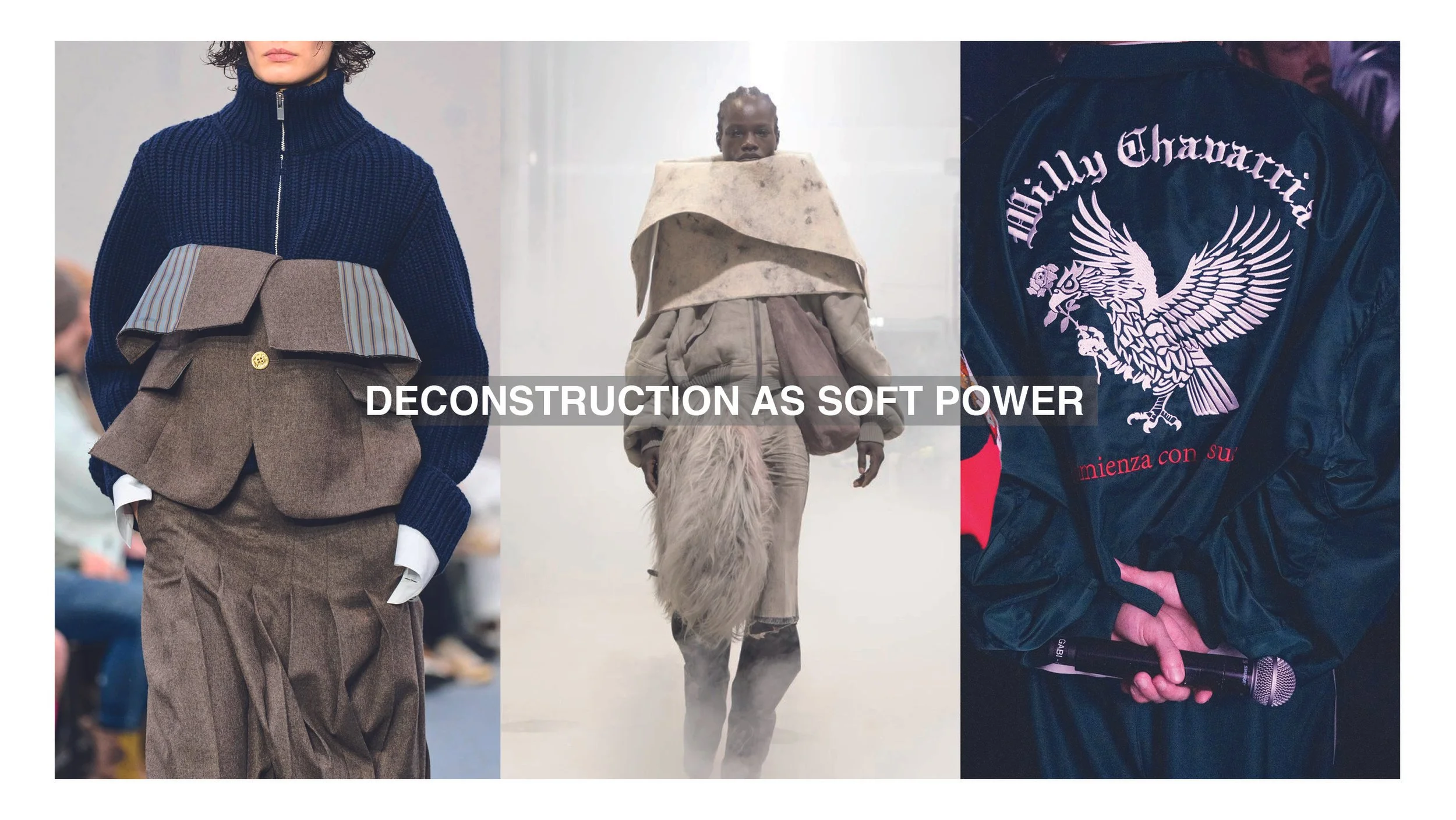
Sacai / Rick Owens / Willy Chavarria - Men Fall/Winter 2026
Men FW26 saw deconstruction evolve from a design technique into a method of protest. Rather than overt slogans, designers employed symbolism, hybridisation and irony to challenge established power structures.
At Sacai, Chitose Abe’s signature hybridisation took on new urgency. Garments were engineered to challenge structure itself: jackets reworked so that different sections moved independently yet remained connected: a visual and technical metaphor for coexistence and tension. This dismantling of order echoed the global unrest beyond the runway. The soundtrack, Queen’s I Want to Break Free, left little ambiguity. The set itself, a drywall partition punched through, referenced strength and liberation. Chitose Abe described it as expressing “the power to break through the wall, to be free.”
Willy Chavarria continued to position fashion as a space for visibility, dignity and emotional truth. Eterno was rooted in representation and love as acts of resistance. The casting conveyed presence and humanity, bodies asserting their right to exist, be seen and take up space. Colour became a key instrument: deep purples, mustard, lipstick red, pool blue and canary yellow clashed unapologetically.
At Rick Owens, political parody took center stage. In Tower, the designer subverted symbols of authority, mocking them through exaggeration and theatricality. Watchtowers, cell towers and tower blocks, all symbols of surveillance, control and isolation, were reinterpreted as hollow monuments. By ridiculing power, Rick Owens stripped it of its dominance.
Together, these designers reframed deconstruction as cultural resistance: subtle, symbolic, and emotionally charged.
3. CLOTHING AS HEIRLOOM - Preservation, simplicity and the wardrobe as legacy
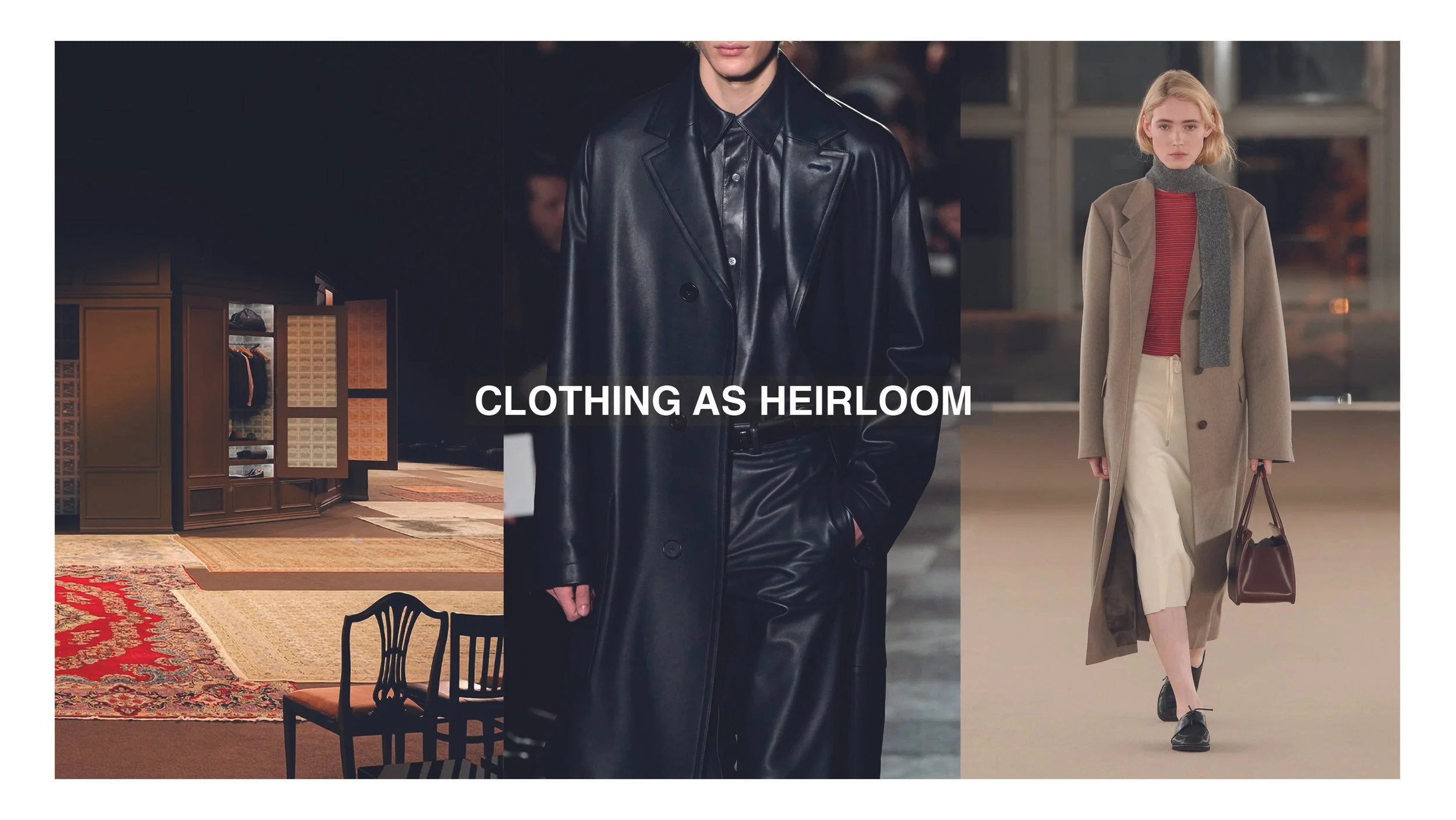
Zegna / Hermès / Auralie - Men Fall/Winter 2026
In contrast to excess and protest, this season’s runways also made space for quiet permanence. Several designers reasserted the wardrobe as a site of preservation, a place where garments hold history, not trends.
At Zegna, clothing was positioned as heirloom. The idea of passing down garments, not just buying them, reinforced a philosophy of buy less but better. The closet became a physical vessel of family memory, where quality, durability and emotional value outweighed novelty.
This sense of continuity was especially poignant at Hermès, marking Véronique Nichanian’s farewell after 37 years as artistic director. Her approach has always been rooted in longevity and cyclical fashion: designing not for seasons, but for lives. In a moment when AI and automation increasingly encroach on creativity, her departure felt like a reminder of the irreplaceable human touch. Hermès once again resisted trends, focusing instead on garments as meaningful, long-term companions.
Auralee distilled this philosophy into desirable simplicity. Ryota Iwai’s “Pure Silhouettes” used colour as the primary storytelling tool. Referencing Bauhaus colour theory, Lego-like modularity and architectural experiments such as the Reversible Destiny Lofts, the collection treated wardrobe-building as intuitive and playful. Primary brights stacked effortlessly, turning dressing into a calm, almost meditative act.
4. DRESSING FOR THE IMMINENT FUTURE - Function, adaptation and emotional resilience
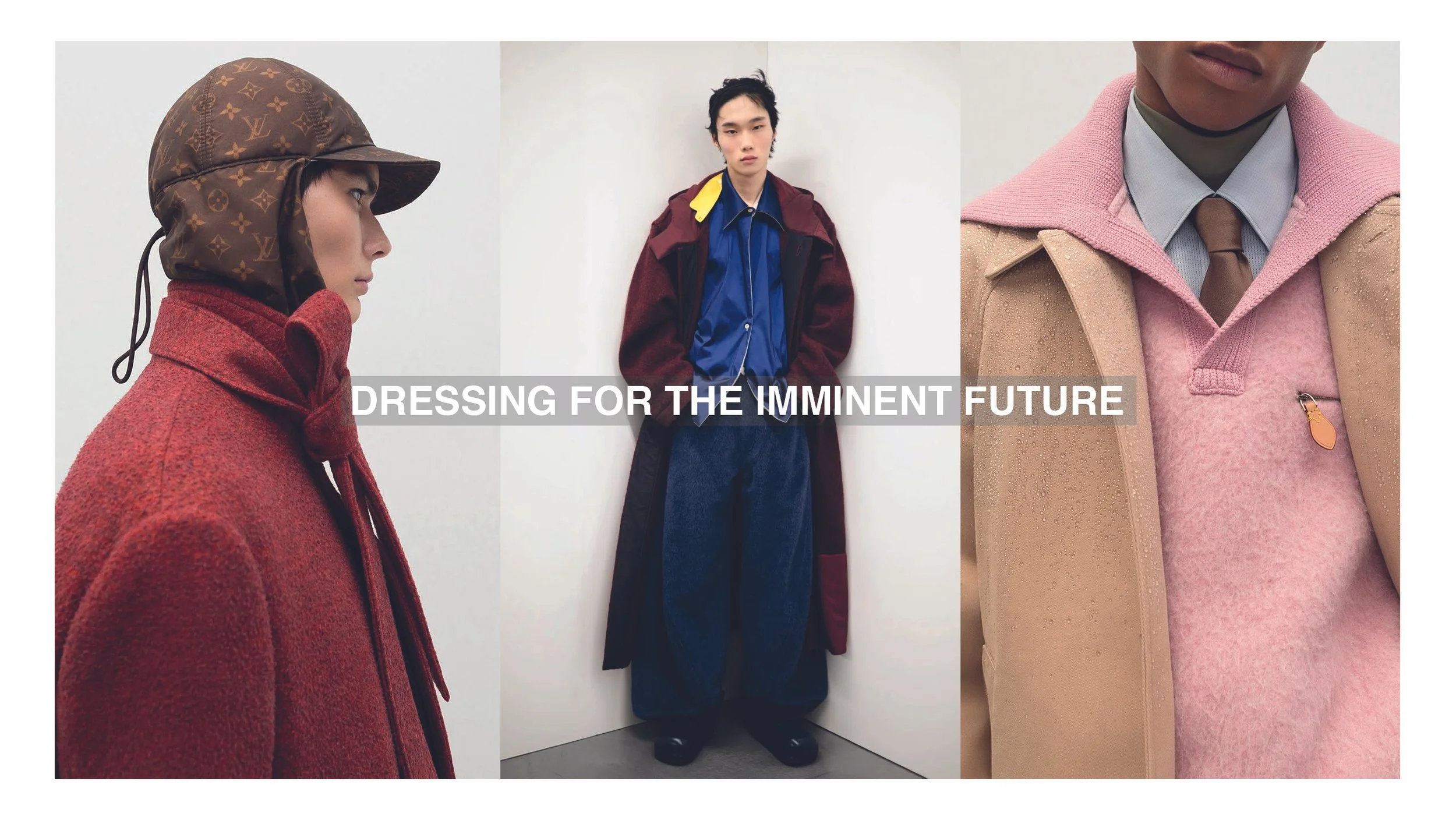
Louis Vuitton / Pronounce - Men Fall/Winter 2026
Designers also addressed the near future, not speculative or distant, but immediate. They considered what consumers will need to endure, adapt and feel supported in challenging times.
At Louis Vuitton, Pharrell explored Timeless Living through the lens of function and human need. The collection reflected on the imminent future and the realities the Louis Vuitton customer may face: uncertainty, acceleration and constant adaptation. Technical innovation was woven directly into garments, with functionality guiding design choices rather than following them. Set within a glass house, the show acknowledged how luxury has expanded to offer solutions for every aspect of modern life, from clothing to environment.
Pronounce offered a quieter, more introspective vision of technicality. The collection encouraged garments to reveal themselves over time, athletic materials were absorbed into tailoring, utilitarian elements softened by proportion and layering. Function existed, but never at the expense of emotion. Movement replaced control, intelligence replaced severity.
Technology in menswear is no longer about performance alone, but about emotional sustainability.
The CIC Take
Men’s Fall/Winter 2026 reveals a menswear landscape shaped less by trend cycles than by emotional, cultural and functional recalibration. Designers are no longer choosing between expression and restraint, or innovation and heritage, they are learning how to hold these tensions simultaneously.
The season points towards a future where value is created through meaningful transformation: reworking the familiar, preserving what matters, and designing with real human needs in mind and garments that feel relevant not just to the moment, but to the lives consumers are navigating.